[0.1] Abstract - Michael Haneke’s 2001 film The Piano Teacher is about Erika, a 40-year-old piano instructor living with her mother. I will argue that Erika's sadomasochistic fantasies and repressed sexuality are due to her mother's surveillance, and I will examine the film's mother-daughter relationship through the lens of Freudian and Lacanian psychoanalysis.
[0.2] Keywords - surveillance, spectatorship, female gaze, voyeurism, fetishism, sadomasochism, phallic power, psychoanalysis, mother-daughter dyad, sexual repression, dependance, rape fantasy, maternal jouissance
[0.3] Trailer -
Miller, Amanda. 2026. “Surveillance and Dependence in The Piano Teacher,” Muhlenberg Visions. Volume 4, No. 1.
1. Introduction
[1.1] Michael Haneke’s 2001 film The Piano Teacher opens with a vignette vividly encapsulating the nature of the mother-daughter dynamic that will be woven throughout the film. Erika, a 40-year-old piano instructor living with her mother, quietly re-enters her apartment. From outside of the frame, her mother’s voice is heard giving a mockingly innocent greeting, and immediately Erika can tell that she was caught. It is evident that her mother is familiar with Erika’s exact teaching schedule. Her mother forbids Erika from entering her room, requiring that she inspects her bag beforehand, denying Erika any privacy and autonomy over her belongings. After her mother removes a dress Erika bought from her purse, the two quarrel over it. The moment of aggression is interrupted by a closeup of a television programme that the mother is watching, further defining the domestic space as another setting of surveillance for Erika. After more intense dialogue, the two nurture each other once again by diving into forgiveness, thus defining the cycle of their dynamic: fused, dependent, unrestrained, and aggressive. Every space that Erika occupies is surveilled. In the prestigious Viennese piano school, she must adhere to rigidity and excellence. In the sex shop she secretly frequents, she is watched due to her gender. In all of these settings, the overarching surveillant is her mother. In his paper, I will argue that Erika's sadomasochistic fantasies and repressed sexuality are due to her mother's surveillance, and I will examine the film's mother-daughter relationship through the lens of Freudian and Lacanian psychoanalysis, including the idea of maternal jouissance, to argue that the relentless projection of ownership the mother exudes over Erika that leads to a cycle of dependence.
2. The Pervert and The Psychotic
[2.1] The Piano Teacher presents Erika as subjected to sadomasochistic desires resulting from the sexual repression that is enforced on her through living with her mother, as well as by embodying the rigidness of being a classically trained pianist. The two principal relationships in Erika’s life are with her student Walter Klemmer and her mother. An understanding of Walter and Erika’s dynamic is necessary in evaluating the ways in which Erika rebels against her mother. In an analysis of The Piano Teacher within a collection of works called Perversion Now! Lacanian psychoanalytic theorist Jean-Claude Aguerre argues that Klemmer is the only true perverted character within the film. This is important to consider because it depicts that way in which Klemmer resists the Social Order as well, and reinscribes Erika as a psychotic subject instead of a pervert (Aguerre 184). Lacan’s perspective on fetish defines it as a complete absence of the phallus rather than a replacement for it, therefore contrasting the manner in which it is defined in Freudian logic. Erika’s perception of her mother forces her to recognize her as having a phallus, whereas Klemmer recognizes her lack of a phallus. Aguerre discusses the ways in which Klemmer masks himself, as the pervert still substitutes the phallus with fetish, but simultaneously knows that the fetish still is not the phallus and is inconsistent. This is where the perversion comes into play: Klemmer recognizes the fetish as false, while Erika believes it to be true. This is unveiled through her contractual letter to Klemmer detailing the sadomasochistic activities she wants Klemmer to do to her. The contract is a pinnacle of a perverse relationship. Aguerre cites Piera Aulagnier in order to explain that:
[2.2] Both partners are to make a mutual and most rigorous commitment to respect and blindly adhere to a series of rules that will invariably define their erotic actions. They make a promise to obey this law or these rules regardless of what their desires may be at the moment when they must apply them […] The point of the enactment of this ritual seems to be a kind of repetition or a phantasmatization of a scene of castration […] we should add that this contract shows that the victim is supposed to – even obliged to – enjoy the pain that he inflicts on himself. (Aulagnier, quoted in Aguerre 187)
[2.3] Aguerre reads Erika’s contract as a declaration of love as she is able to describe genuinely and openly her emotions within this written context. To me, this is another one of Erika’s attempts to reach the Symbolic Order, in which she is denied. She observes the ways in which women are treated in pornography in the sex shop she frequents. While what she sees in that setting is milder than the requests she voices in her contractual letter, it is an extremity channeled through the media she consumed within the sex shop in attempting to relieve her sexual repression. It is a list of desires that are a product of being surveilled by her mother and by the sexual commodification of women within pornography and sexual consumerism. Klemmer, after reading her desires, views her as disgusting and perverse, yet in an episode of extreme frustration perpetuates the violence that Erika requested in a nonconsensual manner, violating her and her mother at the end of the film. In this rape scene, Klemmer continually comments on how this is what is wanted by Erika, insisting on her being a manifestation of sexual deviance while he is commiting an act of violence. This then goes back to the quote by Aulagnier in which the receiver of pain is obliged to enjoy the pain and violence no matter the context. This shows that Klemmer is the only one upholding the contract, solidifying him in the role of pervert, whereas Erika adheres to the role of psychotic in Lacanian theory, as Aguerre asserts. The pervert has access to the Symbolic Order as they can understand that no one truly has the phallus, yet craft their own reality to achieve pleasure. It is imperative to understand this relationship through Lacanian terms as its implications are directly related to Erika’s relationship with her own mother. Erika, using Lacanian theory, is in psychosis through her rejection of the Symbolic Order due to her fusion to her mother that has never been broken. Entrance into the Symbolic Order, or Name-of-the-Father, commences when the child separates from their mother. Since Erika has not achieved this separation, she is barred from entering the constraints of society.
[2.4] Before moving onto the mother-daughter dyad within The Piano Teacher, the final scene must be defined as an ultimate surrender to the Symbolic Order. The day after being attacked by Klemmer, Erika is at the recital hall to fill in for one of her students. Erika’s mother departs to get her seat, leaving Erika alone and giving her time to prepare for her performance. Erika then pulls out a large knife and quietly stabs herself twice before leaving the recital hall. This is the scene in which Erika enters the Symbolic Order. She now possesses the phallus, which is the knife that she penetrates herself with, and is now separated from her mother, who is denied of possessing the phallus. It is now important to analyze the way in which the mother’s gaze operates in The Piano Teacher, and how the bond between Erika and her mother enforces surveillance and a cycle of dependence.
3. The Mother’s Gaze, Defined
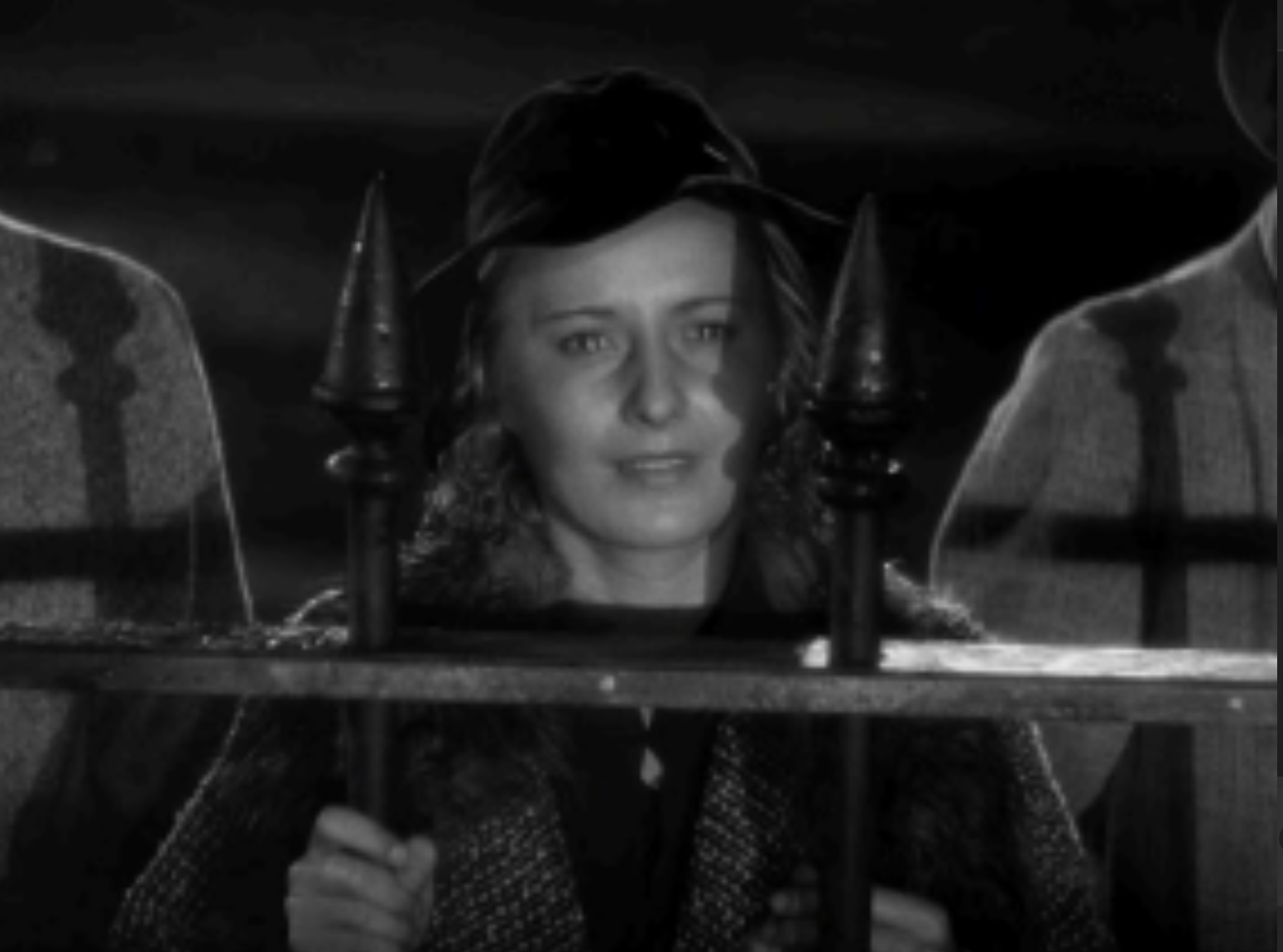
Figure 1: Stella Dallas tearfully watches her daughter wed from afar
[3.1] The mother’s gaze operates in a specific manner in film. The above image (Figure 1) is from the 1937 film Stella Dallas. This melodrama ends with Stella Dallas, a working-class mother, allowing her daughter to marry into a higher class. This image shows Stella watching her daughter Laurel’s wedding from outside surrounded by other onlookers witnessing the high society wedding. As she watches, physically barred and separated from her daughter with the fence, her daughter never meets her gaze; in fact, her daughter doesn’t know that she is there. Laurel is thus released from reciprocating her mother’s gaze. By looking, Stella subjects herself to pain through severing herself from her daughter, while simultaneously feeling fulfillment at observing her daughter achieve a more elevated lifestyle. Stella’s maternal gaze here does not entrap Laurel; instead, it renders her a spectator. Her gaze can be characterized as masochistic. In Mary Ann Doane’s essay “Film and the Masquerade: Theorizing the Female Spectator,” a female onlooker in projecting a female gaze can either identify with the female character and achieve a masochistic gaze or masquerading to achieve a distance from the spectator to the image. Here, although we are looking at a female spectator within a film, the scene frames Laurel and her partner Richard within the window. (Figure 2)
Figure 2: The maternal gaze, staring up at the window, evokes the female film spectator’s gaze as she stares up at the screen
[3.2] With Stella’s teary-eyed gaze, she is employing a masochistic way of looking. It is a visual example of what Doane outlines in analyzing female spectatorship. Furthermore, it offers the complete opposite mother-daughter relationship of what is depicted in The Piano Teacher. Laurel is released from her mother and is allowed to enter the Symbolic Order through matrimony and heterosexuality. Now she is within the patriarchal gaze as well and has joined the law of the father.
[3.3] In Lacan’s theory, the Mirror Stage is when an infant can recognize themselves in a reflection, and this recognition creates the ego and forges self-identity. This also begins the process of mother-child separation as the child, who first sees themselves as fused to the mother, now views themselves as fragmented from the mother. It is actually the presence of the mother’s desire that facilitates the total separation between the dyad. This maternal desire is typically conveyed through the role of a father, in which the mother’s desire is projected onto him and the child realizes that they are not the mother’s only object. This spurs the child’s autonomy in realizing they have separate desires as well. In Erika’s case within The Piano Teacher, she is trapped in the pre-Mirror Stage: the desires of her mother are her desires, and her written sadomasochistic contract referenced earlier is an attempt to reject her mother and forge her own desires and self-identity. Despite her attempts, Erika is still trapped within her mother’s gaze and desires. Her mother’s desires are entirely centered around Erika. Midway through the film, there is a scene in which Erika and her mother are at a reception after Erika plays a private house performance. While Erika is offscreen talking to her students, her mother is talking with an older man around her age. He shows her his antique and valuable instruments. After this interaction, the mother finds Erika and complains about how bored she was with this man, and that Erika should have stayed by her side. It is not only through proximity that the mother prohibits separation of the dyad, but also through her desires only being about Erika. The mother is uninterested in any interaction that does not relate to Erika, and does not want to exert effort over anyone else. Unlike Laurel in Stella Dallas, Erika cannot reach the patriarchal Symbolic Order through happy heterosexuality due to her mother’s gaze. The two are fused and stuck in the mother-child dyad.
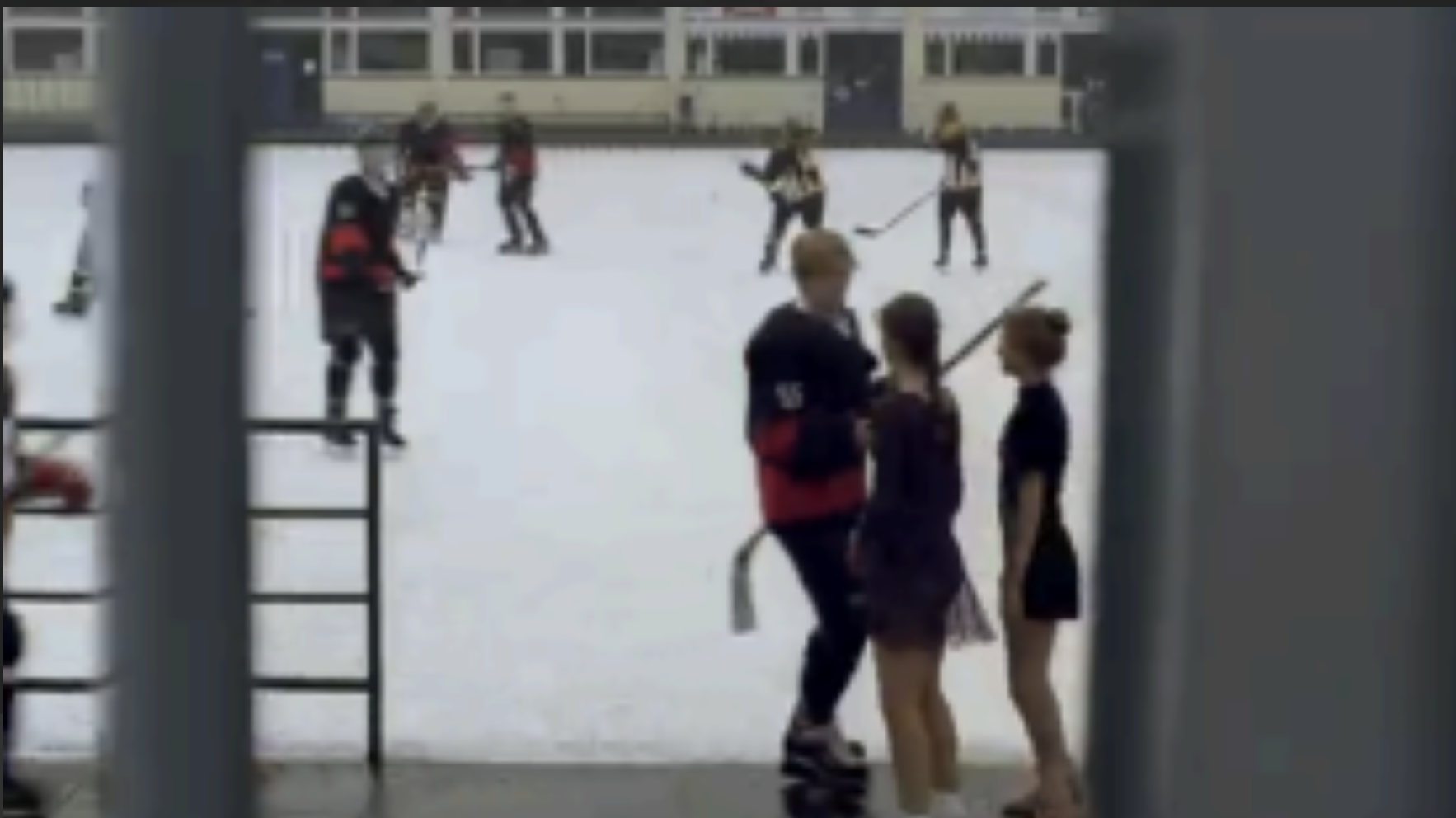
Figure 3: Erika watches her student Klemmer from afar
[3.4] Above (Figure 3) is a shot that is strikingly similar to Stella Dallas watching her daughter get married. Erika watches her student Klemmer play ice hockey. Like Stella, she is physically separated from the world of Klemmer. As discussed in the first section, Klemmer can be characterized as a pervert who is able to exist within the Symbolic Order. Erika, a psychotic, is barred from that. While she is not expressing a maternal gaze like Stella, she is not allowed to be a part of society in the same way Klemmer is due to her inseparability with her mother. This relates to Stella being criticized for the manner in which she dresses and her being a divorcee; she is not permitted to be synthesized into society in the same way as the wealthy family that Laurel marries into. In this scene, Klemmer is not aware of Erika. It is a fleeting shot, yet it conveys a feeling of otherness. (Figure 4) Erika receives pleasure from watching the hobbies of a man who she is unable to connect to. The visual metaphor demonstrates that Erika will never be in Klemmer’s world and will always be on the margins, expressing her desire through gaze. Erika’s acts of watching operate to reject her mother’s desires that are projected onto her and made into her own.
Figure 4: Erika’s gaze evokes the female film spectator’s gaze as she stares up at a “framed” shot of Walter Klemmer
[3.5] Similarly, Klemmer is framed by the fence (Figure 4) , further solidifying Erika as a spectator. Her conservative style of dress contrasts with Klemmer’s sports uniform, further juxtaposing their two different worlds. She becomes preoccupied with Klemmer as she starts to feel a sense of wanting that differs from her mother, yet these acts of following and observing actually cycles back to the unbroken mother-child dyad.
4. Surveillance and Judgement
[4.1] In “Jouissance and Desire in Michael Haneke's The Piano Teacher,” Jean Wyatt asserts that Erika is living in maternal jouissance. She explains that the difference between desire and jouissance is that one operates within the Symbolic Order and the other doesn’t. Desire is a product of social rule, in which one desires a person or object; jouissance is excess, and goes beyond typical pleasure, often blending with pain. Erika’s attempts at desire are interrupted by jouissance. Since her ambitions as a piano teacher are also her mother’s, Erika’s attraction towards Klemmer is distinct from what her mother wants. At first, Erika is cold, and rejects Klemmer. When he auditioned for the conservatory, Erika was the only instructor who disapproved of him, with the rest of the staff marveling at his performance. While her initial rejection of him aligns with the ruthless attitude she maintains towards all her students, it could be inferred that she does not interpret him as a desirable entity at first. Erika operates in three different spheres throughout the film: the domestic, the conservatory, and the in between in which she engages in voyeuristic acts. Erika, at first, cannot mix these three spheres together. The common denominator between these three settings is the surveillance of her mother. Erika lives with her mother, her mother knows everything that is going on at the conservatory, and her mother knows exactly how much time Erika has spent doing salacious activities. Erika is most independent during her inbetween time. Klemmer causes Erika to blend all three of her spheres together. She teaches him at the academy, engages in sexual behavior with him (which, considering their student-teacher relationship, is regarded as sexually deviant), and he eventually enters the domestic space that she shares with her mother. Yet, although he enters into these spheres, it becomes clear that it is not sustainable and that he will not fit, for her mother is omnipresent. Erika’s relationship with Klemmer leads to jouissance, and is truly characterized as a method of expelling her mother.
[4.2] When Klemmer enters Erika’s domestic sphere, she has him read her contractual letter. They are in Erika’s own room, and the door is barricaded with a dresser. Her mother cannot enter despite repeatedly trying to. Klemmer protests reading it at first, to which Erika says “I want what you want. But read the letter first.” Here, she claims a difference in her wants that is separate from her mother’s. This is another attempt at synthesizing into the Symbolic Order. As Klemmer begins to read the letter, the shot is interrupted by a shot of the mother in the living room watching TV. Clearly vexed by not knowing what her daughter is doing, she puts her ear against Erika’s door. Erika writes “For that is my dearest wish: with hands and feet tied against my back, to be locked in the room next to my mother, but out of her reach, behind my bedroom door. Don’t worry about my mother; she is my problem.” Despite having a detailed list of sexual wants, Erika outlines her biggest wish as being separated from her mother. As the two share a bed each night, Erika has no privacy. Yet, within this wish, Erika still maintains proximity with her mother, as she wants her mother to be in the adjacent room. Throughout this scene, her mother’s surveillance is highlighted as she repeatedly attempts to understand what is happening behind Erika’s door. Erika’s dependence on her mother is demonstrated through this wish of hers, and even within her personal wants she mentions her mother. This then continues to restrict her to maternal jouissance. Erika tries to embrace heterosexuality, yet reaches a level of excess, constricting her back to her mother’s excess in surveillance and ownership over Erika. Her attempts at defying her mother loop her back into the mother-child dyad. Wyatt writes “For Erika’s violence toward her own and others’ bodies returns her to the dimension of jouissance that she shares with her mother rather than providing an opening into the larger social world,” (Wyatt 462). Even within her own verbalized thoughts, Erika returns to her mother, enforcing a cycle of dependence.
[4.3] In “Lacan and narrative identity: The Piano Teacher,” Bert Olivier discusses the Lacanian concept of aggressivity. With Erika being stuck in the mother-child dyad, she still sees herself in totality when in reality she is fragmented. The dissonance between these concepts of identity cause paranoia and lead to aggression. Referring back to the opening sequence of the film, Erika and her mother both engage in aggression towards each other. Erika resents her mother for being domineering and controlling, and her mother is excessive in her ownership of Erika. Olivier defines the act of Erika pulling her mother’s hair out during this sequence as a way to disrupt her mother’s totality. Lacan’s concept of the three imagos–paternal, maternal, and fraternal–define one’s behavior through the internalization of an exterior image. The imagoes determine how an individual reacts to their environment, with each different imago embodying a different aspect of identification. The maternal imago thus creates identification with the mother, yet within ego formation (moi), there is a disruption between the idealized image (the identification with the mother) and the real, fragmented body (the child’s body, which cannot be sustained without the mother). This disruption in identity fuels the concept of aggressivity. Olivier explains, “It is important to keep in mind that this aggressivity towards others at the heart of the subject’s structure as ego (moi) is in the first place, as pointed out earlier, aggressivity towards oneself – at least towards the image which is ambivalently experienced as being oneself” (Olivier 6). This then relates to Erika’s own self-mutilation. In the mother-child dyad, her image is interlocked with her mother’s. For example, the only place in which Erika has some privacy in the apartment is the bathroom. The longest time the audience witnesses Erika in this private space is when she is shaving and cuts her labia with a razor. While her exact intentions in shaving are unclear, I assume it is to adhere to a beauty standard by trimming her pubic hair. Blood runs down her leg, and after Erika emerges, her mother assumes that it is period blood. This furthers the perception that her mother has on Erika. She perceives her as juvenile and unable to take care of herself, further asserting the excess in maternal ownership.
[4.4] An aspect of Erika’s mother that has not been strongly mentioned within scholarship on Haneke’s The Piano Teacher is the state of the mother when she is not occupied with Erika. When Erika is absent from the apartment, the mother is depicted as sitting in her usual chair and watching television. This characterizes her as someone who is constantly looking. When she is not watching television at home, she is watching Erika perform. Interestingly, whenever she is watching television she seems distracted by worrying about Erika’s whereabouts. In Tania Modleski’s “The Rhythms of Reception: Daytime Television and Women’s Work,” the concept of passive television consumption is discussed. It can be inferred through the opening sequence and background noise that the mother typically watches melodramas (such as the medical drama seen in the beginning), the news, and documentaries. Modleski explains how daytime television, such as soap operas, is compatible with the rhythms of housework, rendering it possible to understand plotlines during scattered watching. While the mother is not depicted doing housework, her job and labor in the film is monitoring Erika like a child. Since their psychological relationship has not developed past the mother-child dyad, the mother’s preoccupation is consistently Erika. Her television consumption is a distraction from her taking care of Erika. As Modleski puts it “The housewife functions, as many creative women have sadly realized, by distraction” (Modleski 71). While the mother is not technically a housewife (her marital status is unknown), her only (self-induced) obligations are tending to the apartment and to Erika. The television is a symbol of escapism, allowing the mother to attempt to think about other people, yet ultimately she returns to worrying about Erika. She interrupts her viewing by going to the phone or monitoring the clock. Her television consumption is defined by her work, as she is never off the clock in her world. She stands guard in her chair. This also establishes the mother as a spectator. She repeatedly uses the phone as an object of surveillance when Erika is not at the apartment. In one sequence in the first quarter of the film, Erika is wrapping a scarf around her head before leaving the apartment for a rehearsal. She looks at herself in the mirror that is situated directly above the phone. She tells her mother that the rehearsal will run late and not to call her multiple times. “Viora of the Philharmonic’s coming,” she says, “he’ll think I’m a little girl.” This dialogue clearly suggests that her mother’s surveillance oozes into her professional life, along with referencing the paranoia caused in a developing ego/moi of not wanting to be perceived in a certain way. In this moment, Erika is lying to her mother about rehearsal running late as she will be doing various activities in an attempt to sever herself from her mother. After practicing, Erika requests for one of the members to lie if her mother phones. She then eats in a cafeteria, juxtaposing the highbrow setting she was just immersed in, and strolls through a drive-in theater. She slows down when she observes a couple in the car having sex, and begins to watch. (Figure 5) While this voyeuristic act is supposed to function as a rebellion from her mother and an expression of autonomous desire, the sequence is interrupted by a shot of the mother in the apartment. She is watching, just as Erika is, but in a drastically different context. (Figure 6) Nevertheless, the pairing of these two shots directly compares them.
Figure 5: The daughter as voyeur
Figure 6: The mother as spectator
[4.5] This similarity is important as Erika is rejecting her mother’s desires not only through lying, but also through watching. Yet, in this sequence they are both categorized as spectators. As Erika watches the couple in the car, she seemingly becomes aroused and urinates on the ground. This act represents jouissance in which she feels an excess of emotions outside the constraints of the Symbolic Order. On top of this, urination operates as another method of forcing the mother out of the body. As Wyatt writes “it is the real of her own body that she employs in order to escape the real of maternal jouissance: she vomits, urinates, and bleeds, all apparently in the service of expelling a mother experienced as so close as to be inside her own body” (Wyatt 462). Expelling the mother still enforces the cycle of dependence in the mother-child dyad. The jouissance that defies the Symbolic Order is caused by Erika’s confusion on how to express arousal appropriately, which relates back to the concept of maternal jouissance in which Erika’s mother enforces ownership over her.
5. Dependence
[5.1] During a lesson with Klemmer, Erika harshly demands him to play the Schubert piece from the beginning. Her appearance is different from before they began their sexual relationship. Her hair is down, she is wearing lipstick and mascara, and her top button is undone. She scolds Klemmer on the dynamics, claiming that he can never understand Schubert. Klemmer asks to kiss her neck, to which Erika reacts by having a coughing fit. She rejects his advances. When he proposes they go away for the weekend, Erika responds with “I have an engagement with my mother,” to which Klemmer replies with “Forget about your mother. Think about us…You speak of anarchy but sacrifice love to be with Mother.” Klemmer, being within the Symbolic Order, begs Erika to embrace her own emotions that are separate from her mother’s. As this goes on, Erika continues to cough, relating back to bodily efforts to expel her mother from within. “I have no feelings,” Erika says. “Get that through your head.” As Klemmer confesses his love for her, Erika denies herself heterosexual matrimony. This contrasts with Stella Dallas’s Laurel discussed in an earlier section as she is unleashed from the maternal gaze and into the heterosexual, patriarchal Symbolic Order, but Erika remains outside of it. She attempts an extremity by having sadomasochistic wishes rather than heterosexual love aspirations. “Now apply yourself to Schubert,” she commands Klemmer, reflecting what her mother tells her. As Erika’s mother claims ownership over her, she also claims Schubert as Erika’s own. This scene exemplifies how Erika can adhere to the standards of the music academy in which she teaches, yet cannot apply herself to expressing feelings of her own as she is trapped in the maternal gaze. Despite rejecting her mother throughout the film, she depends on her in rejecting Klemmer’s romantic advances.
[5.2] In “Film Bodies: Gender, Genre, and Excess,” Linda Williams discusses melodramas, pornography, and horror and how they are meant to give bodily reactions to the film spectator. Within her discussion of pornography, she asserts that,“Masochistic pleasure for women has paradoxically seemed either too normal…or too perverse to be taken seriously as pleasure” (Williams 7). Klemmer views Erika’s wishes as the latter. When Erika goes to the viewing booth at the sex shop she routinely visits, she engages in a form of secluded voyeurism, attentively selecting and watching pornography. The concept of bodily excess relates directly to jouissance, although Erika does not seem to have a bodily reaction other than simple enjoyment. The idea of bodily excess is reiterated through Erika sniffing a used tissue left by the previous occupant of the booth. It is difficult to understand exactly what Erika is receiving from viewing this content, but she is defying expectations of the targeted spectator. She is consuming media crafted with a heterosexual male audience in mind. Momentarily secluding herself from the grasp of her mother, Erika is observing what it seems that men want; when Erika expresses that she wants it, she is met with anger and violence by Klemmer, who then attacks both her and her mother at her request. Erika’s viewing once again goes back to maternal jouissance, and the content she is watching does not portray real feminine desire that can simulate even a temporary break in the mother-child dyad.
[5.3] In conclusion, Michael Haneke’s The Piano Teacher is often described as disturbing. These off-putting qualities can be analyzed through a Lacanian lens. Erika strives to separate herself from her mother through expressing sadomasochistic desires, yet remains fused to her mother due to her surveillance and maternal jouissance. By utilizing a psychoanalytic lens, the discomfort experienced by audiences of this film can be defined through the mother-child dyad that is prominent throughout. Erika’s behavior is thus explained through this fusion and surveillance.
References
Aguerre, Jean-Claude. 2017. “The Piano Teacher.” In: Perversion Now!, edited by Diana Caine and Colin Wright, Palgrave Macmillan, 183-190.
Aulagnier, Piera. 1967. “La perversion comme structure.” L’inconscient 2, Paris: PUF: 11–41. Cited in Aguerre, Jean-Claude. “The Piano Teacher.” Perversion Now! 183-190.
Doane, Mary Ann. 1982. “Film and the Masquerade: Theorising the Female Spectator.” Screen. Volume 23 (3-4): 74-88.
Modleski, Tania. 1983.“The Rhythms of Reception: Daytime Television and Women’s Work”. In: Kaplan EA (ed), Regarding Television: Critical Approaches an Anthology. Los Angeles: The American Film Institute, 67–75.
Olivier, Bert. 2005. “Lacan and narrative identity: The Piano Teacher. In: Word, (wo)man, world: Essays on literature. Festschrif for Ina Gräbe. Edited by Oliphant, A.W. and Roos, H.. Pretoria: UNISA Press, 94-112.
Haneke, Michael, director. The Piano Teacher. Wega Films, 2001.
Williams, Linda. 1991. “Film Bodies: Gender, Genre, and Excess.” Film Quarterly, vol. 44, no. 4: 2–13.
Wyatt, Jean. 2005. "Jouissance and Desire in Michael Haneke's The Piano Teacher." American Imago, vol. 62 no. 4: 453-482.