[0.1] Abstract - Jonathan Glazer’s The Zone of Interest (2023) uses unconventional cinematography to demonstrate new, digital approaches to questions of realism. In doing so, the film engages in a conversation with the ideals of the Dogma 95 movement and its ideas of “cinematic purity.”
[0.2] Keywords - filmmaking, cinematography, realism, cinematic purity, digital age, Dogma 95, Jonathan Glazer, Lars von Trier, Thomas Vinterberg, camera operation, multiple camera
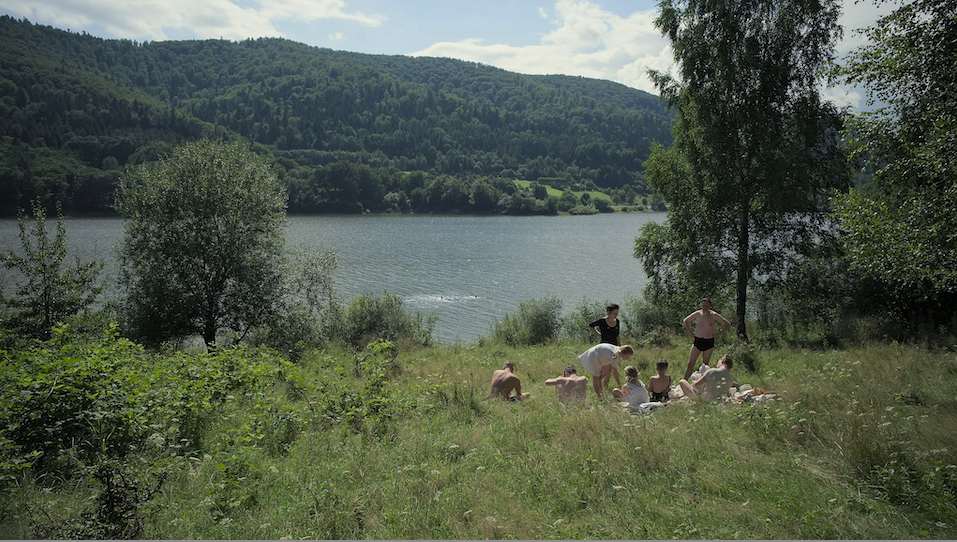
Ceres, Raymond. 2025. “Attempts at Cinematic Purity in the Digital Age,” Muhlenberg Visions. Volume 3, No. 1.
[1] I had been anticipating the release of director Jonathan Glazer’s film The Zone of Interest (2023), loosely adapted from the novel of the same name by Martin Amis, ever since it had been announced in 2019. Following delays because of the coronavirus pandemic and Glazer’s notoriously long post-production process, the film was finally released, almost ten years after the release of his previous film Under the Skin (2014), which garnered acclaim for being one of the best films of the decade.
[2] When a first-look image of The Zone of Interest was finally shared publicly, I eagerly clicked to see it and was in disbelief. I was already aware of and excited by the cinematographer attached to the project, Łukasz Żal, whose expressive and elegant black and white work for Paweł Pawlikowski’s Ida (2013) and Cold War (2018) both earned him Academy Award nominations. My immediate reaction to this first image was to question whether it was actually a shot from the film. I questioned whether it was yet to be color graded or if it was just some behind-the-scenes image captured on set.
[3] The still is in fact a shot from The Zone of Interest. (Figure 1) It is even the film’s opening shot; it is truly our introduction to the film’s visual language.
Figure 1: The opening shot of The Zone of Interest
[4] In hindsight, two aspects made this image difficult for me to process and accept: its content and its form. I knew that the film was about the Holocaust, so I was not prepared to be introduced to that topic with a serene image of a group of people enjoying a picnic along a riverbank. As for its aesthetic, I was shocked by its ordinary and uncinematic quality. It more closely resembles real life—not only because of the lack of any substantial color manipulation and its deep depth of field, but because of its modern, high-tech image quality. It is digital and pristine. Without any context, I would not have known that it was set in 1943. A more conventional approach to shooting this would perhaps feature film grain to evoke the past. However, that is precisely what Glazer refused to do. Glazer deliberately embraced the look of digital cameras with advanced resolution capabilities, as Żal has stated that he and Glazer wanted to see every pixel (Roxborough 25). Costume and production design elements were constructed from scratch in order for the film’s environments to appear as new as they would have been back then. The film’s aesthetic emphasis on modernity serves Glazer’s artistic goal of framing this historical story as a story of the present, so that audiences do not consider its themes as being in the distant past.
[5] Theorist André Bazin, who has been described as a “film purist,” believes it is the duty of a filmmaker to depict reality truthfully and supports the use of technology if it “enhances the spectator’s relationship with the image’s realist effect” (Conrich). With its sense of realism, The Zone of Interest exemplifies this idea, as its visuals are truthful to how the scene would look in person. In discussing cinematic realism, Lourdes Esqueda Verano writes, “cinematographic language is always evolving in keeping with the attributes of the given period: Realism is the general law of cinema, but it is relative to its material evolution” (Esqueda Verano 408). In this paper, I will closely analyze the unique visual language of The Zone of Interest to examine how it uses technology to enhance the image’s realist effect, thus marking a new kind of material evolution. With its innovative production methods and use of special effects, the film demonstrates the possibilities of new digital approaches to questions of realism and cinematic purity. Film scholars have already begun a conversation about digital approaches to these questions in response to the Danish film movement of Dogma 95, founded by directors Lars von Trier and Thomas Vinterberg. It should not be surprising that Dogma 95 has garnered attention from scholars, as its first film, Vinterberg’s The Celebration (1998), is considered the first commercial feature film to be shot digitally, and the movement came at a time when the death of the medium was being predicted as the new century approached, and special effects-heavy films dominated the mainstream (Lindqvist 431). Scholars are largely interested in the production methods dictated by the Dogma 95 Manifesto and how its films have embraced digital technology and its raw, home-video aesthetics, achieving documentary-like realism and performance naturalism—ideas that I will put The Zone of Interest in conversation with.
[6] The Dogma 95 manifesto has a particular idea of purity. Not to be confused with the discussion of purity and impurity in relation to whether film as a medium incorporates elements from other art forms, the idea of purity in Dogma 95 refers to stripping back cinematic conventions and rejecting tools that add cosmetic value. The aim of Dogma 95 is expressed by Vinterberg as “to undress film, to reach the ‘naked film’” (van der Vliet). In purifying the filmmaking process of many of its conventional image-making strategies, Dogma 95 seeks to focus on the basics of story and performance. While Bazin supports the use of technology that enhances the image’s realist effect, purifying can be understood as the avoidance of technology that would interfere with and manipulate the audience's interpretation of the reality captured.
[7] This idea of purity falls perfectly in line with The Zone of Interest’s “unaesthetic,” as cinematographer Żal puts it. While similarities can be drawn between Dogma 95 and The Zone of Interest’s stripped-back process, the film embraces technical and stylistic choices that Dogma 95 would forbid. It is important to consider how The Zone of Interest pursues new strategies, as Bazin argues that realism is a changing phenomenon. There are different kinds of realism that operate on different levels; as Cato Wittusen writes in “Bazin, an Early Late Modernist,” “realism is both an automatic effect and related to the conscious use of artistic means and cinematic techniques” (Wittusen 297). The more automatic effect of realism refers to technical, ontological, or photographic realism, which is the unique quality Bazin identifies as a fundamental characteristic of the photographic medium. But there is also an “aesthetic realism” that is more flexible, as films do not require a realist style despite their inherent photographic realism. Aesthetic realism, also referred to as “stylistic realism,” relies on technology and its use by filmmakers, and since technology is always advancing, there is always capacity for the evolution of aesthetic realism (Esqueda Verano 407-408). The Zone of Interest is a prime example; to understand how it expands on existing attempts at cinematic purity, I will explore how its aesthetic realism differs from that of Dogma 95 films, specifically Lars von Trier’s The Idiots (1998), to evaluate what is gained or lost in either approach. Despite their competing qualities, both approaches can be understood as valid, as there is not just one kind of cinematic realism. Esqueda Verano writes, “depending on the materials employed (CGI, live action, animation, or some hybrid of the three) we can judge how well that particular film has been realised, what added to or took away from its realism” (Esqueda Verano 416). To understand how these films use or do not use tools in service of aesthetic realism, it is also important to consider the intentions of the director.
[8] In portraying the ordinariness of the Nazi characters in The Zone of Interest, Glazer said that he wished not to “glorify or fetishize them by accident” (Roxborough 25). In another interview, Glazer explains:
[9] I found it really impossible to consider filming these characters in their world using the conventions of filmmaking—lights and lenses and the beautifying that happens, the glamorising. It became essential to find a language where I could retain a critical distance from these people without getting caught in their psychology, their interiority and all the things that cinema can do so well. I was trying to photograph this film in a way that felt like we were dropping into their lives in real time—staying away from any drama, just watching them move, watching them behave, and documenting it, really. I thought of it as a document more than a film. (Romney 56)
[10] The first-look image of The Zone of Interest perfectly encapsulates the critical distance Glazer describes. To achieve the film’s observational and objective quality, unique production strategies were devised with parameters that defy conventional cinematic techniques. For example, only natural light and practicals were used; lighting equipment was forbidden and never present on set. The most striking strategy employed, launching the production and its crew into an unfamiliar workflow, is that many of the film’s scenes were shot with 10 static cameras rolling simultaneously. To achieve 360 degree coverage, the cameras would sometimes be visible within the frame, but they were all digitally removed during post-production. In this way, the team did not have to compromise on the exact camera angles they wanted. A 10 camera workflow for an entire feature film, generating nearly 10 times the amount of footage that would typically be shot, as well as the CGI removal of cameras visible in the frame, are ways in which The Zone of Interest takes advantage of the possibilities of digital filmmaking technology (“Filming ‘The Zone of Interest’”).
[11] Glazer’s rethinking of the filmmaking process, informing the creation of a set of rules and limitations, is what led me to make a direct connection between The Zone of Interest and Dogma 95’s “Vow of Chastity,” which lists 10 rules that must be followed in order for a film to be certified as a Dogma 95 film. What particularly interests me about this connection is that, despite the similarities between The Zone of Interest and Dogma 95 films, we see radically different and oppositional methods between their production strategies and visual styles. Yet both approaches have been described by film critics and scholars with the same—perhaps too general—terms, such as “documentary-like,” to indicate their realistic styles. The Zone of Interest aligns with some of the Dogma 95 rules, such as “Shooting must be done on location” and “Special lighting is not acceptable” (Schaefer 77-78), while disobeying several other rules, thus challenging the movement’s idea of purity. The most obvious formal difference is that Dogma 95 requires handheld camerawork, while The Zone of Interest’s visual language mostly consists of static wide shots.
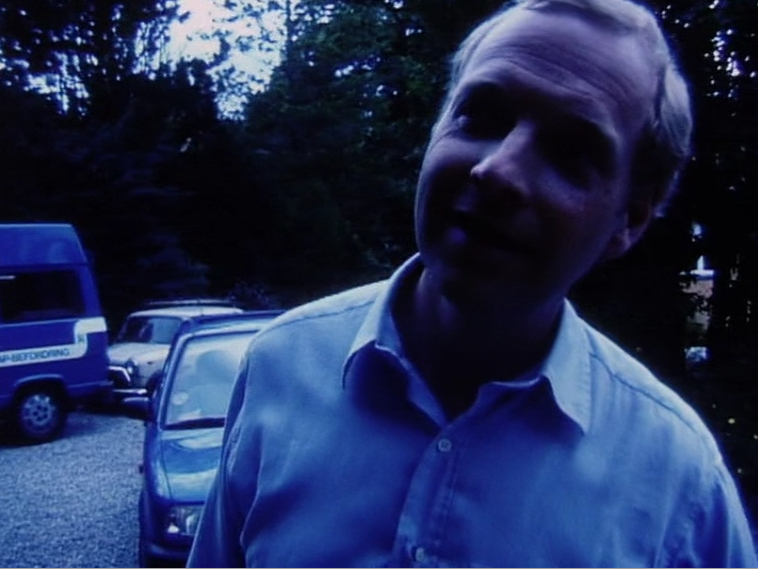
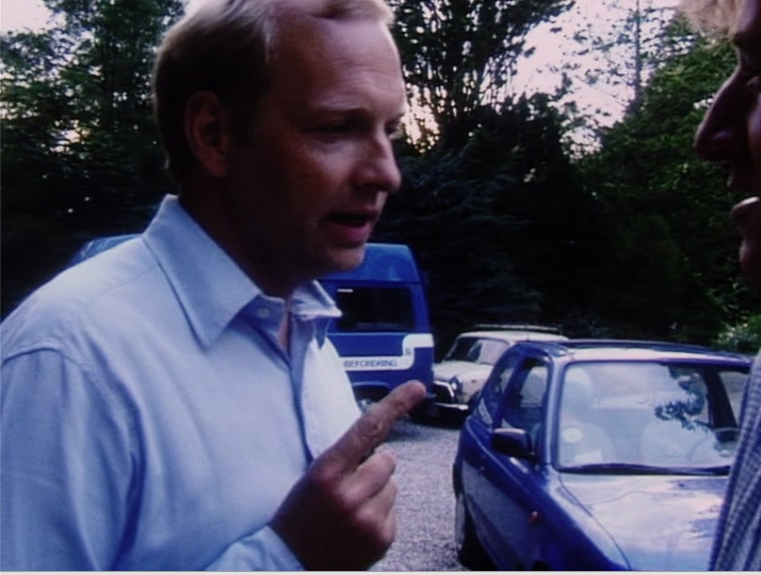
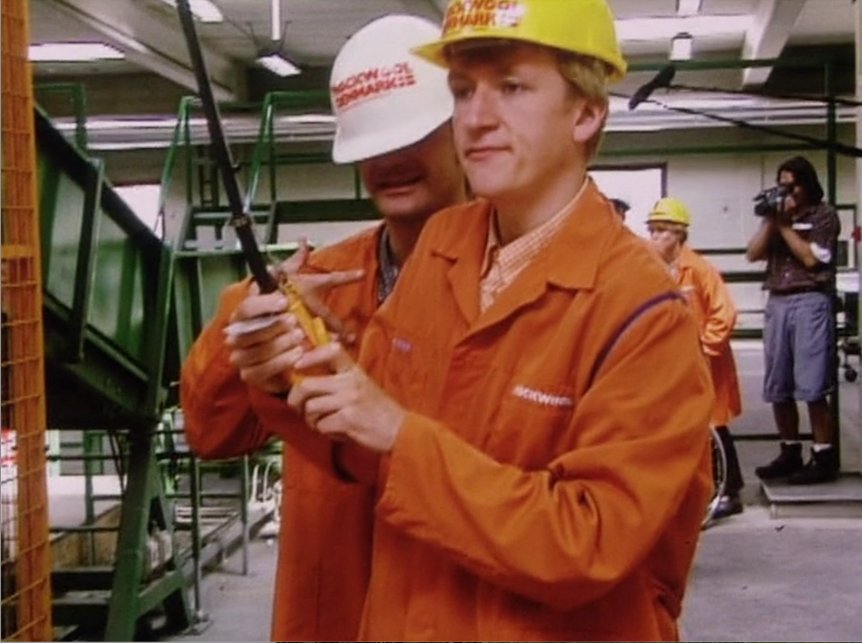
[12] I will first provide an overview of von Trier’s The Idiots to illustrate the existing contributions Dogma 95 has made to digital-age experimentation and its scholarly interpretations. The controversial film The Idiots, the second official Dogma 95 release, follows an intellectual commune of adults who seek to challenge societal norms by pretending to be mentally disabled. The characters engage in behavior such as throwing rocks through windows, disrupting public environments with their “spassing” or “spazzing” (offensive words derived from the Danish spasser or English spastic, a derogatory term describing someone with brain or muscular degeneration or palsy), and sloppily eating and playing with caviar in order to find their “inner idiot.” The film’s narrative aligns with Dogma 95’s anti-bourgeois position on filmmaking, in favor of the democratization of the medium and of liberating filmmakers from cinematic conventions. As the characters embrace a messy and improper lifestyle, so does the film’s aesthetics. The reason I am drawn to analyzing The Idiots over the more acclaimed Vinterberg film The Celebration is that von Trier showcases a far more extreme commitment to what I consider to be the most radical condition of Dogma 95: to liberate filmmaking from “good taste” (Schaefer). With its offensive narrative aside, The Idiots demonstrates an utter disregard for formal precision. For example, when the character Stoffer steps out of the house into a new, exterior environment, the film cuts to a brief shot of his view at 1:01:35 in which the camera’s white balance is suddenly blue and unbalanced. (Figure 2) Next, there is a jump cut within this same scene, location, and timeframe, and the white balance is suddenly balanced and neutral. (Figure 3) It is likely that the camera was using auto white balance settings and took a moment to adjust to the new environment sometime between the jump cut from the unbalanced shot to the balanced shot. Matching the white balance of the two shots would be an easy correction in post-production, but the Manifesto forbids this layer of post-production polish.
Figure 2: The first shot of a new exterior location in The Idiots is blue-tinted
Figure 3: A second shot, a moment later, shows the color beginning to balance
[13] While this is an amateur “mistake,” this is not the work of amateur filmmakers (Ostrowska 65). These formally trained filmmakers are aware of the consequences to white balance when suddenly changing lighting conditions, but their focus is deliberately on the immediacy of the performance over the time it would take to prepare and account for these technical aspects. In their article “‘Take Back the Tube!’: The Discursive Construction of Amateur Film and Video Making,” which analyzes how amateur filmmakers are aided by automatic technology, David Buckingham, Maria Pini, and Rebekah Willett quote Malcolm Squires, author of The Camcorder Handbook (1992), saying that: “[camcorders’] capacity to ‘think for you’ means that you can spend less time worrying about technology and more concentrating on good video-making,” (Buckingham et al. 189). Dogma 95 thrives on this technological advantage; the simple ability to produce an exposed image without technical knowhow is not just groundbreaking for amateur filmmaking, but also for experienced camera operators to choose being present with an actor rather than contemplating technical settings.
[14] Lars von Trier’s role as director and filmmaker is practically interchangeable with the role of camera operator, as he performed the handheld camerawork for roughly ninety percent of The Idiots. The handheld camera’s effect here has been described in a variety of ways. In “Naked Film: Stripping with The Idiots,” Emma van der Vliet describes this camerawork as “truth-seeking,” as von Trier “was not composing the shots but ‘seeking out content’ and ‘pointing’ at it with the camera” (van der Vliet). The film’s production approach services its heavy use of improvisation and lack of blocking or marks for the actors (Thomson). Improvised events occur and the camera reacts. In his book An Edgy Realism: Film Theoretical Encounters with Dogma 95, New French Extremity, and the Shaky-Cam Horror Film, Jerome Schaefer quotes Caroline Bainbridge talking about the central role of the camera in The Idiots, claiming that the action is “unfolding before it as if it were ‘live’” (Bainbridge quoted in Schaefer 84). Scholars understand that the camera is an active presence in the space inhabited by the actors, as if the camera is a participant. Its human touch, an extension of the camera operator’s eye and intuition, is influential to the film’s aesthetic realism. Van der Vliet writes that the camera is “alive,” while in “Non-Cinema: Digital, Ethics, Multitude,” William Brown associates this “sense of ‘liveness’” with the film’s shaky camera movements (Brown 122). Ursula Lindqvist writes in A Companion to Nordic Cinema that Dogma 95 adopts the language of cinéma vérité—famous for its employment of technological advancements such as lightweight cameras and sync sound—signifying a “documentary aesthetic” (Lindqvist 430). In search of actions and truth rather than “nice” frames, The Idiots owns its rough and raw aesthetic. The film embraces low image quality, harsh grain, lighting inconsistencies, and areas of underexposure and overexposure.
[15] Of all the characteristics that indicate The Idiot’s disregard for good taste, the most notable example is that we repeatedly see shadows of boom poles as well as the boom poles physically within the frame, along with the reflection of cameras and camera operators. The camera and camera operator also appear physically within the frame. (Figure 4) While these are glaring errors by professional standards—errors that typically would delegitimize a film as an amateur work that is not worth being taken seriously, thus threatening its potential for immersiveness—here it is intentional and in accordance with the rule against good taste established prior to the film’s production. The filmmakers are simply not concerned with these factors, which are thus not treated as errors. While The Idiots was not taken as seriously upon its release, the film has garnered praise for its realism due to the filmmakers’ choices.
[16] Van der Vliet offers a way to understand the realist effect of these “errors” themselves by connecting the on-screen presence of the cinematic apparatus in The Idiots to Morwenna Crago’s scholarship on Big Brother and reality TV—which van der Vliet considers to be a more modern take on the cinéma vérité approach. Van der Vliet argues The Idiots is more closely related to a show like Big Brother than to cinéma vérité. She includes a quote by Crago: “it seems possible that series such as Big Brother are assisting in the development of new interpretive frameworks that allow the presence of the cinematic apparatus on-screen” (van der Vliet). In this way, van der Vliet raises the idea that the supposed “errors” of seeing a boom or a camera within frame in The Idiots can actually be understood as an “indicator of authenticity.” The visibility of the cinematic apparatus communicates transparency about the filmmaking process, and audiences can learn to accept and associate it as a visual cue that indicates realism; the credibility of the film remains intact. Shaky camera movement is also considered an indicator of authenticity.
Figure 4: A camera operator/camera and boom pole appear at right of frame in The Idiots
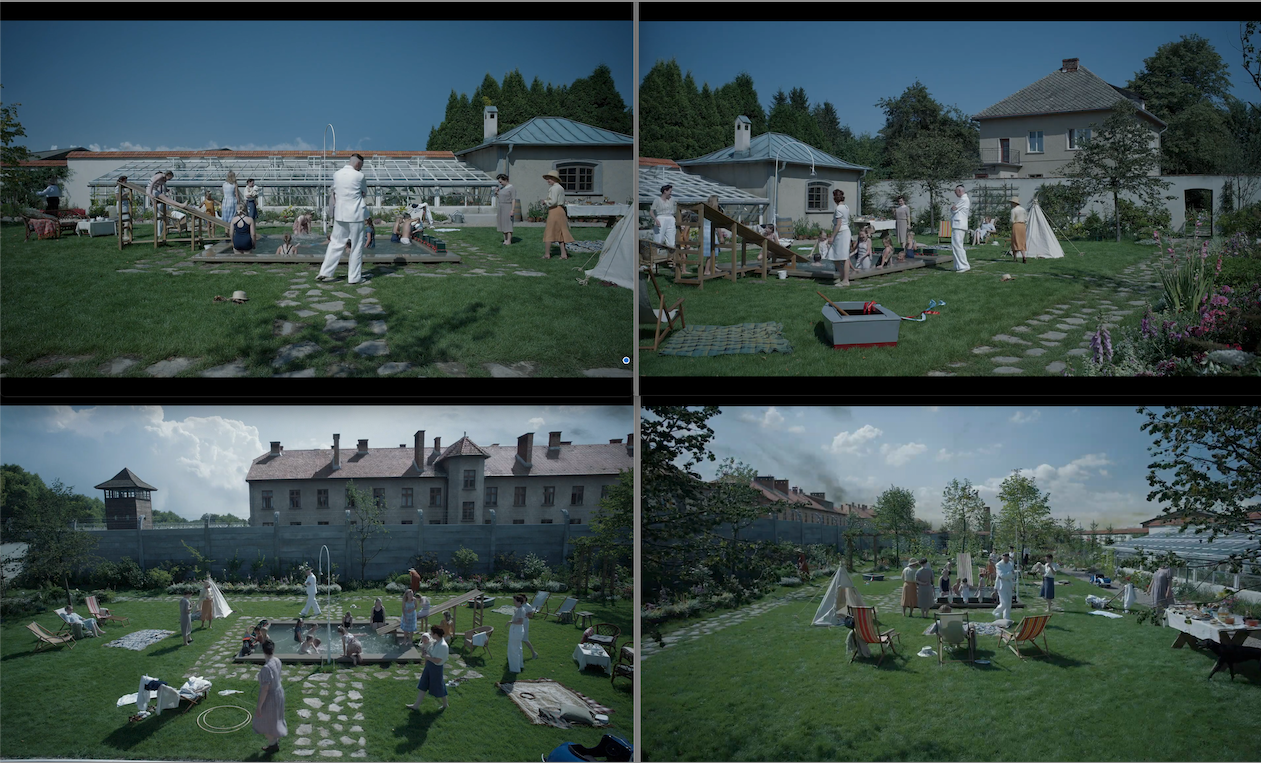
[17] Later in his career, Bazin became interested in live broadcasting and the unique viewing experience it offers—with its inherent risks due to its unpredictability and potential for “slip ups”—which differs from a non-live visual medium with editing potential (Andrew 13). Despite allowing editing, Dogma 95 pursues and embodies this rough, live immediacy and unpredictable nature—qualities imbued in its aesthetic realism. This context further explains how connections have been drawn between The Idiots and a reality show like Big Brother.
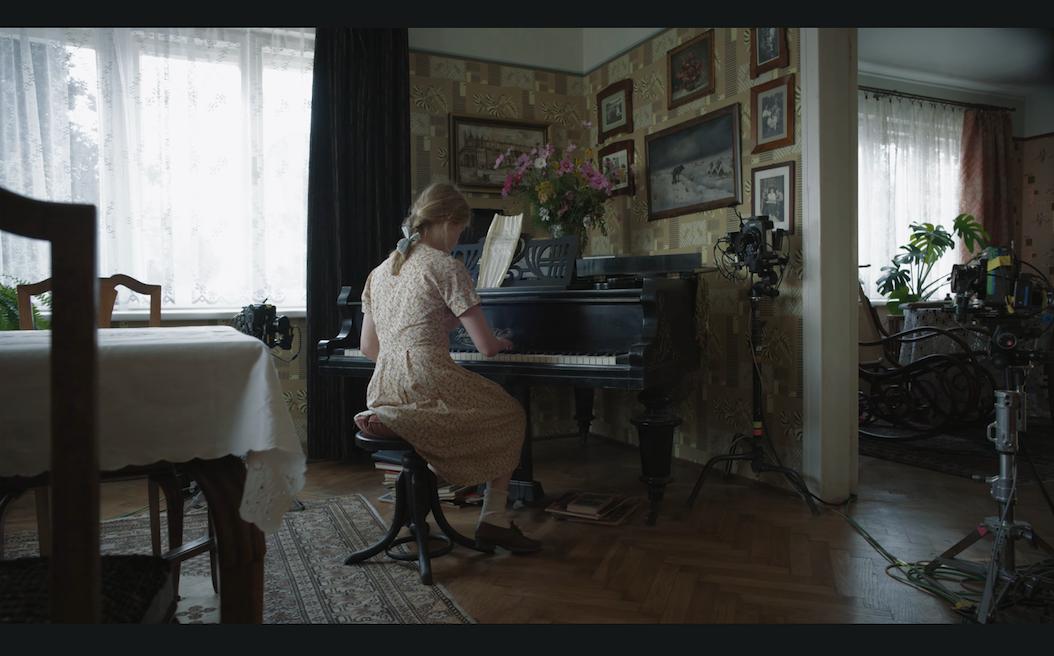
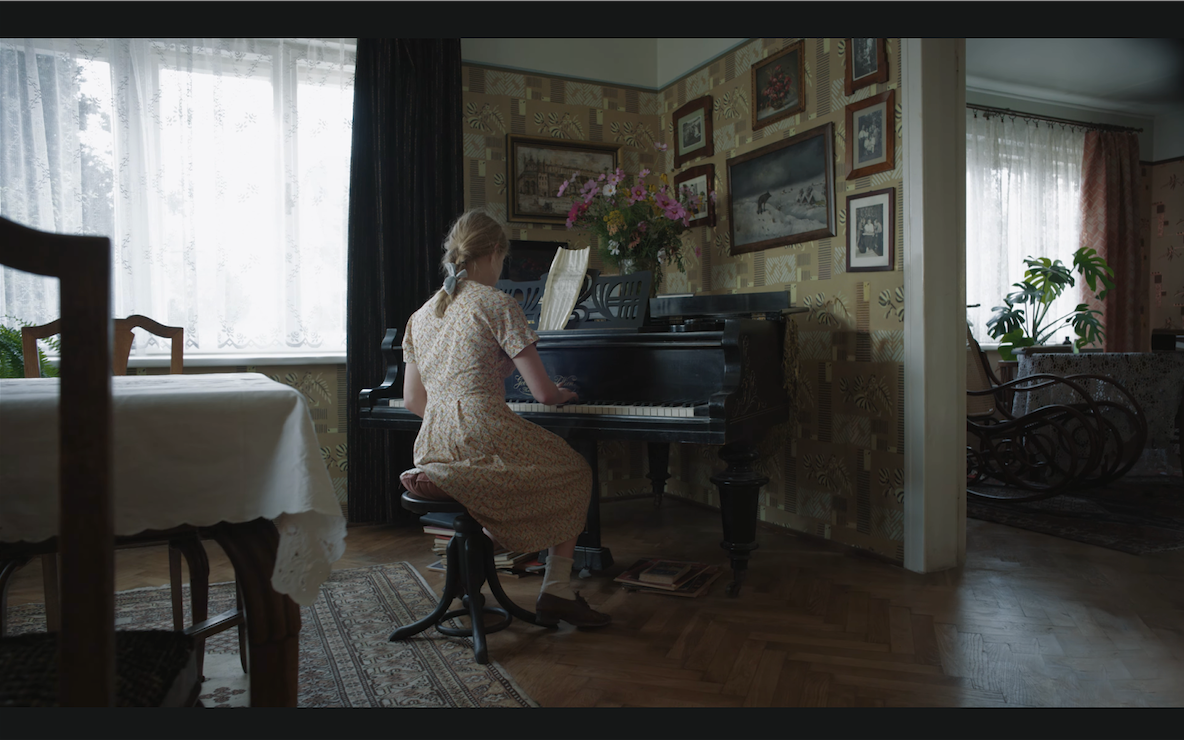
[18] The Zone of Interest’s production challenges many Dogma 95 ideals and builds upon the foundation of its scholarly discussions in a variety of new ways. The film follows Rudolf Höss, the real life commandant of Auschwitz, and his wife Hedwig. Most of the film takes place at their house and property, which sits right outside the walls of a concentration camp; we are never offered a glimpse of the horrors on the wall’s other side. We instead stay with Höss’s family and follow their everyday, ordinary lives while hearing a constant stream of sounds from the other side of the wall, such as screams, the roar of furnaces, and gunshots. The members of the Höss family never stop to acknowledge these sounds. They simply are not bothered by them and continue on with their conversations, chores, and festivities.
[19] It would be difficult to find a review of The Zone of Interest that does not acknowledge the film’s exploration of the banality of evil. The film’s plot centers on characters who are focused on raising a family and moving up the career ladder. The audience is forced to bear witness to their relatable human wants and ordinariness—in the simultaneous context of their nonchalant complicity in unthinkable evil. The film’s goal by narrative design, in addition to the film’s aesthetic “present tenseness,” serves to make the audience members reflect on their own capacity for evil, and even scarier, their current complicity in modern evils (Chagollan 75).
[20] To describe the camerawork of The Idiots, van der Vliet writes, “This is not a clinical, detached observing eye at work” (van der Vliet). But this description does fit Glazer's approach to The Zone of Interest: a fly-on-the-wall approach. While scholars have written about the human presence tied to the close-up, handheld aesthetics of The Idiots, The Zone of Interest’s coverage is primarily achieved through the use of static wide shots, and Żal says, “We didn’t want the audience to feel anybody behind the camera” (Emmons). The operators of the static cameras were not present on set during the shooting. While the camera of The Idiots is active and participating, The Zone of Interest’s camera is passive and observational. Rather than searching for content, as the camera of The Idiots interrogates the actors with uncomfortably tight close ups and zooms, The Zone of Interest utilizes compositions and lenses that are wide enough to capture content. In this way, the filmmakers leave room to capture improvised moments. While von Trier has faced criticism for his treatment of actors and invasive camera gaze, especially with more intimate scenes, The Zone of Interest aims not to impose a human presence. In pursuit of objectivity, The Zone of Interest frames shots geometrically; as Żal put it, “We were looking for geometry, simplicity, and having the actors in the center. That’s how we see with our eyes” (Żal quoted in Challogan 77). This rule removes a degree of creative consideration toward framing decisions, thus preventing a subjective human trace on the film’s aesthetic. The use of wide-angle lenses and deep depth of field align with the preferences of Bazin, who is “An advocate of the depiction of an ontologically ambivalent screen reality in which the viewer is free to select from the image” (Conrich). To Bazin, these choices enhance the image’s realist effect.
[21] While still using wide-angle lenses, The Zone of Interest occasionally employs dolly shots in order to follow and capture the side profiles of characters walking down a straight path. I believe this was done to position movement across the x-axis, emphasizing visual flatness rather than creating depth with characters crossing the z-axis if the camera faced their front or their back. Following this logic and limitation in coverage options, if not for a dolly movement, the shot would have to be extremely wide to capture the length of the distance the character travels across, which aesthetically imposes too great a suggestion of meaning.
[22] While some comparisons have been drawn between The Idiots and Big Brother, even more reviews compare The Zone of Interest to Big Brother, suggesting an even further development in this reality-TV-like realism. Glazer himself even refers to the multiple camera setup of The Zone of Interest as “Big Brother in a Nazi house” (Roxborough 27). An early scene illustrates the film’s multiple camera approach, in which a maid to the Höss family readies a shot for Rudolf Höss to take following his meeting. Her task begins in the dining room, where she gets and pours the liquor, and ends with her setting the shot on a table outside the house on their porch. Across the distance she travels throughout the property, static cameras are planted to capture her movement as she walks down the corridor, passes by Hedwig and her friends seated in the kitchen, and passes by the closed room where Höss holds his meeting. As the actress playing the maid performs the entirety of her actions while all of the cameras are rolling simultaneously, there are also at least five cameras planted inside the room where Höss holds his meeting. As the maid’s scene is recorded, the meeting is also performed and filmed simultaneously, in real time. There are additional camera angles planted in the kitchen once Hedwig and her friends rise to look out the window as Nazi officers approach the house. All of these actions across different spaces in the house are performed and filmed simultaneously, removing the need to adjust camera positions or lights—or to have crew present to perform those tasks. There are only the actors and the cameras, eliminating distractions and allowing for more natural, unbroken performances. Despite its editing process, this filming style is similar to the live quality of TV that interests Bazin.
[23] While this example places cameras throughout the house, this same strategy is used in more contained settings, allowing for full 360 degree coverage. This extent of coverage amounts to an even more impressive commitment to the detail offered in widescreen. This is Glazer’s largest contribution to the idea of realism being relative to material evolution. The scene where the Höss family hosts a pool party in their backyard demonstrates the unique approach of multiple static, wide-angle lens cameras to achieve 360 degree coverage.
Figure 5: Multiple angles on a pool party in The Zone of Interest
[24] The entire backyard is under intense observation with every detail in sight shown from multiple angles, achieving an uncanny quality of surveillance. In the shot progression seen above, each angle was recorded simultaneously. (Figure 5) Evident here as an exterior sequence, this simultaneous coverage allows the film to maintain visual consistency while upholding its rule to only use natural lighting. The Idiots is bound by the same rule but deals with it by simply being unconcerned with visual consistency. Due to the simultaneously rolling coverage and distant, wide-angle cameras that leave nothing hidden, the cameras in The Zone of Interest were visible within each frame and had to be digitally removed in post-production. (Figures 6 & 7) This presents a clear opposition to the visibility of the cinematic apparatus found in The Idiots.
Figure 6: Raw still from The Zone of Interest with 3 other cameras visible within the frame
Figure 7: Final composited still with the other cameras removed from the frame
[25] In his introduction to Bazin’s writings on new media, Dudley Andrew writes about Bazin’s fascination with live broadcasting, noting that “Bazin writes about British experiments with four cameras that permit the ‘switching’ of points of view within pure continuity; the ‘TV switcher’ is completely distinct from the film editor who assembles an illusion of continuity from fragments” (Andrew 13-14). The Zone of Interest is able to make progress in adapting these realist qualities of live broadcasting to the medium of film, as the only illusion is in the removal of the apparatus. The illusion has nothing to do with the content of the shot, and the photographic realism of the content is maintained across all angles.
[26] In “Intensified Continuity: Visual Style in Contemporary American Film,” David Bordwell describes attempts at shooting with multiple cameras, a technique popularized in the 1970s; however, it “often required long lenses in order to keep cameras out of range of one another” (Bordwell 18). The Zone of Interest’s usage of visual effects allows the filmmakers to not have to compromise on the exact framing and lens selections they wanted for each shot, as interference between the cameras capturing one another was never an issue.
[27] While the production methods of The Idiots force the film into a discontinuous aesthetic with constant jump cuts, due to its coverage primarily capturing spontaneous moments of improvisation rather than scripted scenes with traditional, predetermined blocking and coverage, The Zone of Interest’s production methods enable not just seamless continuity, but perfect continuity. In the previous example of the pool party scene, with many extras actively moving around (including children as well as a dog), perfect continuity is maintained between all of their movements, greatly enhancing the film’s realist effect. If a specific performance take in the film was preferred, that performance was captured by all of the angles; no fabrication is necessary to stitch different takes together to create the illusion of a cohesive performance. In this way, The Zone of Interest creates a unique kind of perfectionism in total opposition to Dogma 95’s embrace of imperfection. While this filming strategy leaves the editor with an overwhelming amount of footage, it also offers an overwhelming number of possibilities, freeing the editor from the challenges and obstacles of continuity. The film’s editor Paul Watts operates more like a TV switcher, minus the pressure of live broadcasting. Watts says, “I didn’t have to worry about where the opportunities were to cut. It wasn’t where do I have to cut? The opportunity was: where do I want to cut?” (“Filming ‘The Zone of Interest’”). On the other hand, The Idiots was forced to cut in certain ways and places, demonstrating that there are limits to the appeal of the freedom it proposes to filmmakers. Von Trier discussed post-production limitations with sound, noting that:
[28] During shooting, it turned out that the Dogma '95 rule that sound and picture must not be produced separately was very interesting. This means we often edited according to the sound instead of the picture, because if you required a particular sound or cue, you had to use the picture that accompanied it. (Thomson)
[29] While this lack of freedom is perhaps welcomed by the movement’s interest in experimentation, it is not as applicable for films that are concerned with good taste—which is the bare minimum for many professional filmmakers.
[30] There are merits to the imperfections of Dogma 95; William Brown discusses “how digital movies often deliberately insert flaws in order to hide their perfection” as a result of nostalgia for the qualities of analog film (Brown 115). The Zone of Interest is forward-thinking in its embrace of the perfectionist potentials of digital cinema, even as a historical film. However, the larger issue is that humans are imperfect beings, and it may prove harder for the audience to emotionally connect with perfectionist art. While perfect continuity is the most compelling gain from Glazer’s approach, its cold and clinical execution also has a downside: emotional detachment and even alienation.
[31] In the film’s post-production workflow, Paul Watts edited The Zone of Interest prior to the special effects work that removed the cameras from the frames. Reflecting on his reaction to finally seeing the finished results after the visual effects work was added, Watts says, “it created an almost impossible viewing experience somehow. The fact that, you know, there are these different perspectives to be had on a scene but no recording devices in sight. It just, I guess, made it all the more uncanny” (“Filming ‘The Zone of Interest’”). I am drawn to the sense of impossibility evoked by the film’s coverage. The creation of this wealth of shots suggests an omniscient force that is greater and far more detached from the grounded human perspectives of coverage via a camera operator or even a single static camera. With the use of multiple cameras, the point of view impossibly travels and teleports through space while not interfering with the performances and actions it depicts. The camera is physically present in the reality captured by other cameras—this relationship is embedded in all of the footage—yet is invisible in the film due to subtle visual effects work. The entire cinematographic process is clouded with this illusion, as the cinematic apparatus is physically part of the reality it signifies.
[32] Concerns have been raised with digital effects films; Martin Lefebvre quotes Winston Wheeler Dixon in “Digital Editing and Montage: The Vanishing Celluloid and Beyond,” as saying that, “Perhaps one of the most disturbing aspects of the new wave of digital effects films… is that they do not seem—at first glance—to contain effects at all.” Lefebvre worries that as “the real and the synthetic, the true and the false… become impossible to differentiate, as the photograph loses its specific value and identity, our capacity to access reality, to acquire reliable knowledge, to establish certainties, is eroded” (Lefebvre and Furstenau 91). The Zone of Interest opens new conversations with its digital removal of the camera itself, as its effects do not disturb the content of the film. The Zone of Interest, and equally Bazin, care more that the actor is not manipulated.
[33] In discussing compositing in a film like Gladiator (2000), to achieve the illusion of the lead character Maximus fighting real tigers in the Colosseum, Lefebvre raises the idea that the audience watches this scene with an understanding that the actor Russell Crowe, who plays Maximus, was not actually fighting real tigers (Lefebvre 89). In our viewing of this scene, we the audience know that this would have been logistically impossible, but the scene may inspire curiosity and interest for how it was achieved. Unlike Gladiator, the special effects work of The Zone of Interest does not call attention to itself, as the audience likely does not even notice the impossibilities. It is a more subtle, ambiguous, confusing, and potentially offputting example of apparent visual impossibility for audiences, especially if they are unaware of the methods used and cannot articulate their uncanny viewing experience.
[34] While the digital age has raised concerns of special effects being used in service of spectacle, The Zone of Interest uses special effects in order to heighten its realist effect. The film creates a new language of aesthetic realism in which an illusion is created through the digital removal of the cinematic apparatus itself. In Crago’s terms, The Zone of Interest offers a new framework of realism. Perhaps in the future, with more awareness and development, its uncanny effect may disappear. Dogma 95 epitomized digital age experimentation and has garnered a high degree of scholarly interest, and The Zone of Interest is a contemporary film that challenges and expands the existing conversations, especially with its unique, experimental, and innovative use of special effects. Von Trier has explicitly stated that Dogma 95’s proposal is more of a suggestion and inspiration than a strict set of guidelines to follow, encouraging filmmakers to create their own rules and reimagine what the filmmaking process can look like (Lindqvist). Glazer successfully follows this tradition and opens discussions of the merits of total perfectionism versus total imperfection. Both Glazer’s The Zone of Interest and von Trier’s The Idiots react to the possibilities of digital filmmaking technology—with The Zone of Interest taking advantage of its quantity of cameras. While both productions offer liberations, freeing us from the limitations of continuity and good taste respectively, they also offer limits; coldness in The Zone of Interest, and discontinuity and unmarketability in The Idiots. I believe it is easier to potentially see progress on the limits found with the production methods of The Zone of Interest.
[35] After the long, emotional, and stressful process of creating The Zone of Interest, Glazer says his next film will be about “tenderness—how tender we can be as well.” (Rothkopf). What could this look like if it were approached using a similar multiple camera strategy? Glazer used multiple camera setups in Under the Skin to capture an alien engaging with public bystanders and in The Zone of Interest to capture a distant and objective kind of observation. With the latter immediately, and more universally, hailed as a masterpiece and instant classic, I am curious how its strategies may be adopted or adapted in future film productions. How might future technological advancements further enhance the foundations created in the film’s production? I wonder if Glazer’s multiple camera approach, used in his previous two films to offer a detached look at humanity, could be executed in a more warm or emotional way—or in a way that lacks the less-mainstream connotations of experimental and art cinema. Perhaps a similar approach can be achieved using more telephoto lenses or integrating camera operation. Given Jonathan Glazer's unconventional taste and penchant for experimentation I am curious as to what processes he will adopt in future to offer us new versions of reality.
Andrew, Dudley, ed. 2014. Introduction: Andre Bazin Greets the New Media of the 1950s, in André Bazin’s New Media. Translated and edited by Dudley Andrew, University of California Press: 1-34.
Bazin, André. “The Aesthetic Future of Television.” André Bazin’s New Media. Translated and edited by Dudley Andrew. University of California Press: 37-43.
Bordwell, David. 2002. “Intensified Continuity: Visual Style in Contemporary American Film.” Film Quarterly 55 (3): 16. https://doi.org/10.1525/fq.2002.55.3.16.
Brown, William. 2016. “Non-Cinema: Digital, Ethics, Multitude.” Film-Philosophy 20 (1): 104–30. https://doi.org/10.3366/film.2016.0006.
Buckingham, David, et al. 2007. “‘Take Back the Tube!’: The Discursive Construction of Amateur Film and Video Making.” Journal of Media Practice 8 (2): 183–201. Online at: https://doi.org/10.1386/jmpr.8.2.183_1.
Chagollan, Steve. 2023. “The Zone of Interest: Next Door to Evil.” American Cinematographer 104 (12): 68–77. Online at: https://www.nxtbook.com/nxtbooks/ac/ac1223/index.php?startid=2&qs=The+Zone+of+Interest%3A+Next+Door+to+Evil#/p/68
Conrich, Ian, and Estella Tincknell. 2000. “Film Purity, the Neo-Bazinian Ideal, and Humanism in Dogma 95.” P.O.V. No. 10, December. Online at: https://pov.imv.au.dk/Issue_10/section_4/artc7A.html
Emmons, Seth. 2024. “Lukasz Zal, PSC Captures The Zone of Interest with Leitz M 0.8 Lenses.” Leitz. Online at: https://www.leitz-cine.com/interview/lukasz-zal-psc.
Esqueda Verano, Lourdes. 2022. “There Is No Such Thing as One Realism: Systematising André Bazin’s Film Theory.” New Review of Film & Television Studies 20 (3): 401–23. https://doi.org/10.1080/17400309.2022.2088979.
Cinematographers on Cinematography. 2024. “Filming ‘The Zone of Interest.’” Youtube. Online at: https://youtu.be/er8YBqdVorI?si=AGNmAXWnnf9XZyxV.
Klaver, Zachary. 2013. “The Ideological Effects of Intensified Continuity.” Film Matters 4 (30: 17–22. https://doi.org/10.1386/fm.4.3.17_1.
Lefebvre, Martin, and Marc Furstenau. 2002. “Digital Editing and Montage: The Vanishing Celluloid and Beyond.” Cinémas 13 (0.5): 69–107. https://doi.org/10.7202/007957ar.
Lindqvist, Ursula. 2016. A Companion to Nordic Cinema. Edited by Mette Hjort, John Wiley & Sons Inc.
One of Us VFX. 2024. “The Zone of Interest VFX Breakdown Showreel.” Youtube. Online at: https://youtu.be/twTO_kfIwyo?si=b5XTW6LHKYmsqZXI
Ostrowska, Dorota. 2004. “Purity and Provocation: Dogma 95 (Book).” New Cinemas: Journal of Contemporary Film 2 (1): 65–66.
Romney, Jonathan. 2024. “‘That’s the Horror—There’s Nothing Remarkable about These People at All.’” Sight & Sound 34 (2): 56–60.
Rothkopf, Joshua. “‘The Zone of Interest’ Took a Decade of Work. Its Director Will Never Be the Same.” Los Angeles Times. Online at: https://www.latimes.com/entertainment-arts/movies/story/2024-01-11/jonathan-glazer-int erview-zone-of-interest-auschwitz-holocaust
Roxborough, Scott. 2023. “The Zone of Interest.” Hollywood Reporter 429 (34A): 24–29.
Schaefer, Jerome P. 2015. An Edgy Realism: Film Theoretical Encounters with Dogma 95, New French Extremity, and the Shaky-Cam Horror Film. Newcastle upon Tyne: Cambridge Scholars Publishing.
Thomson, Patricia. 2000. “‘The Idiots Plays by Von Trier’s Rules.” American Cinematographer 81: 21–26. Online at: https://www.nxtbook.com/nxtbooks/ac/ac200001/index.php?startid=21&qs=The+Idiots#/p/20
Van der Vliet, Emma. 2009. “Naked Film: Stripping with The Idiots.” Post Script: Essays in Film and the Humanities 28 (3): 14–30. Online at The Free Library: https://www.thefreelibrary.com/Naked+film%3a+stripping+with+The+Idiots.-a0211362421
Wittusen, Cato. 2019. “Bazin, an Early Late Modernist.” The Journal of Aesthetics and Art Criticism 77 (3): 295–306. https://doi.org/10.1111/jaac.12648.
Wolf, Mark. 1991. “Eisenstein, Bazin, and Kracauer on HDTV.” Spectator: The University of Southern California Journal of Film & Television 11: 72–77.