[0.1] Abstract - Are horror films just about cheap jumpscares and scare tactics? Or do they go deeper? In this paper, I will argue that horror films serve as a productive metaphor for our fears and traumas, both personal and communal. I will also argue that the viewing of horror films can act as a therapeutic tool, helping audiences conquer their inner demons.
[0.2] Keywords - Horror, horror films, art horror, trauma, psychology, monsters, fear, feminist horror, Ari Aster, gynaehorror
Biggs, Lindsey. 2025. “Fear Made Flesh: Horror Imagery and Narrative as it Represents Emotional Trauma,” Muhlenberg Visions. Volume 3, No. 1.
[1] Introduction
[1.1] In the 2022 horror film Smile, Rose, a psychotherapist, treats a patient presenting with hallucinations and delusions. The patient claims that, ever since her professor brutally took his own life in front of her, she has been followed by a demonic entity that plagues her, making her hallucinate and slowly go insane. In the examination room, the patient points behind Rose, exclaiming “It’s here!” She collapses to the ground, screaming. Suddenly, she rises with an eerily wide smile on her face, promptly grabs a shard of glass, and slits her throat in front of Rose, leaving the demonic entity to haunt Rose instead. Over the course of a week, Rose slowly succumbs to the demon as it torments her with images and hallucinations of her traumatic past.
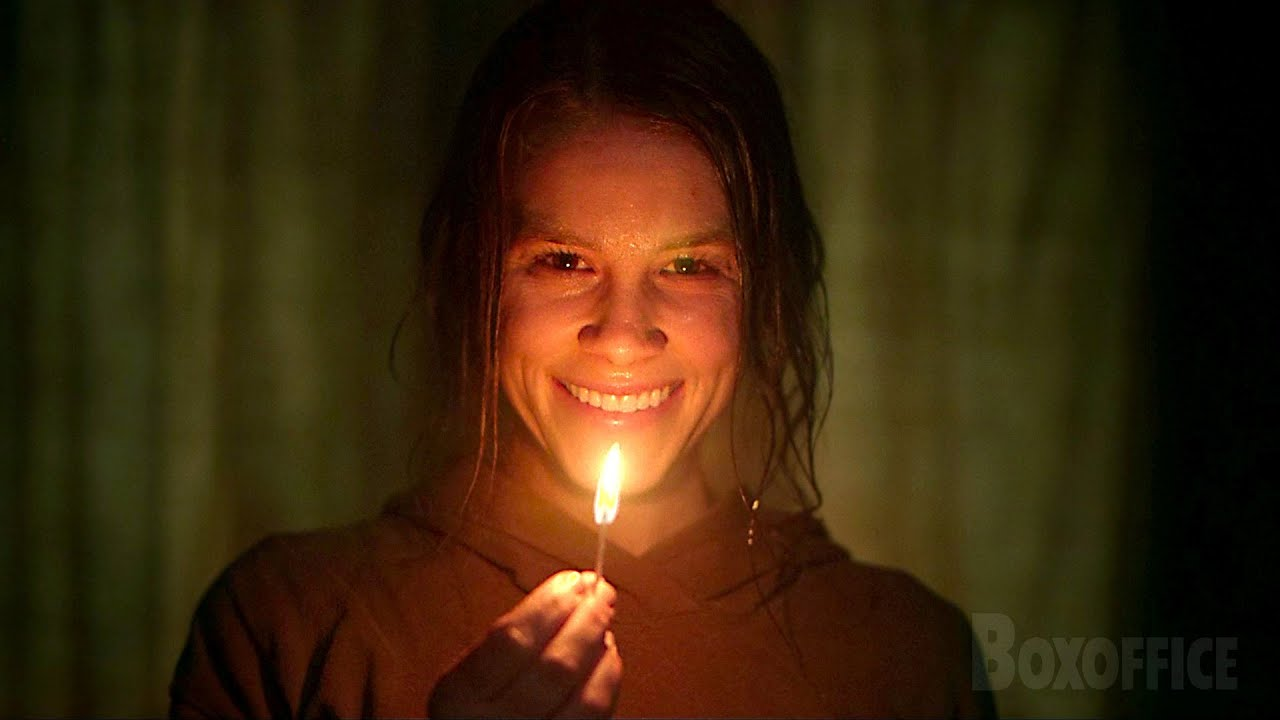
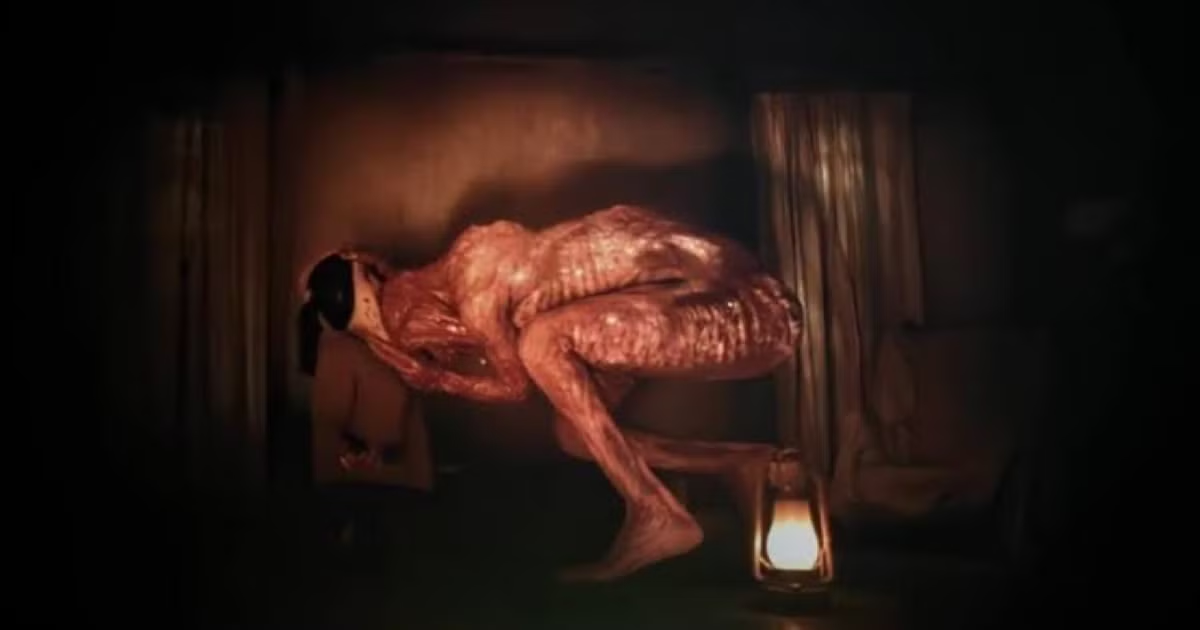
[1.2] In the film’s climactic end scene, Rose confronts the demon head-on as it reveals itself in its true form - a tall, deformed humanoid figure with rows and rows of teeth and thin, translucent skin. Rose is no match for the demonic entity, and it grabs her by the jaw, forcing her mouth open and shoving its entire body into her mouth. (Figure 1) Newly possessed, “Rose” (or rather, the demon) turns to the nearest person with a wide and unnatural smile plastered on her face. Maintaining her off-putting smile, she douses herself in gasoline and lights a match, passing the demon onto yet another innocent bystander.
Figure 1: End scene where the demon possesses Rose in Smile (2022)
[1.3] Smile has the most clear, cut-and-dried representation of psychological trauma that I, personally, have ever seen in cinema. The demon is, very obviously, a metaphor for emotional trauma, and the film invites audiences to consider their own inner turmoil. Smile is just one example of horror providing a literal manifestation of emotional trauma, but the vast majority of horror films do this. In fact, horror as a filmic genre is mainly concerned with the working through of trauma via terrifying imagery and narratives, aided by formal elements such as lighting and mise-en-scene. Because of this, horror films often function as a sort of therapeutic outlet through which viewers can better their own relationships with their inner turmoil - but how exactly do they do it?
[2] History
[2.1] To understand how horror allows us to interact with and process our own traumas, we must first understand the origins and history of the genre itself, as well as the evolution of societal and scientific attitudes surrounding mental health and psychological trauma. In his essay, “Horror and Psychoanalysis: An Introductory Primer,” Chris Dumas delves into the intersection of the cinematic genre of horror and our deep-seated psychological anxieties and traumas. He highlights how horror, as a genre, operates within our unconscious, allowing it to interact with our inner turmoil in an incredibly unique way. He examines Sigmund Freud’s psychoanalytic theories and applies them to his study of horror cinema, analyzing the ways in which horror imagery and psychological anxieties work in tandem to effectively represent these mental issues. But to properly understand how horror films reflect and interact with trauma, we must take another step back and understand trauma itself.
[2.2] Before Freud, mental health as a concept had a very different reputation than it does today. It was commonly thought that most mental illnesses and emotional struggles were present in an individual since birth. Much of Freud’s work, however, introduced the idea that some mental illnesses and emotional issues develop after birth, and stem from lived experiences - the idea that our environments can inflict real mental and emotional pain that can evolve into serious mental health conditions (Dumas, 23). With this theory, Freud introduced the idea of emotional trauma. I would like to recognize Sigmund Freud’s controversial reputation within the psychology community and at large. While some of his theories have since been debated and debunked, much of his ideas surrounding emotional trauma are considered legitimate and serve as the foundation for modern trauma studies.
[2.3] While horror as a cinematic genre has existed for a while, really coming into itself with the revolutionary film Nosferatu (1922), it has not always been seen in the best light. In fact, historically, horror has not been taken nearly as seriously as other cinematic genres. It has long been regarded as a kind of “low-brow” category of film, gaining very little recognition or appreciation from film institutions such as the Academy Awards. However, as the genre has grown, it has evolved and broken off into subgenres. Nosferatu introduced monster horror as a subgenre, with more and more subgenres developing thereafter; for instance, slasher films became popular after the release of Alfred Hitchcock’s groundbreaking film, Psycho (1960). As it has evolved, horror has become more appreciated as real cinema by the general public as well as by scholars and industry professionals.
[2.4] As the genre has come into itself, we can see the type of “horror” these films evoke in audiences divided into two distinct categories: what we might call “genuine” horror, and art horror. Genuine horror works in such a way that it sets out to elicit real, survival-like fear in its audiences, similar to the fight-or-flight response. Art horror, on the other hand, does more than just scare viewers. Art horror includes more complex concepts and subgenres, such as psychological horror. This paper will primarily focus on art horror due to its ability to represent more complex themes, such as trauma. While genuine horror and art horror have fundamental differences, both of these subsets are marked by the use of otherworldly creatures and concepts, with film scholar Noël Carroll stating that, “...horror novels, stories, films, plays and so on are marked by the presence of monsters of either a supernatural or sci-fi origin…” (Caroll, 15).
[2.5] Over time, we as film enjoyers have begun to consider horror films as serious pieces of art. We have begun to recognize the ways in which horror films can actually act as a sort of “cultural mirror,” reflecting both personal and societal fears and anxieties, therefore allowing us to view and interact with them in ways that other genres do not allow us to. But why exactly does this occur with horror?
[3] Why Horror Works
[3.1] In “Horror Films and Grief,” Becky Millar and Jonny Lee lay out why exactly the horror genre functions as a near-perfect vessel through which fears and anxieties can be effectively communicated. Firstly, they speak on how the very nature of the genre itself allows it to represent trauma on the screen, as the genre is preoccupied with heavier themes such as anxiety, grief, mutilation, and murder, making it predisposed to be an effective story-telling vessel through which these themes can be conveyed and subsequently examined. It is, in fact, the very defining aspects of the horror genre that enable it to act as a “cultural mirror.” Millar and Lee claim,
[3.2] The representation and communication of such themes (grief, trauma, etc.) often gravitate around the antagonist of the story, that is, the monster. “Monster” is intended here in its broadest sense, referring to any antagonistic entity in the horror genre whose destructive power endangers human well-being or social order, typified by a grotesque physical body or psychological character (e.g., gross tentacles or lack of moral conscience). Monsters may be supernatural (e.g., ghosts and vampires) or mundane (e.g., serial killers and predatory animals). Monsters are the primary cause of fear and disgust in horror, both to the characters and the audience, insofar their appearance and behavior cause the characters and audience to feel scared and disgusted. (Millar and Lee, 174)
[3.3] As Millar and Lee describe, horror films examine traumas through terrifying monster imagery, such as otherworldly creatures and paranormal entities, as well as more mundane figures, like murderers. In addition to these horrifying characters, filmmakers manipulate formal elements, such as lighting and mise-en-scene, to emphasize the feeling of fear that this imagery invokes in the audience.
[3.4] In “The Aesthetics and Psychology Behind Horror Films,” Michelle Park works to examine the ways in which horror filmmakers manipulate formal elements to further intensify the feelings of terror meant to affect audiences. Park first examines lighting: a powerful, oftentimes overlooked formal element in film that can truly transform a scene and the feelings incited in audiences. Park discusses different lighting techniques and methods commonly used in horror films. This includes silhouette, spotlighting, underexposure, projected shadows, and the use of internal frames (shooting through an object). These techniques result in a greatly distorted image, generating a sense of mystery, suspense, or tension. One of the most common techniques used to invoke these feelings is uplighting–a lighting technique in which a light source is positioned below a subject. (Figure 2) This positioning casts long, dramatic shadows pointing upward, distorting the way the subject appears and creating a sense of unease. As Park explains:
[3.5] Uplighting creates alarming shadows around eyes and facial features, which gives an eerie appearance. Perhaps, that is why kids hold their flashlights under their chins while telling scary stories around a campfire. Furthermore, light from below looks unnatural since sunlight shines on us from side, above, and from behind. This lighting that comes from beneath evokes the idea that it is coming from hell. (Park, 13).
Figure 2: an example of uplighting from Smile (2022)
[3.6] Park also describes the impact of other, more technical, elements of horror films, aside from monsters or other supernatural entities. She mentions how props, costumes, and special effects can work in tandem to represent fears and traumas. Park explains how props are of the utmost importance to a horror scene, claiming that “props in horror movies are the ‘instruments of terror’ and ‘essential to the storylines,’” (Park, 25). She also mentions another hugely influential aspect: setting. Park posits that,
[3.7] Horror films are often set in isolated locations such as cabins, forests, mountains, deserts, abandoned ships and houses. These lonely or enclosed spaces, contrasting to wide-open spaces, give a tense atmosphere because of the idea that no one can help you when you are in isolation. Settings such as forests, mountains, deserts, and wide-open areas give feelings of uneasiness because viewers do not know what will pop out and attack the character. Scary films usually take place during the night and forests and mountains have a lot of trees that cover the area. Trees and absence of light give a limited view of the area and is perfect for jump-scares, a technique used commonly in horror films by surprising the audience with an abrupt change in image or event, usually occurring with a loud, frightening sound. (Park, 26-27)
[3.8] While aspects such as lighting, props, costumes, special effects, and setting can effectively and concisely express certain fears and traumas, we seldom see horror films rely solely on these formal elements. More times than not, we see horror films utilize “the monster” and monstrous imagery to represent trauma. In other words, filmmakers typically seek to personify emotional trauma through a physical–and oftentimes sentient–manifestation of fear. However, there are exceptions to this. Every so often, we see horror films that show that the horrors of daily life are scarier than monsters. Films that do this would be classified as art horror as opposed to genuine horror. This is due to the fact that they utilize formal elements to describe the fears surrounding horror, rather than flat-out terrify audiences with jumpscare techniques.
[4] Midsommar
[4.1] Art horror films are where Park’s ideas surrounding formal elements really come into play. Horror films that do not rely on overt monster imagery must instead rely heavily on formal elements such as mise-en-scene to properly and effectively communicate the anxieties and traumas they are intending to represent. They do this by manipulating certain filmic elements, just as Park highlights. A film that does so beautifully is Ari Aster’s folk horror, Midsommar (2019).
[4.2] Midsommar follows Dani, a young woman grieving the sudden loss of her sister and parents in a murder-suicide. Seeking support, she goes to her indifferent boyfriend, Christian, and his equally cold, emotionless friends. Reluctantly, they invite Dani on a trip to a remote Swedish village for a midsummer festival. Initially idyllic, the celebration quickly turns sinister as the festival turns out to be a cult and the group of foreigners becomes entangled in their disturbing rituals. Dani, drawn into the community, wins the cult’s favor and, ultimately, chooses Christian to serve as a sacrificial offering at the end of the film.
[4.3] The vast majority of the film is preoccupied with Dani and how she copes with the devastating loss of her family. To convey this, the film is also preoccupied with grief, trauma, and healing, with these growing into central themes as the plot progresses. It documents Dani’s processing and healing journey, capturing the ways in which trauma can affect our psyches without relying on overt monster imagery.
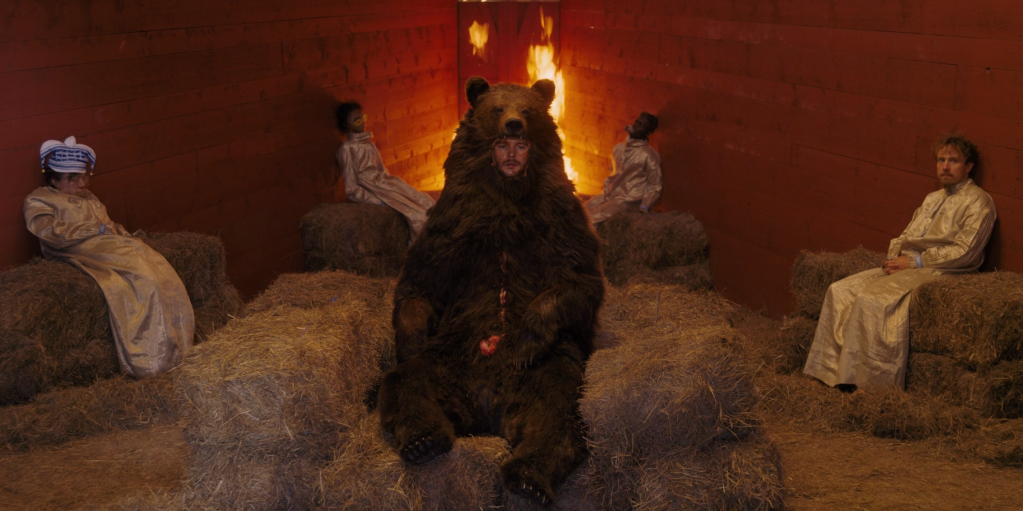
[4.4] Aster allows more mundane, ordinary imagery to scare us and represent trauma. Take the bear, for example. Throughout the entirety of the film, the image of a bear follows Dani. Even before she and her group of friends arrive in the Scandinavian countryside (where it may make more sense to encounter a brown bear), we see images of bears trailing closely behind Dani. In her cramped city apartment, we can see a photo of a bear hanging on the wall. Images of bears follow Dani as from the first minute of the film up until the final minute - when her boyfriend is burned alive as he is donning the skin of a real bear. (Figure 3)
Figure 3: Christian wearing a bear suit for sacrifice from Midsommar (2019)
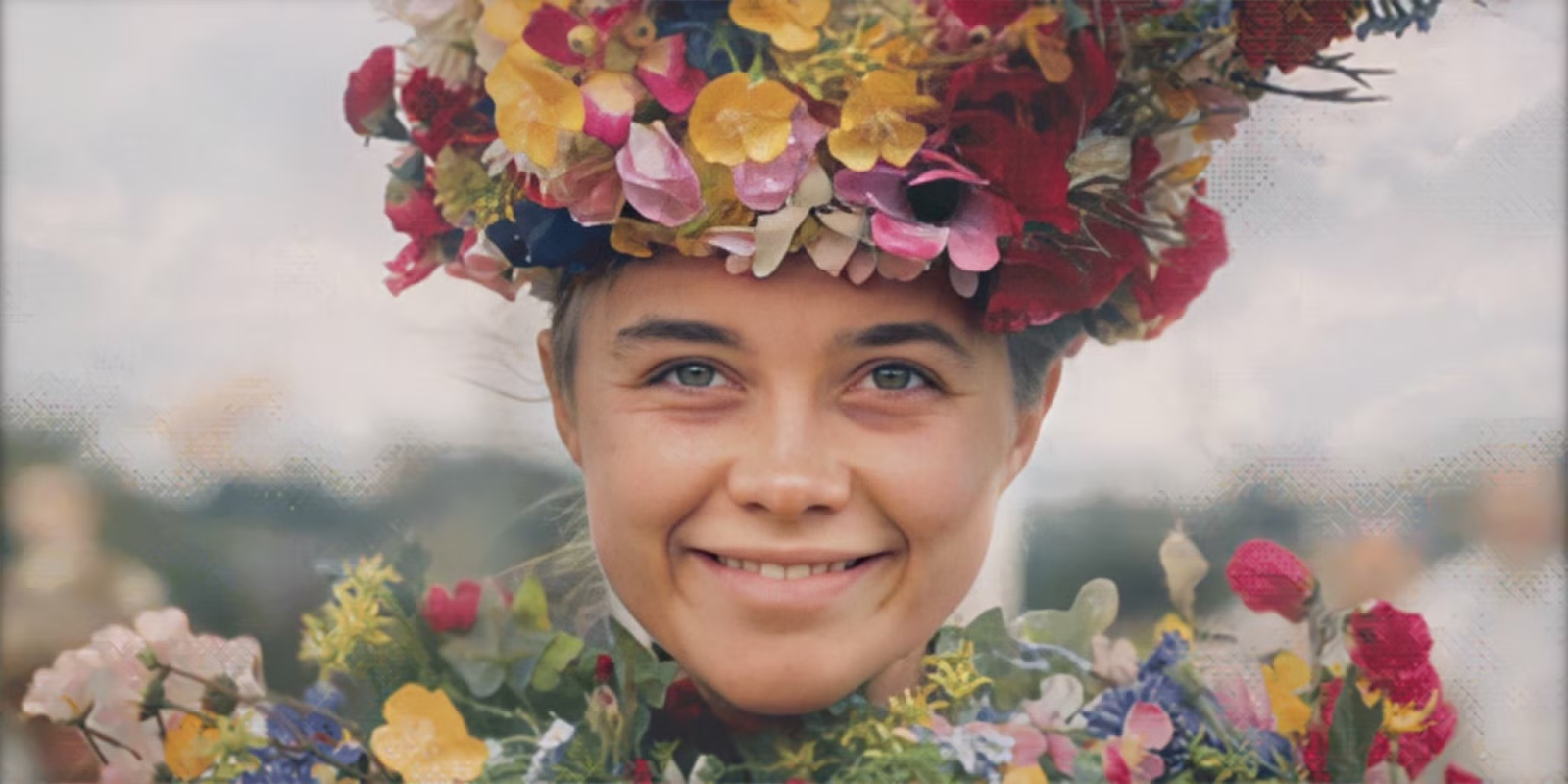
[4.5] After examining the film, it is clear that the bear is intended to serve as a representation of Dani’s trauma. It follows her throughout the entire film, lurking in the background, silently plaguing her from afar. In this, the bear imagery acts very similarly to the way emotional trauma does in real life, lingering and following - becoming one’s shadow. It almost replicates the way in which bears will stalk their prey before attack. The bear imagery follows Dani as she continues to suffer in Sweden, and remains recurring until the bear suit is burned with Christian inside it. As the bear suit and Chrsitian burn, Dani gazes upon the building housing her boyfriend, which is completely engulfed in roaring flames. At this, her face scrunches and contorts, eventually forming a smile. (Figure 4)
Figure 4: Dani smiling while watching the bear burn in Midsommar (2019)
[4.6] The first time the audience sees Dani show a genuine smile is in this final scene. This is the first and only instance in which we see Dani display genuine joy, and it is prompted by the burning of the bear. The burning of the bear, something that had been shadowing her for the entire film, results in a cathartic experience for Dani. This is eerily similar to the way in which our traumas plague us in our everyday lives, and the way in which the processing and release of trauma can result in feelings of catharsis. The bear imagery in Midsommar is, very clearly, directly mirroring the effects that emotional trauma has on us and our minds. It reflects how it negatively impacts us, but also reflects how emotional trauma can be overcome. Sara Pjetrushaj summarizes this reading of the bear as a metaphor for trauma, explaining that:
[4.7] The bear represents the trauma that the characters carry within themselves, and its presence throughout the film embodies the haunting effects of past wounds and unresolved pain. Trauma, much like the bear, can be a dormant force, seemingly harmless and subdued until triggered or confronted….As the story unfolds, the bear becomes more prominent in the rituals and symbolism of the Harga community. It is burned inside a wooden structure, representing the culmination of its symbolic significance. This burning of the bear parallels the characters’ journey of facing and processing their traumas, as the act of burning the bear happens right after Dani is ready to start her new life free of her emotional baggage. (Pjetrushaj, 36).
[5] “The Monster”
[5.1] We now know that the trials we endure affect our mental health, as first outlined by Sigmund Freud. His work allowed us to consider that lived experiences can cause similar, if not identical, symptoms to certain mental health conditions, and even be the root cause of some. We now know that enduring emotionally-distressing experiences will, almost certainly, result in adverse effects on our mental health. We also know that, to overcome these adverse effects, we must think through and process the actual event. However, the experiences that give one trauma are often so overwhelming that they cannot be easily brought into conscious awareness; instead, the mind converts the experience into monstrous imagery, which, as Jenny Hamilton argues, may function as the initial emergence into conscious awareness (Hamilton, 3). In doing so, we assign monsters and monster imagery to our own traumatic experiences as a means to indirectly process it. This is why the vast majority of horror films rely on monster imagery rather than formal elements. In his Ph.D. thesis, Memory as Monster: Trauma and Memory in Horror Novels, Films, TV, and Videogames, Jeffrey Ambrose quotes philosophy professor Mark Vorabej’s explanation of monster imagery:
[5.2] The true object of fascination in horror is ourselves, and the human condition in general. Battling monsters is a highly veiled odyssey of self-exploration. A monster’s description must be significantly inchoate if each of us is to imprint his or her personal psychic concerns on the fiction. (quoted in Ambrose, 16)
[5.3] Ambrose concludes: “In short, we make monsters out of our traumas, whether personal or…communal” (Ambrose 16).
[5.4] In his essay “Das Unheimliche,” Freud describes the eerie and uncertain state that he calls the “uncanny.” A more modern version of Freud’s uncanny occurs when we feel great unease and anxiety when presented with an object or humanoid creature that looks not-quite-human. The term that is used to describe this phenomenon, “the uncanny valley,” was coined in more recent years as we see an increase in the production and popularity of humanoid robots. However, the feeling described by our more modern definition of the uncanny valley is precisely what Freud is describing in his essay. The feeling we encounter when we interact with something that falls within the borders of the uncanny is eerie and anxiety-inducing – perfect for a horror film. Because of this psychological phenomenon, many horror films have relied on recreating creatures and characters that fall within the uncanny valley to incite feelings of unease in audiences.
[5.5] The fact that our traumas typically first reveal themselves to us via monster imagery, coupled with the fact that most images of monsters fall into the uncanny valley, makes monster imagery the perfect way to represent trauma as well as incite fear in audiences. Horror, particularly art horror, uses monster imagery to explore complex and nuanced topics such as trauma in a uniquely interactive and engaging manner, allowing characters and audiences to take a look inward. Jennifer Kent’s The Babadook (2014) does exactly that.
[6] The Babadook
[6.1] The Babadook centers its plot around Amelia, a widowed mother struggling to raise her troubled son, Sam, after the death of her husband, Oskar, who suffered fatal injuries in a car crash while en route to Sam’s birth. Sam displays behavioral issues that plague Amelia throughout the film. Sam eventually discovers a mysterious children’s book titled Mr. Babadook. The book introduces a sinister entity, the Babadook, that threatens to invade their home and lives. Sam becomes obsessed with the creature, convinced it is real, while Amelia dismisses it as a mere figment of his imagination. However, unexplainable and unnerving events begin to occur at the hands of the Babadook.
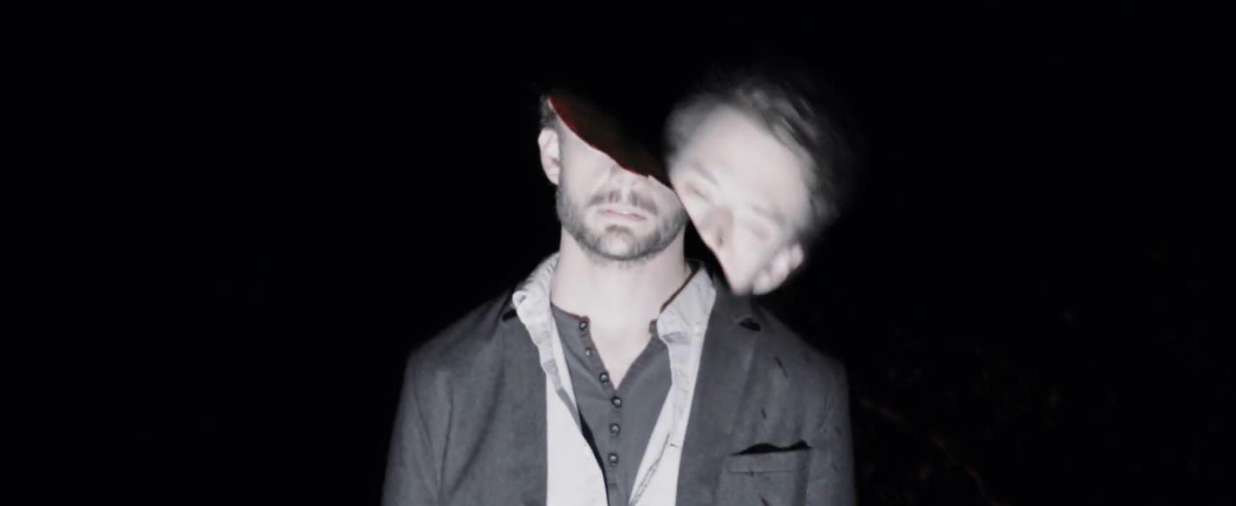
[6.2] Perhaps one of the most troubling things the Babadook does is give Amelia terrifyingly realistic nightmares. He makes her relive the traumatic death of her husband over and over again (Figure 5), re-traumatizing her and making her mental state deteriorate even faster. These nightmares almost function as PTSD-like flashbacks, exemplifying the negative effect unprocessed trauma can have on one’s psyche. In her essay, “The Horror Within: An Analysis of Psychological Horror Films’ Representation of Trauma Through Focalisation,” Lorena Santos explains that the nightmares the Babadook inflicts on Amelia
[6.3] reinforce the idea that the Babadook represents not only the trauma of her loss, but also the depression that followed her, thereafter, impeding her from being able to enjoy life and even her own son. She finally acknowledges this here after the vision forces her to relive Oskar’s gruesome death, her biggest pain. (Santos, 20)
Figure 5: Amelia’s nightmare, reliving her husband’s death from The Babadook (2014)
[6.4] As the Babadook’s antics escalate, Amelia's mental state deteriorates. She grows paranoid, angry, and violent - almost as if she is under the influence of the Babadook itself. The film works to portray her internal turmoil as she confronts her unresolved grief and repressed emotions over her husband's death and her son’s behavioral issues. At her wits end, Amelia confronts the Babadook face-to-face, banishing it from her home. At this, the Babadook retreats into the basement and remains there, still co-existing with Amelia and her son, but no longer completely overtaking her life.
[6.5] In this narrative, the Babadook serves as a tangible, sentient manifestation of Amelia’s emotional trauma and inner turmoil. He is a living, breathing symbol of Amelia’s suffering. In this example, we can see how our minds tend to assign monster imagery to traumatic experiences to begin to process, just as Mark Vorabej previously described. In the film, we watch Amelia begin to recognize the severity of her mental decline as the Babadook grows more and more violent. This is the shift to conscious processing. Shortly after this, Amelia has her head-on confrontation with the Babadook, and he retreats to the basement, remaining confined there. Santos makes the claim that,
[6.6] By defying the Babadook in this scene Amelia is not allowing her trauma to consume her any longer and finding strength and will in her love for her son instead. As she asserts herself over her house and her son, she regains bodily, mental, and emotional autonomy whilst finding her core values again. Though the weakened Babadook eventually hiding in the basement represents how trauma-related depression may not be cured and still lives in the mind it can no longer haunt a person as the focus of their everyday life. (Santos, 21)
[6.7] The Babadook serves as a reminder that our traumas can and will continue to affect us negatively until we confront them head-on. Mr. Babadook is the personification of Amelia’s trauma, and he represents the mental turmoil she endures after a traumatic experience. The film also peripherally focuses on Amelia’s emotions concerning motherhood and her relationship with her son. There is, at times, a focus on Amelia’s insecurities involving her mothering of Sam and how it is affected by her deteriorating mental health. This is mostly shown via “...plot and dialogue with most antagonisms being judgement or threats to Amelia’s unhealthy coping mechanisms and parenting…” (Santos, 22).
[7] Barbarian
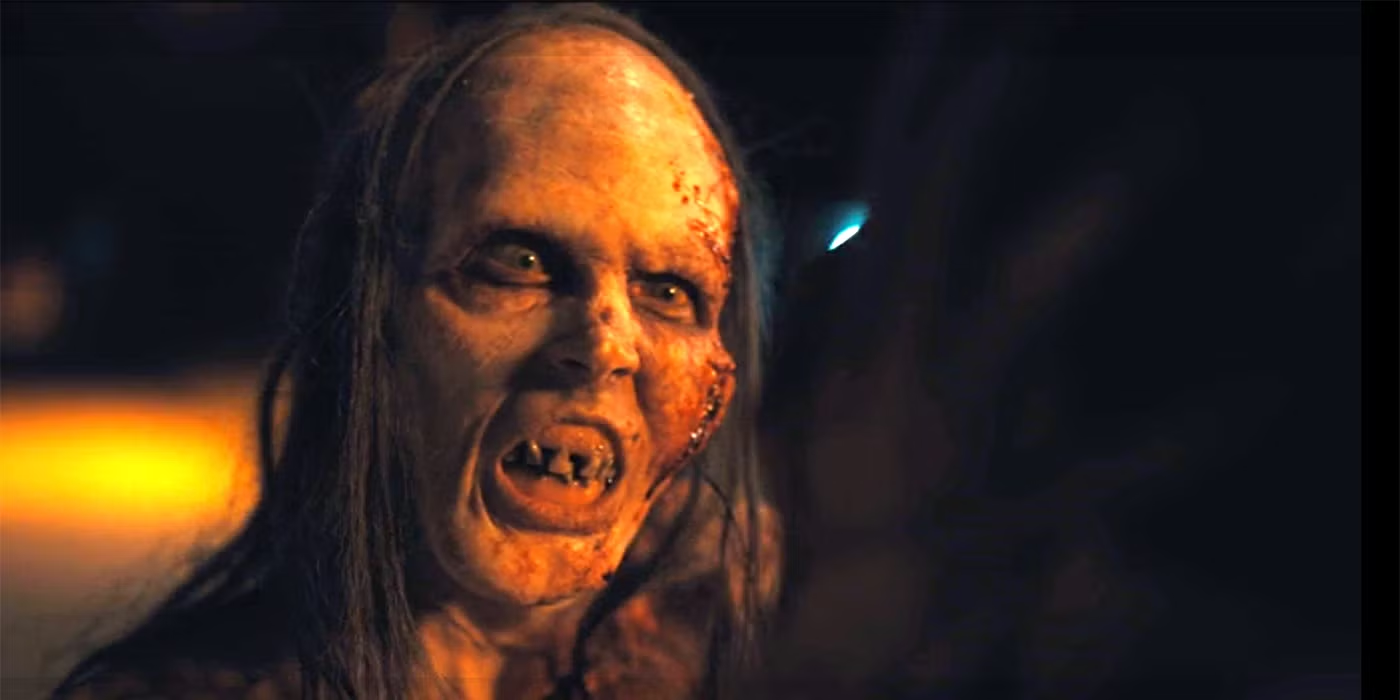
[7.1] Zach Cregger’s Barbarian (2022) is another film that deals with parenting, motherhood, and overall distinctly female traumas. The plot opens with Tess, a young woman traveling to Detroit, arriving at a seemingly ordinary AirBnb in a run-down neighborhood. Unfortunately, the house has been double-booked, and Keith, a stranger to Tess, is already staying there. She reluctantly decides to bunk with Keith, with him sleeping on the couch to make room for her. Strange events soon unfold, and Tess uncovers a hidden basement door leading to a dark, grungy, and impressively elaborate tunnel system under the house. Keith, attempting to investigate, is killed by a monstrous woman known as "The Mother," who inhabits the tunnels. She is an 8 foot tall, lanky, deformed woman. Her hair is long, stringy, and wet, with most of her head being bald. Her eyes are sunken in and she bears very few teeth. (Figure 6) After eliminating Keith, Tess is captured by The Mother, and is kept in a hole in the ground with a makeshift lid. The Mother’s physical appearance very much falls within the uncanny valley, making her a perfect figure to instill unease and fear in audiences.
Figure 6: “The Mother” in Barbarian (2022)
[7.2] The film then makes a jarring shift and changes its focus to AJ, the property’s current owner, who is a washed-up actor facing career-ending allegations of sexual assault. In an attempt to scrape up any and all money he has in order to pay his legal fees, AJ visits the house to assess its value, and subsequently discovers the tunnels while exploring. He encounters both Tess, who has managed to survive in the tunnels, and The Mother. After The Mother attempts and fails to feed AJ with a baby bottle, she takes him to another layer of the basement. The room is dimly lit, the floor is dotted with pillows, and a television in the corner is playing a breastfeeding tutorial. The Mother tries to breastfeed AJ, but he once again refuses, breaking free and running away. In the labyrinth of tunnels, he finds the house’s original owner, Frank. Flashbacks reveal Frank’s horrific past, showing how he abducted and imprisoned women in the house, repeatedly raping them, forcing them to birth his offspring, then raping his female offspring, leading to the creation of The Mother. Now elderly and incapacitated, Frank lives hidden away in the tunnels, the remnants of his unspeakable crimes surrounding him. Upon being discovered, Frank takes a gun from his bedside drawer, puts it up to his chin, and pulls the trigger.
[7.3] In the film’s climax, Tess and AJ attempt to escape, making their way to the top of a water tower. AJ sacrifices Tess in an attempt to save himself, tossing her from the roof. But despite her monstrous appearance and previous actions, The Mother displays maternal instincts toward Tess. She flings herself off the roof, grabbing Tess mid-air and hugging her, shielding her from the long fall. The two land on the pavement below, Tess being relatively unscathed, thanks to The Mother, who cushioned her fall. AJ rushes down the tower to make sure they’re dead, but to his dismay, they’re both still breathing. The Mother, beaten up and bruised, rises from the ground and grabs AJ by the throat, killing him. She rushes back to Tess, weakly saying “baby” over and over again, desperately trying to get Tess to return to the AirBnb with her, where she can mother her and further protect her. The Mother gently places a kiss on Tess’ forehead, uttering a weak “baby” one more time before Tess shoots her in the head, killing her.
[7.4] Much like the Babadook, The Mother is a physical, sentient manifestation of trauma. Instead of being the manifestation of one person’s emotional turmoil, The Mother is an amalgamation of all of the trauma Frank has inflicted on his many victims. She is a symbolic manifestation, similar to how the Babadook is, but, uniquely, she is also a literal manifestation. She is the literal, direct product of Frank’s abuse. She is the end result of decades of rape and incest.
[7.5] Because this film primarily deals with themes of rape, sexual assault, and mothering, I would classify it as what Erin Harrington in her doctoral thesis describes as “gynaehorror” - a type of horror film that is primarily preoccupied with the female sex, sexuality, reproduction, and motherhood (Harrington, 1). Barbarian falls into this category for two central reasons: it grapples with themes of sexual assault, which primarily affects women, and it vilifies motherhood and motherly acts, which are distinctly feminine topics. We spend almost the entirety of the film fearing The Mother and her maternal instincts, when, in reality, she is merely another victim and the true villain is lying right beneath our noses - literally.
[8] Gynaehorror
[8.1] According to Harrington, gynaehorror consists of films that almost exclusively focus on themes related to women’s bodies, reproductive health, and gendered experiences, often emphasizing the anxieties surrounding femininity, womanhood, and motherhood. This type of horror typically explores societal, cultural, and personal fears associated with pregnancy, menstruation, childbirth, motherhood, and sexual violence (Harrington, 215). Films classified as gynaehorror effectively use the female body as a central site of horror, just as Barbarian does.
[8.2] In her thesis, Harrington delves into the ins and outs of gynaehorror, considering how it operates and how the values these films represent are reflected in society, and vice versa. She also describes how these films can serve as a lens through which we can examine and analyze the distinct fears, anxieties, and traumas that can come with womanhood. For example, Barbarian focuses on the emotional horrors that ensue after experiencing sexual assault, but does so by vilifying the female body. The repercussions of such awful, inhumane crimes are represented via a deformed, monster-like woman.
[8.3] While, on the surface, this may seem backwards and unproductive, this subgenre may actually serve as a validating, almost therapeutic, viewing experience. Because these films directly deal with taboo topics such as rape, they serve as unique opportunities in which we can consider the importance of discussing them. These films often act as a critique of the patriarchal nature of our society, which can be a refreshing experience for many women. The fact that films classified as gynaehorror focus on taboo issues means that they amplify and emphasize them, bringing them to light, therefore fostering a sense of recognition and empathy.
[9] Why Watch Horror Films?
[9.1] Sentiments such as these are not completely unique to gynaehorror, however. While gynaehorror centers itself around particularly troubling, typically-feminine, topics, both gynaehorror and the overarching genre of horror as a whole allow for opportunities for validating and therapeutic viewing experiences, regardless of the subject matter at hand. As I have been arguing, the vast majority of horror films are preoccupied with the representation and examination of certain personal and communal fears and traumas. Because of this, gynaehorror’s therapeutic aspect can be easily translated to most other horror films.
[9.2] This brings me to one of my central arguments - that the viewing of and interaction with horror films can act as a form of therapy, helping us work through our own mental and emotional turmoil. This is particularly true if the subject matter of a film deeply resonates with a viewer on a personal level. For example, a sexual assault victim may be validated and even feel a sense of emotional release upon viewing Barbarian. Single mothers struggling with their mental health may watch The Babadook and feel empowered when Amelia finally banishes the entity to her basement. Those suffering from grief may share Dani’s joy at watching the bear burn in Midsommar.
[9.3] The therapeutic value of horror is not merely hypothetical speculation. I am speaking from firsthand experience. I have used horror films to process and resolve my own emotional turmoil. Smile was particularly therapeutic for me, as it helped me better understand the cyclical nature of trauma. In an honors thesis written at Texas State, Sarah Waldrop also asserts the value of horror for processing trauma:
[9.4] Viewing one’s own fears through the controlled environment of fiction can allow viewers to face anxieties head on and consider ahead of time how they would cope when confronted with fear in the real world. The horror genre allows for anxieties and phobias to be captured through a large scope, employing antagonists that are truly terrifying in order to fully explore the reality of fear in a way that validates the feelings of the viewer. (Waldrop, 1).
[9.5] Further, there is concrete evidence showing that the viewing of horror films can act as a productive therapeutic experience. A study involving 17 patients with substance use disorders found that cinematherapy served as an initial catalyst for change (Kouchinsky 5). The films used in the study were ones that resonated with the patients' inner worlds and past experiences, fostering a safe and imaginative environment for emotional expression and personal transformation. While film-as-therapy lacks the extensive empirical support of some other creative interventions, it is becoming increasingly recognized as a valuable tool for self-exploration, enabling viewers to connect with characters, behaviors, and motivations.
[9.6] Psychological research aside, there is also evidence of positive physical reactions to the viewing of horror films. Some researchers have theorized that the physical process of watching a horror film is therapeutic in and of itself. When we watch particularly terrifying scenes in horror films, we grow tense and stressed. But, as G. Neil Martin explains, once the scene is resolved, the tension is relieved and it results in a sense of euphoria, a cathartic release (Martin, 6). This release is incredibly similar to what we feel when we confront our own traumas. The act of watching a horror film is unbelievably therapeutic - both psychologically and physiologically.
[10] Conclusion
[10.1] By now, I hope I have made it clear that the horror genre goes so much deeper than jumpscares and cheap tactics. Horror movies have transcended their reputation as mere instruments of thrill. As it has evolved, the genre has marked itself as a powerful artistic medium through which trauma can be unpacked and represented. The genre is primarily occupied with personal and societal fears and anxieties, making it predisposed to be a productive and enriching vessel through which these heavier themes can be represented and examined. There are subgenres within the overarching genre of horror that grapple with more specific and taboo fears and traumas, such as gynaehorror. These subgenres allow for even deeper engagement with the audience, as they often portray emotions or experiences deeply personal to their targeted viewers.
[10.2] The manner in which horror films represent certain traumas falls into two separate categories: direct representation and indirect representation. Direct representation is marked by the use of monster imagery to personify trauma. This can be seen in The Babadook and Barbarian, where the fears at hand are manifested through a sentient being - a monster. Indirect representation, however, does not use monster imagery to represent trauma and instead relies on formal elements such as lighting and setting to do so. Both of these methods are effective at representing trauma, prompting audiences to think of their own inner turmoil.
[10.3] Horror’s therapeutic potential is evident in its ability to provide both emotional validation and catharsis. By framing fears within a controlled narrative, horror films allow viewers to engage with their anxieties and vulnerabilities in a safe and structured way, fostering a profound sense of relief and empowerment. This is particularly true when the genre aligns with personal experiences, offering a mirror through which audiences can process their emotional turmoil. The horror genre is a medium for not only entertainment but also healing, giving audiences rich, meaningful viewing experiences. This further solidifies horror’s legitimacy as an art and clarifies horror’s therapeutic nature within the film industry.
Ambrose, Jeffrey R. 2023. “Memory as Monster: Trauma and Memory in Horror Novels, Films, TV, and Videogames.” Indiana University of Pennsylvania ProQuest Dissertations & Theses.
Carroll, Noël. 1990. The Philosophy of Horror, or, Paradoxes of the Heart. New York: Routledge.
Dumas, Chris. 2014. “Horror and Psychoanalysis: An Introductory Primer.” In Benshoff, Harry M., ed. 2014. A Companion to the Horror Film. Chichester, West Sussex, UK: Wiley Blackwell: 27-37.
Hamilton, Jenny. 2020. “Monsters and Posttraumatic Stress: An Experiential-Processing Model of Monster Imagery in Psychological Therapy, Film and Television.” Humanities and Social Sciences Communications, DOI.org. vol. 7, no. 1.
Harrington, Erin. 2014. Gynaehorror: Women, Theory and Horror Film. Ph.D. Thesis, University of Canterbury.
Kouchinsky, Mari-Peyton, A. Renee Staton, Amanda Evans, Michele Kielty, James Madison University, and James Madison University Department of Graduate Psychology. 2021. “The Attraction of Fear and the Potential Therapeutic Value of Horror Films.” Dissertation, [Harrisonburg, Virginia]: James Madison University. https://commons.lib.jmu.edu/edspec202029/33.
Martin, G. Neil. 2019. “(Why) Do You Like Scary Movies? A Review of the Empirical Research on Psychological Responses to Horror Films.” Frontiers in Psychology, vol. 10.
Millar, Becky, and Jonny Lee. 2021. “Horror Films and Grief.” Emotion Review 13 (3): 171–82.
Park, Michelle. 2018. "The Aesthetics and Psychology Behind Horror Films." Undergraduate Honors College Theses 2016-. 31. https://digitalcommons.liu.edu/post_honors_theses/31
Pjetrushaj, Sara, and Erika Melonashi. 2020. “‘Midsommar’: Unraveling the Impact of Early-Life Trauma through Art. Medicus, 4(1), 29–41.
Santos, Lorena. 2022. “The Horror Within:An Analysis of Psychological Horror Films’ Representation of Trauma Through Focalisation.” Bachelor’s Thesis, University of Stavanger. ,https://uis.brage.unit.no/uis-xmlui/handle/11250/3003184
Waldrop, Sarah Elizabeth. 2022. “The Enemy is Fear: The Psychological Benefits of The Horror Genre Through Resilience and Coping.” Honors Thesis, Texas State University. https://digital.library.txst.edu/items/c53a9f57-31a0-40a2-bf50-f0854d9477b0