[0.1] Abstract - The movement of trash cinema pioneered by the Warhol Factory and catapulted into the greater public consciousness by John Waters is a rebellious movement against mainstream cinema by creating a uniquely American avant-garde displaying people and cultures that often are ignored in media.
[0.2] Keywords - trash cinema, Andy Warhol, John Waters, Barbara Rubin, Paul Morrissey, bad taste, queer cinema, transgender cinema, sex on screen
Meistrich, Jamen. 2024. “LOOK AT ME: The Power of Spectatorship through the eyes of Trash Cinema,” Muhlenberg Visions. Volume 2, No. 1.
[1] Disgusting, smelly, reviled and unwanted. These are just a few of the many words that are used to describe trash. Trash is something that is to be discarded and forgotten about, but as the cliché goes, one man's trash is another man's treasure. While that saying has many applications, for this essay the main focus is on cinema and specifically a style/genre of filmmaking called trash cinema. It is difficult to pin down an exact definition of trash cinema but its essential trait is its rebellious nature. It goes against the status quo, whether that is a mainstream film catering to a mass audience or a snobbish arthouse film. Trash films feature lots of nudity, sex, drug use, non-heterosexual relationships, people who don’t exist within the gender binary, and all kinds of societal outcasts. Filmmaker Nick Zedd wrote a manifesto titled the Cinema of Transgressions in which he describes his thought process concerning these films. He writes: “We openly renounce and reject the entrenched academic snobbery which erected a monument to laziness known as structuralism and proceeded to lock out those filmmakers who possessed the vision to see through this charade” (Zedd 88). He states very clearly his gripes with narrative structured cinema that follows a certain formula and denounces it as snobbish and lazy. The movement of trash cinema has been a response to the idea that there is a specific structure and set of rules a film needs to follow to be good. The artists and filmmakers behind the movement set out to push these boundaries and display worlds that often go unseen and ignored.
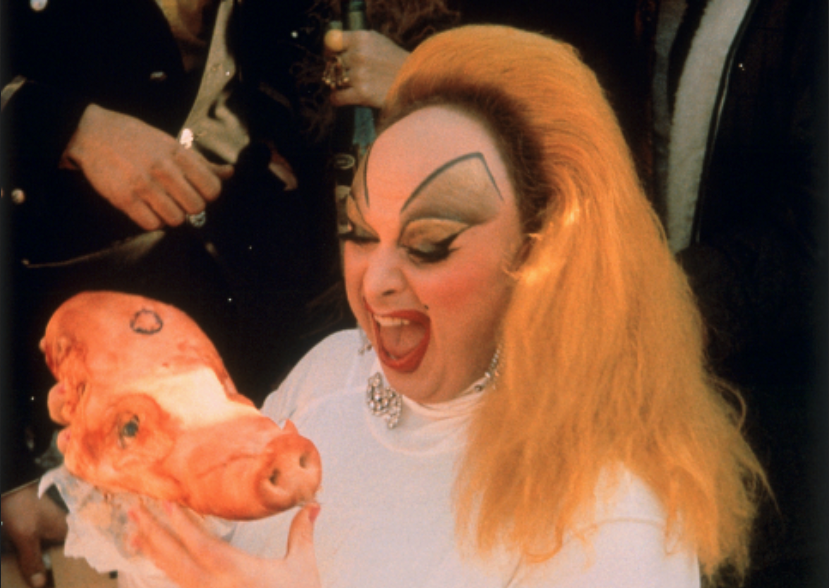
[2] One key aspect of cinema that separates it from other forms of creative expression like writing, music or painting is the much higher barrier of entry it takes to get the opportunity to make a film. To make a film requires much more labor and therefore more money, which makes it a difficult form for experimentation and trying things where there is a sense of precariousness on how the audience might react. For someone to invest the capital it requires to produce a film, they will likely want some sort of evidence that there will be a return on their investment. This makes experimental film very rare as it almost never yields a return on investment. It is often not meant to appeal to a wide audience but more to push the medium forward. Zedd writes, “Intellectual growth demands that risks be taken and changes occur in political, sexual and aesthetic alignments no matter who disapproves” (Zedd 88 ). This is the philosophy that guided the New York Underground movement of artists that included films made by Andy Worhol and Paul Morrissey, eventually going onto inspire the “Pope of Trash”: John Waters. These filmmakers are among many who experimented with the form to create something that was shocking and new instead of the formulaic films they felt dominated the larger film industry. They were anti-academia, anti-establishment, and anti-snobbery. They were bohemian innovators unconcerned with profit and motivated primarily by entertainment and idiosyncratic expression. Zedd writes “We propose that all film schools be blown up and all boring films never be made again. We propose that a sense of humor is an essential element discarded by the doddering academics and further, that any film which doesn’t shock isn’t worth looking at” (Zedd 88). Trash cinema is meant to shock, to display something that you have never seen before (Figure 1) and whether you like it or not, at least it is new.
Figure 1, Divine gleefully contemplates the present of a pig head in Pink Flamingos
[3] Beyond experimentation and shock value, why does trash cinema have the effect it does on audience members? It is one thing to make a violent, grotesque or generally disgusting movie that has no point, but movies like that usually do not stand the test of time. John Waters says, “I could make a ninety minute film of people getting their limbs hacked off, but this would only be bad taste and not very stylish or original. To understand bad taste one must have very good taste” (Waters 2) The films aren’t made without thought or intention and it is due to that intent that gives a lot of these so-called trash films merit that goes beyond shock value. Before we analyze the intent behind artistic decisions, it's important to understand what drew audiences, albeit small, to these films in the first place. Famed film critic Pauline Kael writes in her essay, “Trash, Art, and the Movies”:
[4] After a time, we may want more, but audiences who have been forced to wade through the thick middle-class padding of more expensively made movies to get to the action enjoy the nose-thumbing in “good taste” of cheap movies that stick to the raw materials. At some basic level they like the pictures to be cheaply done, they enjoy the crudeness; it’s a breather, a vacation from proper behavior and good taste and required responses. (Kael)
[5] She explains that it can get tiresome watching expensive movies that all stick to a formula that will ensure they get as much box office as possible and cheaply done movies can be far more appealing and freeing as an audience member. If that's what draws in audience members, what was the grander meaning behind the movement as a whole? The movement of trash cinema pioneered by the Warhol Factory and catapulted into the greater public consciousness by John Waters is a rebellious movement against mainstream cinema by creating a uniquely American avant-garde displaying people and cultures that often are ignored in media therefore giving these communities a place in American society that was cast aside before.
[6] If one were to go to the very beginning of what we consider to be cinema now, the very first subject that was captured via moving images were naked bodies. Eadweard Muybridge, who created one of the first film cameras, conducted experiments shooting naked bodies and analyzing movements. From the moment the technology was invented, people wanted to see other people naked, which goes to show something about taste and how it is oppressed by values held by those with the most power in society when censorship grows. As cinema became more accessible and grew into an artform, rules, unspoken and official, about what could be shown on screen became much more prevalent. In the early days of narrative cinema, there were films about sex and other taboo subjects such as the films of actress Mae West. She made a career out of making films where she plays various powerful women who use their sexuality to manipulate men. Certain behaviors like that, or kinds of people started to get classified as distasteful, all leading up to Hollywood's era of self censorship dictated by the Hays Code. The Code dictated the content of studio films from the mid-1930s through the 1950s, when we started to see the beginning of B-movies. Guy Barefoot, author or Trash Cinema: The Lure of the Low writes, “Where the B-film is linked to trash cinema it has been traced back as far as the 1950s but rarely further” (Barefoot 25). The B-film is a way of classifying the lower budget films that would be marketed less than the main studio films. It was an early example of what went on to become trash cinema. Barefoot writes,
[7] Trash could be associated with Hollywood in general, and with the prestige MGM picture as well as with the low-budget production, or it could be identified with the bottom half of the double bill, or below. It could also be used either to elevate a film star or film, in the discovery of treasure among the trash, or to derogate a film or a body of films. (Barefoot 27)
[8] The films were not as racy or objectionable as the ones that succeeded them in the 60s but they acted as a prophecy of what was to come in the post-Code era. The Code was an oppressive censorship of artists to submit to a puritan religious society in which no other ways of life or opinions were allowed to be on display. Many pieces of media were made illegal during this time. Richard W. Benash, writes in his dissertation Scum Cinema: America through the Eyes of the Exploitation Film:
[9] Comstock and his organization destroyed untold millions of books, photographs and other materials that were supposedly ‘obscene.’ These included pornographic photos and erotic books, but also included pamphlets about birth control and venereal disease, and even included works by Ovid and Walt Whitman, as well as anatomy textbooks for use by medical students. (Benash 53)
[10] This history of mass censorship has been ingrained in American culture since its inception. The country has a long history of Christianity and a strong sense of morality has permeated the fabric of US society, with a strong presence today. That is a large reason trash cinema is a product of American culture as it is a direct response to the oppressiveness of the morals of a very specific kind of person; usually white straight Christian Anglo Saxons. The power that censorship held over culture in this era was out of control as medical books were being considered obscene. The overt censorship went too far which resulted in the counter movement also taking it to the extreme.
[11] The strong censorship of film for decades seemed to create a bubble of unrealised ideas that seemed to explode all at once with a movement of filmmakers. Ground zero of this explosion was in the New York underground art scene, which included artists from various different mediums such as The Velvet Underground, Nico, and Andy Warhol, who was the guiding spirit of the Warhol Factory, a place for artists to create and experiment as they pleased. This was the start of the avant-garde movement that came to be trash cinema: a movement that set out to protest propriety. An aspect of the movement was to defy European overly-intellectual cinema to create something more catered to the US. Barefoot writes about filmmaker Jack Stevenson’s perspective:
[12] For Stevenson, trash was a thoroughly American invention, scorning European conceptualist art, deifying the thing rather than the meaning of the thing, ignoring the creator’s philosophy, intention or politics: ‘It spurns the highbrow culture of art criticism (a virus transplanted from Europe) and is itself impervious to criticism.’ (Barefoot 49)
[13] While claiming the artform could be impervious to criticism may be a stretch in logic, the sentiment of the claim remains true. While the intention of a lot of trash films is to have no deep political meaning, that intention in itself is very political especially in what the films choose to portray. The choice to portray such graphic sexuality is definitely an act of politics especially at the time period that these films were produced. This is evidenced in the way the films were received, as Barefoot explains the reception of the film Flaming Creatures by Jack Smith:
[14] In the context of the early 1960s it was strikingly transgressive, a film that offended against sexual norms and distinctions with glee…The controversy surrounding it culminated in the film’s seizure by the New York police and the arrest of Mekas and Jacobs (then acting as projectionist for the screening). The resulting trial led to the conviction of Mekas and Jacobs and the banning of Flaming Creatures for obscenity. (Barefoot 55)
[15] Jack Smith’s experimental film was sexually explicit enough to be charged with obscenity, which shows that its creation was a rebellion against established norms and provoked enough outrage to lead to that charge. The film basically is one large orgy scene, consisting of men, women and all that exists in between. The film is shot in a way to where it is difficult to make out who is having sex with who and what exactly is going on. It does not attempt to establish any characters or tell a consistent story; it is simply unfiltered free sex displayed on screen. The act of showing an audience member something that is supposed to be unseen and taboo sheds light onto that topic in a way that is much more powerful than hearing or reading about it. Having to see sexually explicit content gives it a sense of reality that other forms of media cannot achieve. That is precisely what makes it a political film. Pauline Kael writes “Movies are used by cultures where they are foreign films in a much more primitive way than in their own; they may be enjoyed as travelogs or as initiations into how others live or in ways we might not even guess” (Kael). An example of the point she is trying to convey is that the lifestyle of those who participated in the underground art movement would seem very foreign and alien to someone outside of that, but in the same way cinema from other countries give us a window into their culture, trash has the same effect. Cinema has always been an excellent tool for anthropologists to study humanity from all walks of life and this is no different as it is just another slice of culture that has been silenced from proper society.
[16] Some of the most notable pieces of trash cinema that comes from this era is a series of films directed by Paul Morrissey including Trash (1970) and Flesh (1968), both produced by Andy Warhol and starring Joe Dallesandro. These films have similar plots and both lack traditional narrative structure but have the same unique style with very improvisational dialogue and long unbroken handheld shots. Flesh is the story of a man named Joe who wanders around New York working as a prostitute to fund his lesbian wife’s abortion as well as his own heroin addiction. Trash is also about a man named Joe who is also a heroin addict and follows a more episodic plot as he goes through several different encounters with various kinds of off-beat people and frustrates the women in his life with his drug induced erectile dysfunction. These films show a lifestyle that is not often seen in cinema but does not make it any less true to reality. Barefoot writes, “Morrissey was equally cynical in suggesting that his intentions were to show that there was ‘no difference between a person using drugs and a piece of refuse” (Barefoot 56). The effect of depicting drug use in film gives the audience a portrayal of a human being and not some monster they are often made out to be. Drug users and people who are sexually liberal are often vilified by the media and these films give a more sympathetic and humanistic portrayal of people with these afflictions. . These films were ahead of their time in representation and their attitude regarding sex and drug use. For an audience member, simply watching something like these and being exposed to non-heteronormative relationships can be life changing. Ara Osterweil writes in her dissertation Flesh Cinema: The Corporeal Avant -Garde, 1959–1979, “However, by watching Underground films, I suspect that my father, like many other members of his generation, may have had his first encounters with the public presentation of alternative sexual desires, and the onscreen representation of full frontal nudity” (Osterweil x), She discusses how her father watched these films and learned something about himself that he may not have known prior to seeing the film. That is a display of the power that spectatorship has over an individual and how these films can change a life by simply showing someone a lifestyle that they didn’t know was possible. Trash is also one of the first American films to have a transgender actress play a lead role with Holly Woodlawn playing Joe’s girlfriend. Her existence as a transgender person is not focused on nor mentioned at all in the film and she is simply allowed to exist as a woman in the story. This is ahead of its time representation that other films, such as Myra Breckenridge (1970), fail to achieve. Instead of making it a big deal and focusing on it heavily, it is normalized in the film which could have an effect on audience members that it is normal to be queer in sexuality or gender and there is nothing wrong with it.
[17] The use of nudity plays a large role in the effectiveness in these kinds of films. These filmmakers had no qualms about sex or nudity. Filmmaker Barbara Rubin created a film titled Christmas on Earth (1963) (originally titled Cocks and Cunts) that was described as the most sexually explicit film of the 1960s. It is a film dedicated to genital worship and is simply a display of all kinds of genitals and free love sex. It is essentially a love letter to the human form and an example of a new kind of cinematic expression. Osterweil writes “For the first time in the history of experimental film, filmmakers overwhelmingly depicted the body as a defiantly material object that refused to be harnessed to conventional ideologies of gender or subjectivity” (Osterweil v). Rather than using the cerebral form or portraying a message through a film via dialogue or linear plot, these films with nudity use the body as a way to tell a story. Nudity is a serious taboo when it comes to film but it is a fact of life. People are naked all the time in reality and they communicate with their bodies and these films brought that into American consciousness in a way that is far more respectful than pornography, as pornography often displays and promotes unrealistic and overly aggressive forms of sexual relations which appeals mostly to straight men. Christmas on Earth is an amalgamation of sexual organs and penetration that is hard to decipher and that is the point as it is not concerned with gender or sexual pleasure of its viewer. Osterweil writes “In films by these directors, bodies were ambiguous, uncooperative, and at times, difficult to discern. Although many of the bodies that appeared in these films were male, it was frequently impossible to ascertain their gender because of framing, editing, focus, lighting, and costuming” (Osterweil ix). The choice to display sex without discernible gender is a counter to traditional sex scenes more prevalent in European cinema at the time was a statement in favor of a more corporeal cinematic style rather than cerebral.
[18] As previously mentioned, nudity is nothing new to cinema as the capturing of naked bodies was one of the first acts after the invention of motion picture cameras. Rubin plays with this fact of history in her film as well. When Muybridge conducted his experiments, a lot of his nude photography was focused on the female form. Rubin wanted to flip this idea on its head. In an essay on Barbara Rubin, Osterweil writes:
[19] Like Muybridge, Rubin relies heavily on veils and other types of costumes that simultaneously mask and reveal the human figure. However, rather than merely ornamenting the female body, Rubin insists that masculinity too is a form of masquerade. Transformed into erotic objects through costume and make-up, here the male performers occupy what is typically considered the ‘feminine’ position by rendering their bodies serviceable for penetration. (Osterweil 136)
[20] The concept of displaying character through gender fluidity starts deep within the counterculture movement and remains a large aspect of trash cinema, as it slowly became more accepted into the mainstream through the work of John Waters. Morrissey and Rubin’s use of sex and nudity fits in with the notion that trash cinema is a rebellious and political act against mainstream culture and cinema itself. The portrayal of men in this way combats the idea of the male gaze as it shows men in a position that is typically reserved for women on screen. It feeds into the idea of rebelling against things that we are all told that don’t apply to everyone. Men can have sex with other men and vice versa for women and these films display that in a way that is unavoidable to the viewer. It takes away the ability to imagine these things and shows exactly how they are. These films focus on more physical storytelling with sex, drugs and a cinema verite style of shooting that offers up a more realistic perspective. Osterweil writes:
[21] “...films by all of these directors attempted to access the material "truth" of being by compelling on-screen bodies to produce visible evidence of their pleasure, pain, and disintegration. Rather than deploying the body as the earthly medium through which more transcendental notions of identity and subjectivity were made manifest, these experimental filmmakers portrayed the body as flesh itself, capable of disclosing corporeal rather than spiritual or psychological truths. (Osterweil xii)
[22] They use flesh as truth and it is an invention of American culture due to decades of aggressive censorship and the constant pushing of heteronormative social norms and anti-sex culture. These films are a direct response to that aspect of society and its avant-garde style mixed with its taboo content makes for a very effective satire of snobbish filmmaking and American culture.
[23] While most trash cinema operates in a space in the underground scene, there have been haphazard attempts to mix the style of underground trash cinema with mainstream audiences. One of the more famous and disastrous attempts is Myra Breckinridge, directed by Michael Sarne. The film was released by 20th Century Fox and was a colossal failure both critically and financially. At the time the studio was interested in pushing barriers of taste and trying to surprise audiences by going against the status quo. The film is the story of Myron Breckinridge, who at the beginning of the film travels to Denmark to undergo a sex change operation to become Myra Breckinridge. Myra then returns to America posing as Myron’s widow and attempts to take over her uncle's acting school in Hollywood. It is a plot that seems to attempt to mimic the style of trash cinema using gender in socially-liberal ways but the film is a failure on many levels. One of the first mistakes is the choice of Michael Sarne, a British director with virtually zero experience in feature filmmaking. The film's plot was all over the place and contained several archival clips of classic Hollywood films placed intermittently throughout the film with no rhyme or reason. David Scott Diffrient recounts the film’s reception in his article “Hard to Handle’: Camp Criticism, Trash-Film Reception, and the Transgressive Pleasures of Myra Breckinridge”:
[24] Such criticisms were vitriolic, and frequently included language typically reserved for horror films. Gene Shalit called Myra Breckinridge “a new low in amateur squalor.” William Wolf, a contributor to Cue magazine, labeled the film a “freak show, a self-consciously mod, disjointed patchwork of leers, vulgarity, and general ineptness,” and Joseph Morgenstern of Newsweek referred to it as “a horrifying movie . . . a nightmare. (Diffrient 64)
[25] These criticisms may partially come from bigotry against transgender people but they are also absolutely true. There are several tasteless scenes of sexual assault and incest that seems to try to shock but do so in very poor taste and it comes across as very uncomfortable. There was tension on the set between stars which resulted in a lack of chemistry and overall flat performances including one from Mae West, who returned to cinema after a decade long hiatus with this film. Diffrient writes: “Tabloids as well as reputable weeklies were abuzz with talk of the strained relations between cast and crew members, who had ‘splintered into two warring camps.’ Welch and West rarely spoke to each other, sitting ‘on opposite sides of the studio commissary every day’” (Diffrient 52).
[26] There are several reasons that Myra Breckinridge fails at tackling taboo subjects that other trash cinema films succeed at doing. One reason is applying a large budget production to a style that is more appealing when it is seemingly lower budget. There is a level of charm that comes with a low-budget aesthetic that adds forgiveness to the uncomfortable subject matter that doesn’t apply to a high-budget production like Myra Breckinridge. Those involved were also unfamiliar with the lifestyle of trash as a lot of the actors were big stars and one of the actors was a film critic and not an actor. Rex Reed, who played Myron Breckinridge, criticized other trash cinema filmmakers like John Waters, as documented in Emmanuel Levy’s essay “John Waters: Queer as Trash and Camp”: “After seeing Female Trouble, Rex Reed, representing other film critics of his kind, groaned: ‘Where do these people come from? Where do they go when the sun goes down? Isn’t there a law or something?’” (Levy 297) It is evident that the people behind this film were not equipped to tell a story like that.
[27] Beyond all that, the biggest mistake the film made that caused it to be a failure on all fronts was the casting. Myron Breckinridge and Myra Breckinridge are played by two completely different actors who look nothing alike. Myra is played by Raquel Welch, a beautiful Hollywood starlet who bears no resemblance to Rex Reed, who plays Myron, who remains a part of the film long after the sex change. The choice to cast a man and a woman instead of the same person to play a transgender person is a serious mistake that robs the film of any shred of sincerity. It proves that the studio was interested in exploiting the interests of fans of underground trash cinema in order to make money instead of telling a story that is true to life. It is exploitative and the countercultures audiences could tell. Diffrient writes,
[28] “Rocker Janis Joplin… referred to [the film] as being “too choppy.” Significantly, Joplin’s comment reveals how resistant some members of the counterculture were to nontraditional forms of cinematic style and plotting. In response to Joplin’s statement that she “couldn’t understand it, it kept changing all the time,” Welch succinctly summed up: “Yeah, well, it is about change.” (Diffrient 66)
[29] Someone like Janis Joplin, who is also a part of the counterculture, criticizes the film, while people in the film, like Rex Reed, criticize trash cinema. This shows the disconnect between the film and the style it tries to embody. If the film were truly about change then Myra would be played by one actor; instead the film is about difference, which alienated the potential audience of this film.
[30] While the jump from the underground to the mainstream has been a failure for some, one filmmaker has made a legendary career blending the two over many decades. That filmmaker is John Waters, a man who has been anointed the “Pope of Trash” on many occasions. His career ended up growing and evolving into becoming a very successful mainstream filmmaker and even ending up on the Hollywood Walk of Fame. He once said, “First I made underground movies, and then there were no underground movies. Then it was Midnight Movies, and they disappeared. Then independent movies, but they were co-opted by Hollywood. Now it’s all the same. So I make Hollywood movies” (Pela 147). Even as his films grew in scale, budget and audience, they always had that rebellious and taboo tone that came from his background in trash cinema. He was a champion of using counter culture to mock and satirize the mainstream. Levy writes, “From the start, Waters politicized camp, using it as a deliberate assault on mainstream culture. He employed gay camp as a counter-cultural means, as an oppositional standpoint and active force. For him, camp attacks acceptable values, normal physical appearances, and conventional modes of behavior” (Levy 290). Waters’s rejection of so-called good behavior is a staple of trash cinema and quintessential to the philosophy of using filmmaking as a protest against the norms pushed on everyone.
[31] One of Waters’s earlier films and his first relative success was Pink Flamingos (1972). That film is the embodiment of everything that trash cinema has stood for. The film stars Divine, a drag queen, playing a fictionalized version of herself, as she competes with a couple called the Marbles to retain her title of “Filthiest Person Alive.” There isn’t much of a linear plot, mostly a series of scenes in which Divine and the Marbles commit the most shocking and filthiest acts, culminating in Divine murdering them at a party and eating dog poop off the sidewalk, officially cementing her title. This film perfectly embodies the rebellious nature of trash cinema and tackles the subject of filth with such seriousness and sincerity that comes across through all the performances. It reached a wide audience and made trash cinema more relevant to people that exist outside the underground. It also rebels against the idea of gender norms by using Divine as the lead actor. Having an overweight drag queen as a star of a successful movie was a rare occurrence back then and still even now. Putting her on display and letting her take over the movie in such powerful and captivating ways (Clip 1) gives validation to people who might also want to be drag queens or cross dressers or non gender normative. Representation in itself is a rebellion against societal norms that tell you exactly how to dress, behave and so on.
Clip 1, Divine gives her manifesto in Pink Flamingos
[32] In 1981, Waters made a film called Polyester, which also stars Divine and is a sort of inverse to Pink Flamingos. Instead of Divine's character being the arbiter of all filth, in Polyester she plays Francine Fishpaw, a typical suburban housewife, who is unwillingly surrounded by filth. Francine just wants to live a normal life with her family, but over the course of the film, her life starts to crumble as her husband, the owner of a pornography movie theater, leaves her for another woman. On top of that her son is sent to an asylum for breaking women's toes and her teenage daughter is impregnated by a local hooligan. She is surrounded by aspects of filth and trash but does her best to reject it and expel it from her life. Derek Kane-Meddock writes in his article, Trash Comes Home:
[33] While Francine clings to a conventional notion of propriety, she suffers a comic array of personal traumas: divorce, the institutionalization of her son, her teenage daughter’s pregnancy, alcoholism, and so on. Ultimately, Francine’s angst can only be alleviated by the dissolution of the existing patriarchal family structure and its reconstitution in a nontraditional form, challenging the conventions of the family melodrama. (Kane-Meddock 212)
[34] Even in a film with a much higher budget and production value, Waters uses qualities of trash cinema to challenge gender norms and satirize the classic family drama structure.
[35] About 13 years later, Waters made Serial Mom (1994), which is the furthest departure from his roots in the early ‘70s as a bonafide trash auteur. At this point his films were no longer classified as trash, but they still retained elements from his early films that continued to make them great. Kane-Meddock writes:
[36] In a sense, Waters’s films became too expensive and technically accomplished to fit within the paradigm of trash established for understanding his work. Although Waters’s earliest projects were influenced by both Hollywood and underground cinematic traditions, their production values and exhibition strategies situated these movies as an alternative to the commercialism of mainstream cinema. (Kane-Meddock 217)
[37] Serial Mom is a fairly high-budget studio release and unfortunately was produced after the death of Divine, so the lead character was played brilliantly by Kathleen Turner. The story follows a seemingly-typical suburban mom named Beverly Sutphin– except she is a psychotic, deranged serial killer. The film was taken very seriously by mainstream film culture, as it served as the closing film for the ultra prestigious Cannes Film Festival in 1994. While it was certainly a mainstream film, it still holds true to the values of trash by subverting the typical archetype of a sweet and proper motherly figure and turning her into a rabid killer. Even though Waters became mainstream and deviated from his place as a midnight movie maker, it should not be considered a failure of the trash movement. In the book Midnight Movies, James Hoberman and Jonathan Rosenbaum write, “You can say that midnight movies succeeded rather than failed, in the sense that the major figures in this movement . . . have all made it into the mainstream. But it’s a kind of success that resembles failure on certain fronts.” (Hoberman and Rosenbaum 322) This juxtaposition between succes and failure fits into the spirit of trash cinema as it often tows the line in every subject matter or philosophy they choose to portray. Though trash has become more mainstream as it went on, which can be considered a failure of the counterculture, it can also be a success that these themes and ideas have become normalized enough in society that a mainstream audience can accept and enjoy them.
[38] There is a lot to consider in what made John Waters able to jump from underground trash to mainstream audiences while a film like Myra Breckinridge failed. There are several reasons Myra Breckinridge failed as a piece of trash cinema and a film in general and a large reason was the film was motivated by capitalizing on the tastes of trash cinema fans. Trash cinema is a response to being silenced by cultural norms and censorship, and is not very concerned with profit. But Waters comes from that culture as a gay man growing up in the 50s and 60s. For Waters as an artist, trash cinema isn’t a way to make money; it is an expression of who he is and how he fits into an American society that doesn’t accept him. This goes for all creators of trash cinema, but John Waters was skilled enough in storytelling and lucky enough to become very successful and imbue the ideals of trash into more palatable stories for a larger audience. He takes it very seriously; he cares about the story and those who it represents and uplifts. This is what audiences respond to and what brought him great success.
[39] A question that still persists is: what happened to trash cinema? Where is it today, if it even still exists? There is no perfect answer to this question but, to me, trash cinema is a responsive art form. It was a response to the sanitized era of film production dictated by religious groups and governed by the Production Code. It is unique to the time period of the early sixties to the late seventies, as that was when cinema needed it most. All the repressed trash movies had been simmering and bubbling during the era of the Hays Code, and the lifting of the Code resulted in the mass explosion of these films. These films were needed at the time to rebel against the repression of ideas and lifestyles that were deemed unworthy or inappropriate to be shown. That is partly the reason they were so explicit – since the Production Code took censorship too far, trash had to take it too far in the opposite direction. In modern day cinema, representation and freedom of expression has come along with the development of new technologies that make filmmaking more accessible. While it is nowhere near perfect, there isn’t a massive need for rebellion for free expression in this medium. With the rise of social media and platforms like YouTube, it isn’t very difficult to express yourself artistically whoever you are, and if that art strikes a chord with an audience, then it will grow into a niche on the internet. This is constantly happening these days so the rebellious stance of trash cinema has become unnecessary. Trash cinema paved the way for this age of far less censored media.
[40] Cinema, as well as art in general, has always been a tool for political expression. Even as people pine for a place to simply be entertained and not think about politics, virtually every film has some sort of political philosophy even if it's not overtly about real world policies and affairs. The manifesto for “Cinema of Transgression” tells us, “None shall emerge unscathed. Since
there is no afterlife, the only hell is the hell of praying, obeying laws, and debasing yourself before authority figures, the only heaven is the heaven of sin, being rebellious, having fun, fucking, learning new things and breaking as many rules as you can” (Zedd 89) This statement encapsulates the spirit of many of the films created under the banner of trash. There is no desire to be intellectual or preach a message, just “sticking it to the man” by showing what they have always been told not to show. That is the core politics of this movement: to show what is not supposed to be seen according to proper society. Pauline Kael writes “The pleasures of this kind of trash are not intellectually defensible. But why should pleasure need justification? Can one demonstrate that trash desensitizes us, that it prevents people from enjoying something better, that it limits our range of aesthetic response?” (Kael) Trash isn’t about intellectual stimulation, it is hedonistic pleasure and that deserves a place in cinema just like any other film. It is about shining a light on people like Holly Woodlawn and Divine who would never be given a chance to star in mainstream films due to their identity and presentation. Trash cinema is the cinema for those who don’t feel the need to dictate their lives around arbitrary rules of behavior and Morrissey, Warhol, Rubin, and Waters showed the world the other side of that coin. Because of them, the landscape of avant garde cinema is a far more interesting and diverse canon.
References
Barefoot, Guy. 2017. Trash Cinema: The Lure of the Low. London: Wallflower,.
Benash, W. Richard. 2019. Scum Cinema: America through the Eyes of the Exploitation Film. United States: Dartmouth College. https://www.proquest.com/openview/8535a9862f4b8e8bb90979c5b70e4f17/1.pdf?pq-origsite=gscholar&cbl=18750&diss=y
Diffrient, David Scott. 2013. “‘Hard to Handle’: Camp Criticism, Trash-Film Reception, and the Transgressive Pleasures of Myra Breckinridge.” Cinema Journal 52.2 : 46–70.
Hoberman, James, and Jonathan Rosenbaum. 1991. Midnight Movies. New York, NY: Da Capo Press.
Kael, Pauline. 2020. “Pauline Kael: Trash, Art, and the Movies.” Scraps From the Loft. 20 Jan. Web.
Kane-Meddock, Derek. 2012. “Trash Comes Home : Gender/Genre Subversion in the Films of John Waters.” In Gender Meets Genre in Postwar Cinemas, ed. Christine Gledhill. . Urbana: University of Illinois Press.
Levy, Emanuel. 2015. “JOHN WATERS: Queer as Trash and Camp.” Gay Directors, Gay Films?: Pedro Almodóvar, Terence Davies, Todd Haynes, Gus Van Sant, John Waters. New York: Columbia University Press.
Mathijs, Ernest. 2005. “Bad Reputations: The Reception of ‘Trash’ Cinema.” Screen 46.4 : 451–472.
Osterweil, Ara. 2005. Flesh cinema: The corporeal avant -garde, 1959–1979. University California Berkeley. https://www.proquest.com/openview/79eb51e6a51cd01246ba4c45b3629532/1?pq-origsite=gscholar&cbl=18750&diss=y
Osterweil, Ara. 2007. “‘Absently Enchanted’: The Apocryphal, Ecstatic Cinema of Barbara Rubin,” in Blaetz, Robin. 2007. Women’s Experimental Cinema : Critical Frameworks. Durham: Duke University Press.
Pela, Robert L. 2002. Filthy : The John Waters Phenomenon. 1st ed. Los Angeles, Calif.: Alyson Books.
Waters, John. 2005. Shock Value: A Tasteful Book about Bad Taste. New York: Thunder’s Mouth Press.
Zedd, Nick. 1985. “Cinema of Transgression Manifesto (USA, 1985).” Film Manifestos and Global Cinema Cultures: 88–89.