[0.1] Abstract - The multiple gazes of Kirsten Johnson’s 2016 film Cameraperson create a new perception of what it means to be a filmmaker, a subject of the camera, and a viewer of film. This paper analyzes these different gazes and how they relate to established film theory. It examines how Cameraperson’s techniques and use of specific footage creates a film that is from the female gaze and how that differs from the male gaze. It further explores each gaze and how Johsnon accepts and challenges their rooted place in cinematic history.
[0.2] Keywords - documentary, cinematography, female gaze, feminist film, voyeurism
[0.3] Trailer
Romano, Joe. 2024. “Interpreting the Multi Layered Gazes of Cameraperson,” Muhlenberg Visions. Volume 1, No. 2.
[1] Cameraperson is a film released in 2016 that created a unique way of filmmaking in both its presentation and subtext. There are many voyeuristic qualities in the movie that generate stimulating ideas about gaze theory. Part of this comes from the film being a first-person documentary, which means it has been made solely from the perspective of director/cinematographer Kirsten Johnson. The audience is put into the place of Johnson through her first-person camera techniques and unfiltered footage of her shooting on location. With that, Johnson controls the audience’s gaze, choosing what is to be seen and what is not to be seen. Johnson being a female filmmaker adds interest in how the typical male gaze is subverted and how that relates to the gaze Johnson presents the viewer with. There are many sequences in which people look directly into Johnson’s camera, which gives the audience a distinct perspective. This direct gaze is interesting because it is often seen as negative in movies and something that gets cut out because it breaks normal filmmaking standards. Johnson’s inclusion of these clips makes the audience feel as if they themselves are constantly being watched. It brings the audience’s gaze into question. There are many layers of looking in this film, and how each of those works with or contrasts each other is significant. The multiple gazes of Cameraperson create a new perception of what it means to be a filmmaker, a subject of the camera, and a viewer of film.
[2] The director of Cameraperson is a woman named Kirsten Johnson. Johnson is a female documentary cinematographer and director who has worked on over 20 different films throughout her 30-year career. Before starting her career, she graduated from Brown University with a Bachelor of Arts in 1987 and two years later attended the French National Film School in Paris, France. She has mainly worked as a cinematographer so most of her work comes from those jobs. Some of her most notable cinematography work comes from films such as The Oath (2010), Citizenfour (2014), This Film Is Not Yet Rated (2006), Fahrenheit 9/11 (2004), The Invisible War (2012) and so many more. Many of the films she has worked on challenge audience perception as well as work to create media that is meaningful and serves a bigger purpose than just entertainment. Her directorial feature debut, Cameraperson, is no different, as she creates a new type of film that is unique in its curation.
[3] Cameraperson is distinctive from other movies in that it is entirely made up of archival footage. In his article, “The Act of Seeing: Kirsten Johnson’s ‘Cameraperson’,” Ron Deutsch argues that the film “explores many of the challenges to documentary filmmaking, as well as the challenges of the world around us, through Johnson's eyes and through the many films she's worked on” (Deutsch 10). The film’s footage comes from various feature and short films Johnson worked on throughout her career, including some segments from the previously mentioned movies. There is footage in Cameraperson that has been shown in the movies she worked on, but there is also footage from these films that was not ever shown publicly. By taking specific clips from this vast selection of footage, Johnson compiles selected shots and moments and forms them into a standalone film that became Cameraperson. On the surface, the film acts as a memoir of Johnson’s life’s work. But when analyzed more thoroughly, it stands for a lot more.
[4] The first thing the viewer sees in Cameraperson is an explanation of what the film is going to present. A title card reads: “For the past 25 years I’ve worked as a documentary cinematographer. I originally shot the following footage for other films, but here I ask you to see it as my memoir. These are the images that have marked me and leave me wondering still. With love, KJ.” With this introduction, Johnson establishes what we will witness, and also sets up the knowledge that this film is from Johnson’s perspective. Cameraperson is interested in many things—including ethics in documentary filmmaking and repressed trauma—but the main focus here will be the film’s interest in the gaze. The gazes of the camera, the filmmaker, the person being filmed, and the audience are all acknowledged and brought into question. Johnson’s perspective and presence in the film are important in analyzing her gaze.
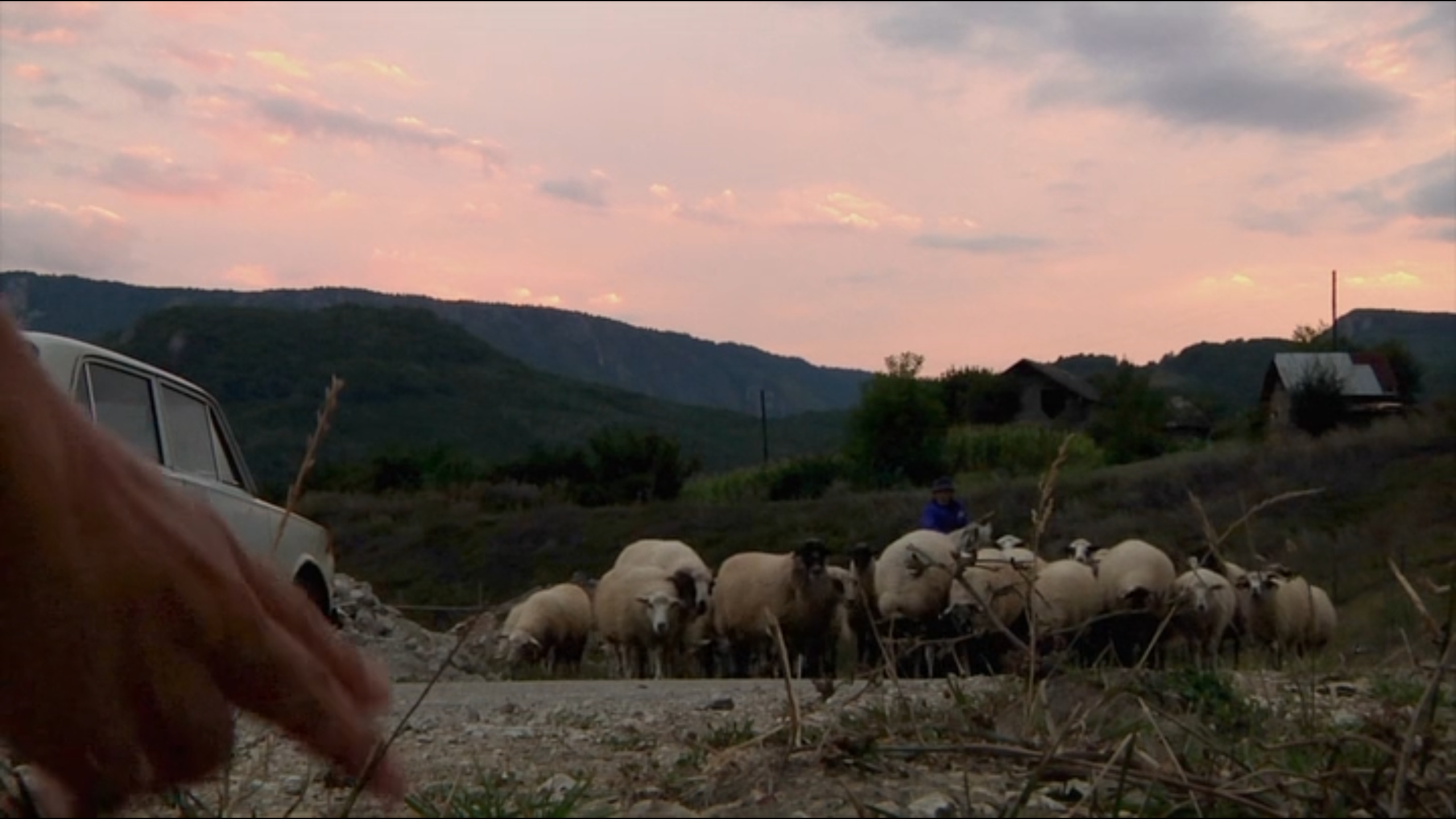
[5] The first shot the viewer sees after the introductory message is of a shaky camera pointed at a white house. A woman is heard mumbling behind the camera. This voice belongs to Johnson, who is talking to herself while composing her shot. She discusses the beauty of the flowers, and the audience hears her contemplation on what will make the image good. The viewer is allowed to witness this unfiltered moment of her working which is something that would likely be cut out in other films as it gives recognition to the person behind the camera. More of these moments happen throughout the sequence, such as Johnson talking to the people she is recording. The viewer even gets their first glimpse of Johnson’s physical body as a hand is seen pulling grass out of the ground in order to get a better composition (Figure 1). Moments of the cinematographer's presence happen quite steadily throughout the film, reminding the viewer that they are witnessing this from Johnson’s perspective. The audience is shown right away that what they will be seeing is controlled by Johnson’s gaze as if they were looking through her eyes. Her look is now established as a female gaze, which is something that has not often been recognized in film as it is normally a male gaze that has control over what is shown.
Figure 1, A glimpse of a figure not usually seen: cameraperson Kirsten Johnson
pulls grass out of the shot in Cameraperson
[6] In her famous essay “Visual Pleasure and Narrative Cinema,” renowned film theorist Laura Mulvey uses psychoanalysis to give a definition to the male gaze and its long history in cinema. Mulvey explains that there are specific elements that make up and contribute to the male gaze. She explains how scopophilia (pleasure in looking) and identification with the image create a set standard for how women are viewed and represented by male viewers and filmmakers. This standard makes it so women are objectified in film and used as something to be looked at. This means that they are not represented as human beings with intellect and diverse, complex characteristics but, instead, are seen as objects to be observed and displayed as a spectacle (Mulvey 14-19). This is taken further if there is a male character in the film. The male in these films is often the one the audience identifies with. As Mulvey explains, “As the spectator identifies with the main male protagonist, he projects his look onto that of his like, his screen surrogate, so that the power of the male protagonist as he controls events coincides with the active power of the erotic look” (Mulvey 20). Mulvey’s writing is integral in film theory because it points out unaddressed issues in filmmaking and also introduces the idea of the male gaze. This forever changed the way movies were perceived and generated a whole new way of thinking about sight in film as well as audience perception. While this theory is valid and applicable to contemporary filmmaking, there are still flaws. One of the biggest is that it does not leave room for the female spectator or the female filmmaker’s gaze. When a film like Cameraperson is created, there must be room to identify and understand its gaze.
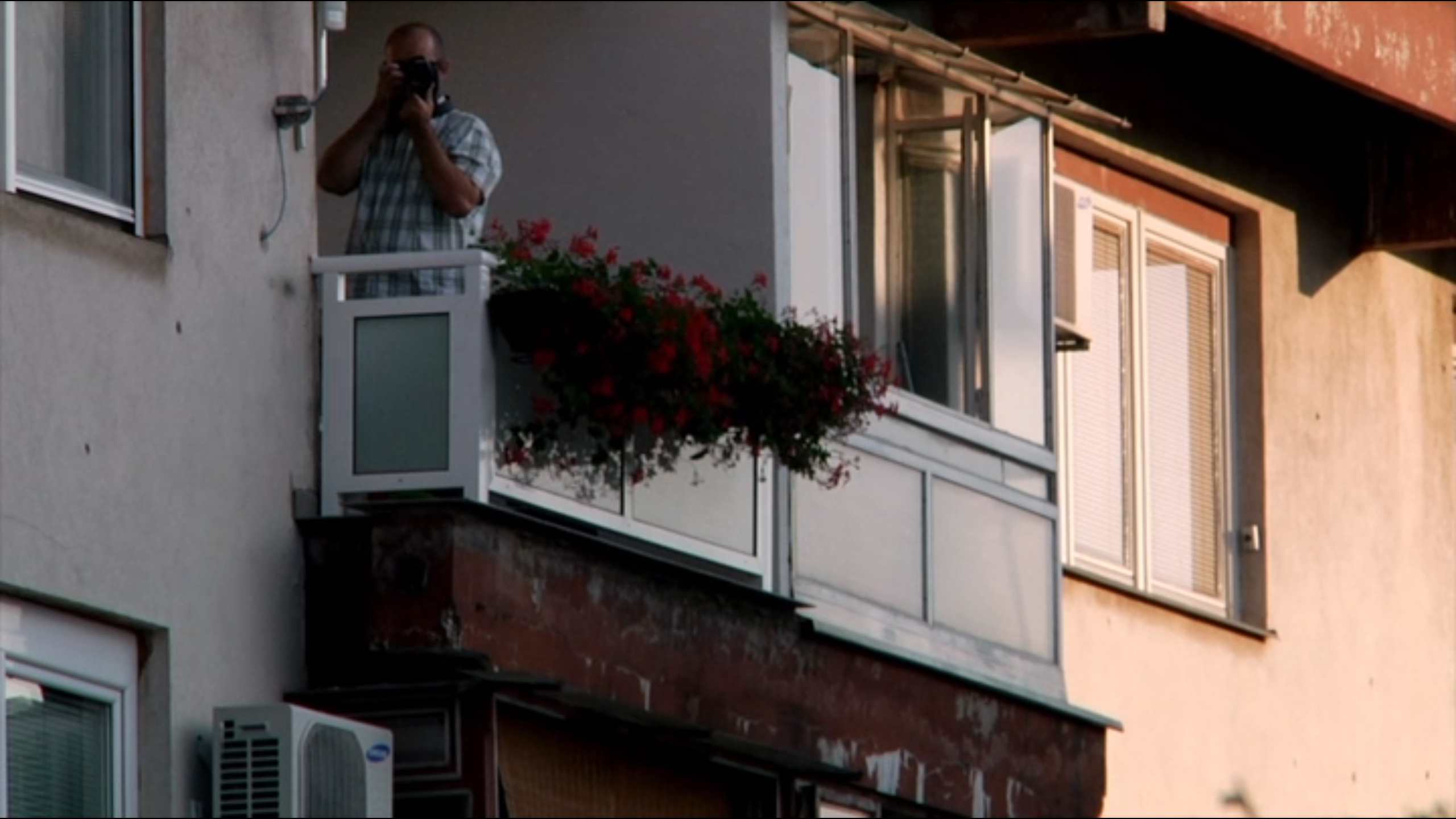
[7] Having Cameraperson be from the perspective of Johnson complicates the male gaze that Mulvey discussed in her writing. Mulvey had to use psychoanalysis to generate terminology for what is now known as the male gaze. But as a cinematographer, it is the female Johnson who chooses what to focus on and how to represent it. This does not change the fact that there still is a gaze. Johnson shows that she is aware of the power of the camera’s gaze throughout the film. There are multiple moments in the movie that prove this but one sticks out and feels very meta compared to the rest. This moment happens when Johnson is heard behind the camera discussing with an anonymous woman what is and is not allowed to be recorded where they are filming. Johnson states “anything that’s in public is public domain, it’s open. But you also, it’s like I always try to have some kind of relationship with people, like I’ll look them in the eye like ‘You see me shooting you, don’t you?’” Following that line, a man with a photography camera, who is facing away from the audience, is shown standing atop a balcony. He eventually turns around and points the camera at Johnson (who is behind the camera filming him), and takes a photograph (Figure 2). This scene both acknowledges the gaze of the camera as well as confronts it.
Figure 2, dueling cameras in Cameraperson
[8] Johnson choosing to leave in this select dialogue is important because it gives the viewer her perspective on how she is thinking about things, specifically the gaze. She contemplates what it means to film unsuspecting people, those who do not have knowledge of the gaze set on them. She strives to break this idea of objectifying people as solely something to look at by acknowledging her presence as an observer and essentially letting them know they are being filmed by making actual eye contact with them. Johnson realizes that the camera can be troubling because of its gaze. This is further conveyed by following up that dialogue with the imagery of the man holding the camera. Johnson is acknowledging that there is an objectification of people when working as a cinematographer. She and the man with the camera are a mirror of each other’s gazes in that they are both voyeurs observing other people. In an interview from Filmmaker: The Magazine of Independent Film titled “Locking Gaze,” Kirsten Johnson explains the significance behind certain moments from Cameraperson. One of these moments she discusses is of the man with the camera. Johnson said of it, “This makes me confront who I may be to other people. Filming can be so aggressive, such a taking of the person. The way in which this man tries to be stealthy by turning and covering his face with the camera as quickly as possible—it’s a way, I feel, of hiding some kind of shame” (Macaulay 33). Understanding her gaze and being concerned about it is one way that Johnson’s gaze differs from the gazes in other films. This is because many filmmakers have pronounced voyeuristic qualities in their films and often choose to ignore the way they are representing those on the other side of the camera, and particularly their objectification of women.
[9] There are theories based on Mulvey’s that introduce the idea of a female gaze. Carol J. Clover is an author and theorist who developed new concepts based on Mulvey’s male gaze. Clover is recognized for her theoretical writing about the female and male gaze in horror films. She has expanded on Mulvey’s initial male gaze theory by recognizing that a female gaze exists. In “The Eye of Horror, '' a chapter of her book, Men, Women, and Chain Saws: Gender in the Modern Horror Film, Clover discusses various gazes in horror films; in particular, she describes the assaultive gaze and the reactive gaze. The assaultive gaze has to do with the male gaze and its predatory look at women. This look is constructed through the camera as it invites the audience to be a part of this gaze (Clover 202-203) . It is again an objectifying gaze as it turns the female into an object to be harmed, or even worse, killed. This gaze is normally in the first person, adding emphasis to the connection of the gaze with the male viewer. The opposite end of the assaultive gaze is the reactive gaze. This gaze is typically constructed through a female perspective and is linked with the victim, putting the viewer in a position of being threatened by the assaulting camera (Clover 203) . Cameraperson must reject these gazes to give proper representation to those in the film. Johnson attempts to get rid of these gazes by acknowledging them, as well as showing a female perspective that has been missing in film since its inception.
[10] What Johnson is doing is altering Mulvey’s theory as she is a female dictating the gaze. In the article “Gender in Cinematography: Female Gaze (Eye) behind the Camera,” author and cinematographer Zoe Dirse seeks to examine if there is a difference in perception between the male and female gaze. Dirse does so by breaking down her own work and experience working as a cinematographer. She explains that women cinematographers have historically been underrepresented due to a male-dominated film industry (Dirse 18). But Dirse rejects Mulvey’s gaze theory. She questions what it means for a female to be the bearer of the look and how the perception of gender alters this outlook. Dirse’s experiences can relate to Johnson’s as they are both female documentary cinematographers.
[11] Dirse mentions that being a documentary cinematographer allows for more “license and freedom” (Dirse 16) in what is being captured compared to traditional fiction films. In fiction films, one has to follow the vision the director wants, so the freedom to express their perspective is limited. Though being a cinematographer is a collaborative experience with the director (who may be male or female) in both fiction and documentary, having this freedom and having to act on the spot is one way to break away from the male gaze. The man is no longer the one controlling the gaze, and in the case of documentaries, it is up to the female cinematographer to capture what they see in a specific moment. This is literally giving way to the female gaze by allowing the woman to take control over what the audience will see. In Mulvey’s essay, she discusses the difficulty in breaking away from the male gaze because of its long history in film. In her theory, the male gaze is the standard, and to reverse that gaze means that it will always be an alternative to the standard (Mulvey 15). However, Dirse suggests that “when feminist filmmakers engage in the process, then the film has feminist elements” (Dirse 25). Johnson’s ability to work in a male-dominated industry and tell female stories is incorporated into Cameraperson to give the film a female perspective.
[12] Johnson being a female cinematographer is also important because of her perspective on the world. This perspective is one that a male cinematographer or director would not be able to understand or present. There are many examples of this throughout Cameraperson, but two examples stand out the most. The first is a scene that was filmed during shooting for a 2016 film entitled Trapped, directed by Dawn Porter. In this clip, a single mother sits in an abortion clinic and discusses her present life, her past struggles, and her future goals. She explains that she cannot handle a second child and that she feels like a bad person because she got pregnant unintentionally. This comment provokes an intervention from Johnson, who is behind the camera. She tells the girl that “the only rule I am going to give you is you may not say ‘I’m not a good person’ anymore because that is not the case. Unintended pregnancy is an unintended pregnancy. That’s all it is.” It is a very emotional moment for everyone in the room. Johnson stopping the conversation to let the girl know that she is not a bad person is very important in that Johnson creates a safe space for the girl to discuss these difficult topics. Another woman in the film states that “it’s also happened to all of us. We’ve all had unintended pregnancies.” This again creates a safe space in which the girl in front of the camera can relate to those behind it. The girl is treated as a human being with deep complexity and is given emotional support during a tough time. If it were men behind the camera during this interview, the dynamic would not have been the same. A male cinematographer would not be able to relate to the girl’s difficulties in the way a female cinematographer might be able to and, in this case, was able to.
[13] There is another moment in Cameraperson where we see gender really matter. A segment from a 2011 female-directed documentary entitled Women, War and Peace: I Came to Testify is shown. The clip selected from this film and put into Cameraperson is of a Bosnian Muslim woman who discusses her experience living through a time in Foća, Bosnia while imprisoned during the Bosnian war. She explains that she was raped by male soldiers and describes other horrors she witnessed while imprisoned. Similar to the previously-discussed clip, if the people in the room during this discussion were not female then it could have been hard for the woman to discuss her trauma. The reasoning behind this is similar to the former clip, in that a male might not fully understand or identify with the perspective that this woman is coming from. A woman might also have found it hard to discuss this topic with men because of her past abuse and trauma associated with men. Dirse emphasizes the importance of being able to connect with the person being filmed: “As a female cinematographer, I could feel the fear and instability that women living in such volatile environments must experience daily, and I could feel the urgency to tell their plight through my eyes, look, and gaze” (Dirse 24). The importance of a female cinematographer is that a woman can have a different perspective on many things that men would not have the same perspective on.
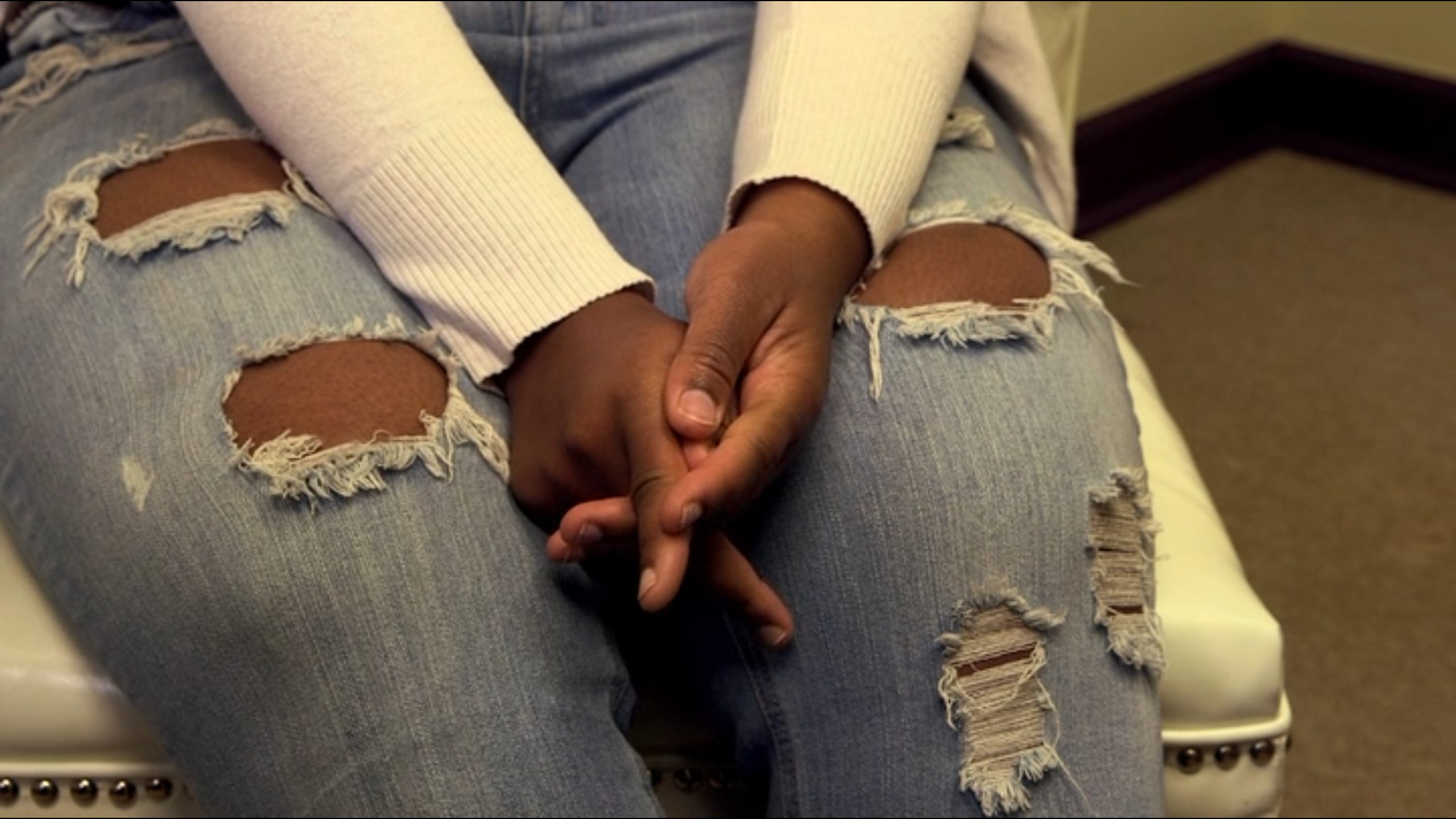
[14] The way that Johnson presents these traumatized women is also important. In these scenes, Johnson chooses to show only the women’s hands as they speak (Figure 3). In “Locking Gaze,” Johnson explains this choice: “I realized that I was learning completely different things from watching a person’s hands as they were speaking than I’ve learned from their words” (Macaulay 28).
Figure 3, Johnson focuses on a girl’s hands to respect her privacy
[15] What makes this shot interesting is that Johnson chooses to focus on the girl’s hands and not any other part of her body. There are a few reasons Johnson chose to do this, one being confidentiality, but the hands work as being a different way to allow the girl to express her feelings without having to show her face. The hands give emphasis to the person talking as they express her nervousness, her pain, and visualize what she is saying. In other films, parts of a woman's body could be used as a way to objectify them as nothing other than that body part, but that is not true here. The hands are a replacement for a face. If the girl’s face was shown, that would have led to ethical problems as it was confidential, but it would have also put the girl in a much more vulnerable position.
[16] Johnson is also interested in other people’s gazes. In Cameraperson, there are many moments of exchanged looks. This happens in the film when Johnson is filming someone and that person recognizes that they are being filmed. They then look back into the camera, introducing a new type of gaze which will be referred to as the returned gaze. This is interesting as Johnson’s own gaze has already been established, so by including a returned gaze in her film, it creates a dynamic between two different ways of looking. There is a specific interest in the returned gaze in this film as there are around fourteen instances in which someone acknowledges Johnson’s presence. This is interesting because the film ends up becoming about more than just Johnson's gaze: it becomes about how other people see her and the power she holds.
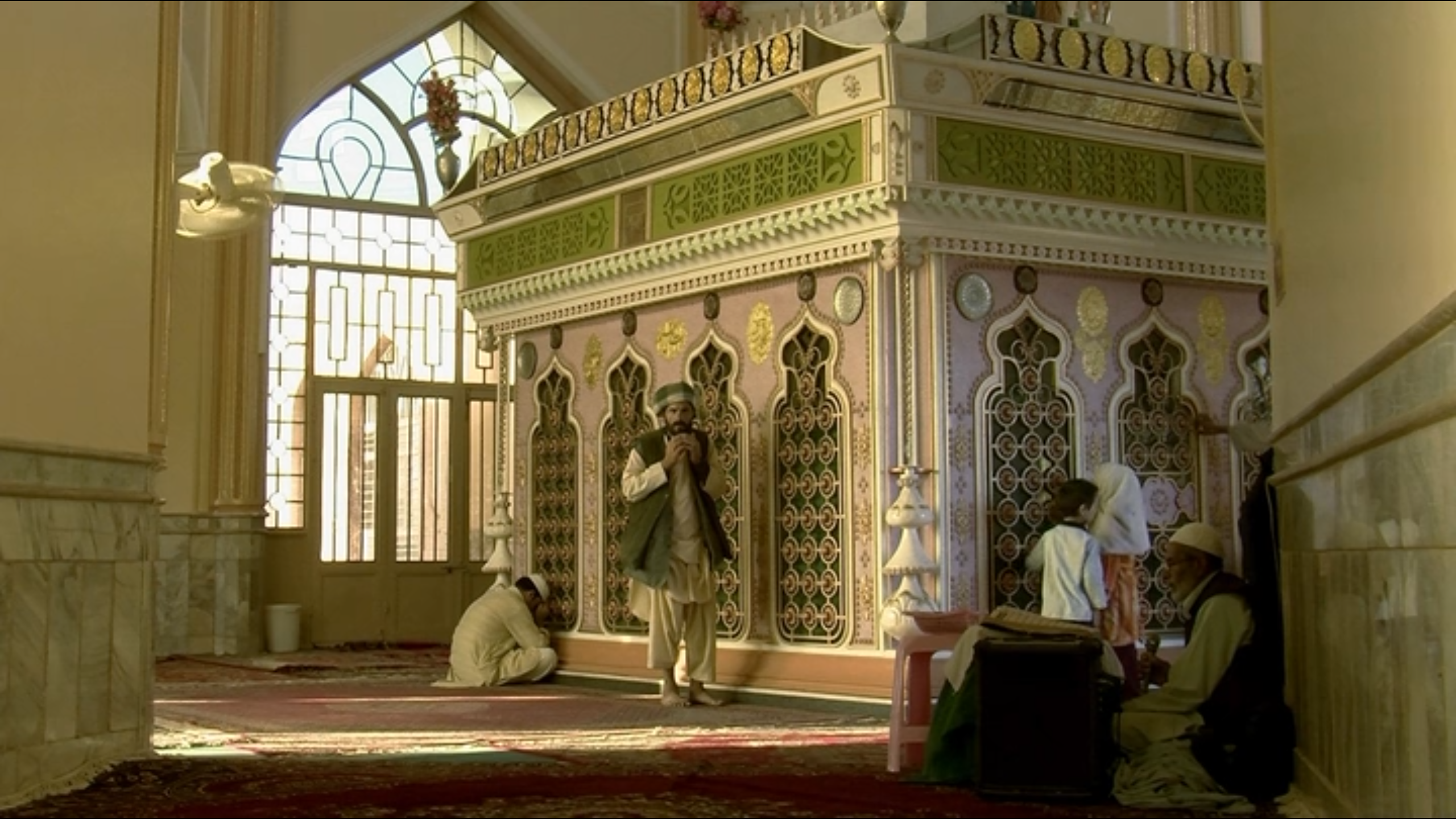
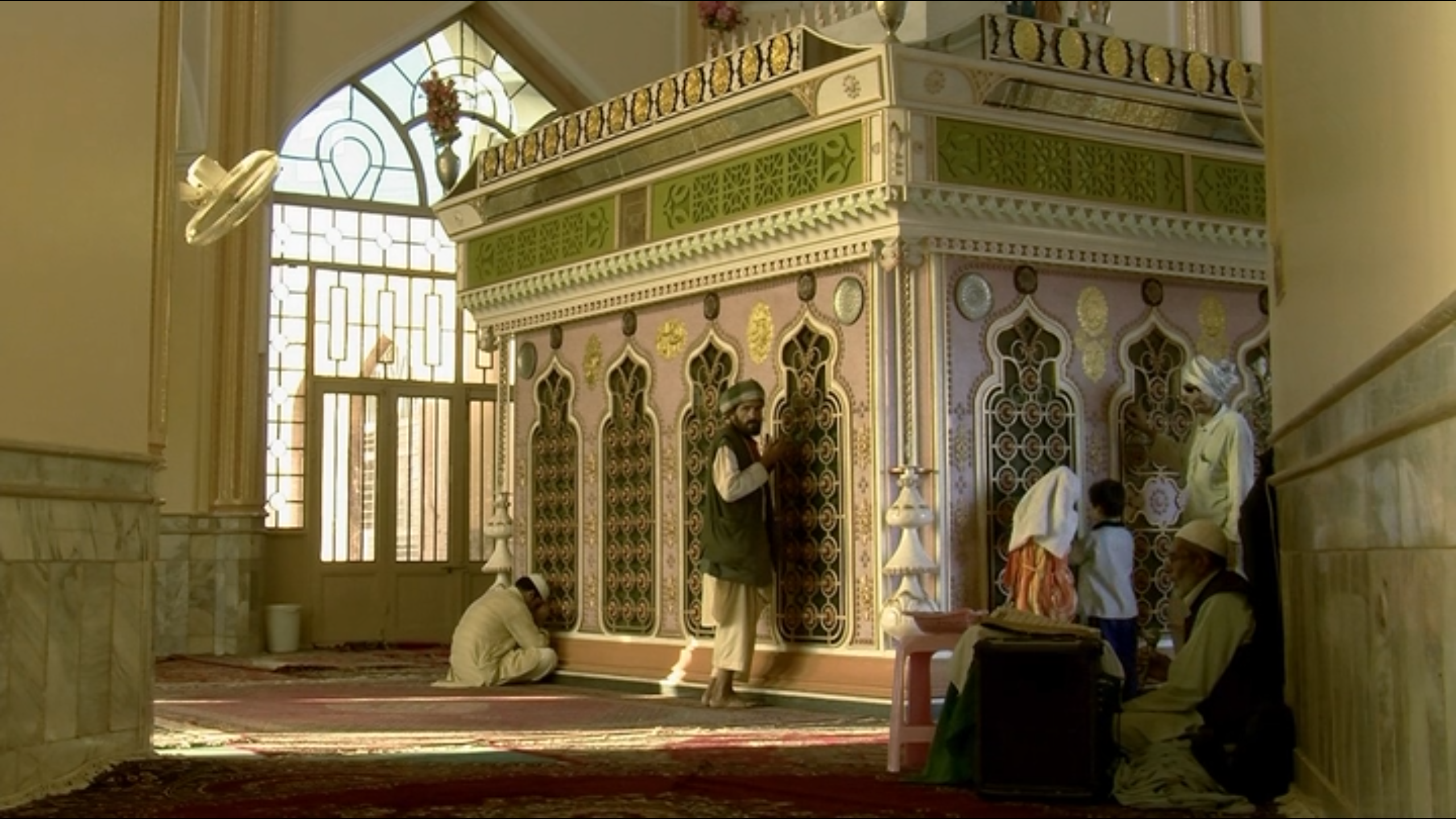
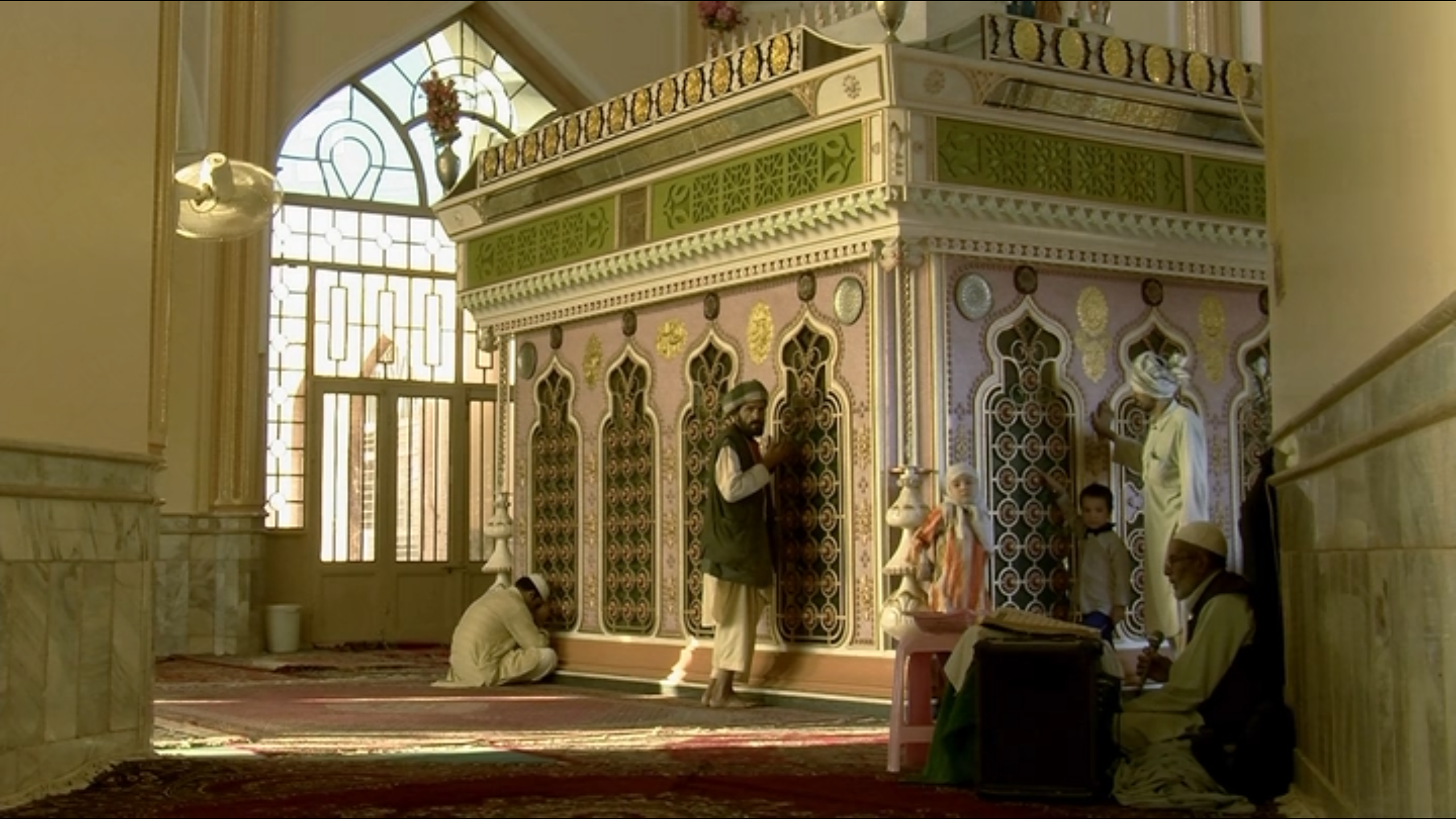
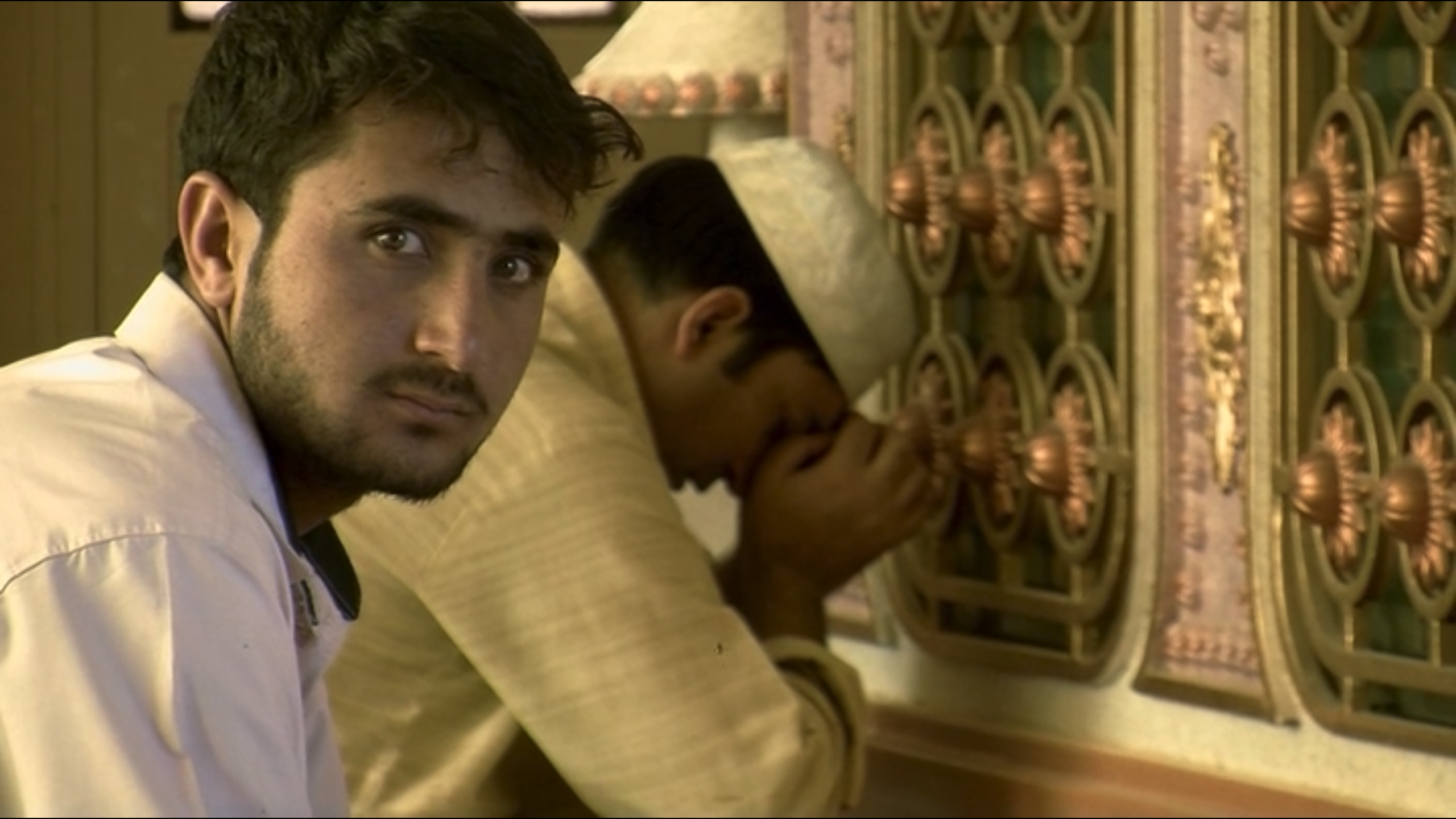
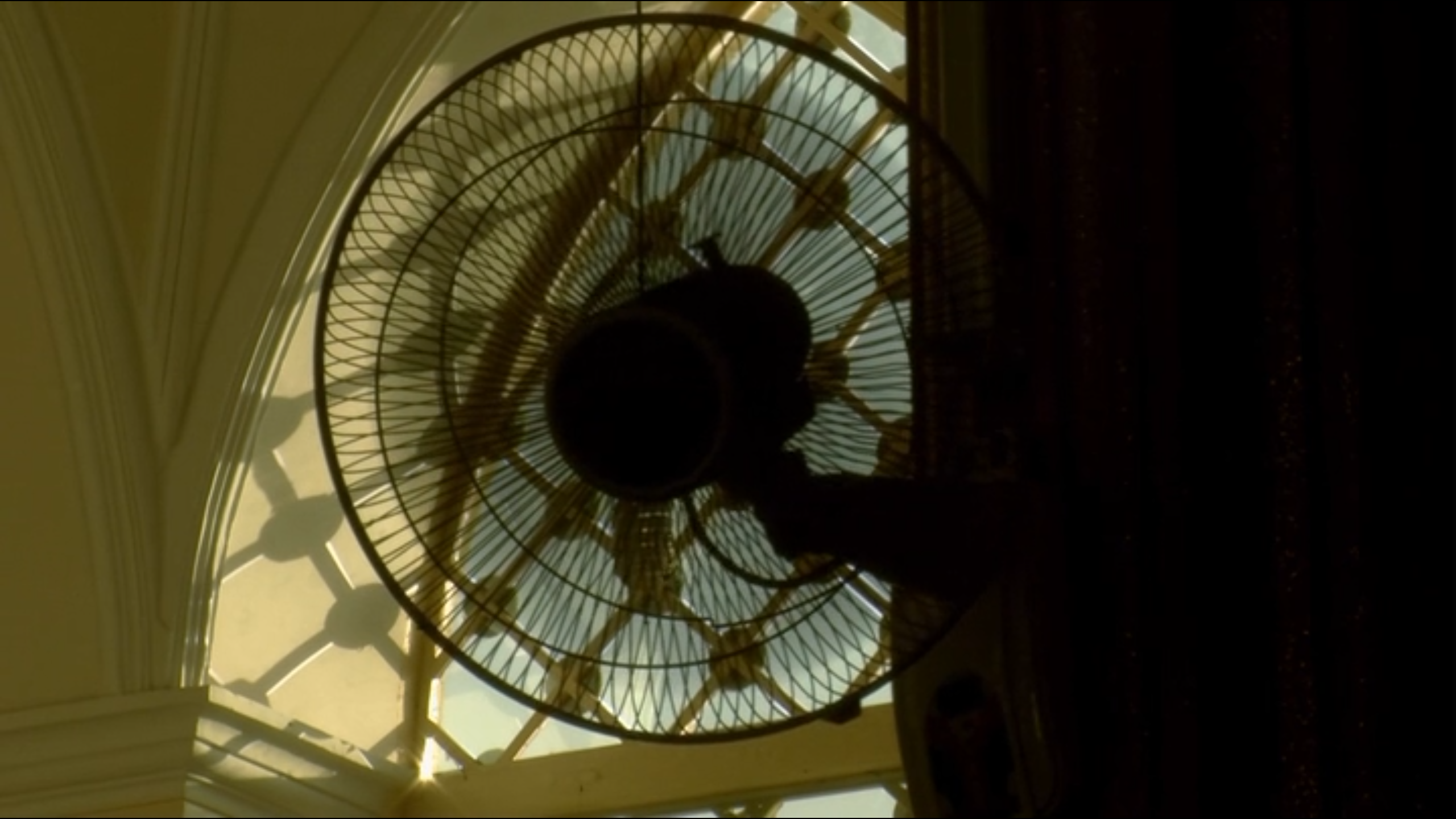
[17] There is one specific moment in Cameraperson that demonstrates this idea very well. We see a reversed gaze in footage from an unfinished film of Johnson’s entitled A Blind Eye. This sequence takes place in a mosque located in Herat, Afghanistan. After a title card establishing the location is shown, the film cuts to a long shot where a man stands next to the prayer area facing and staring directly toward the camera. His look is abrupt as the audience is immediately presented with it after the location title (Figure 4). His look is also intense as if he is unapproving of being recorded. After some time he turns toward the wall he is standing near and turns his head away from the camera. Moments later he looks back and stares again, this time his body is turned away but his face is still direct. He seems curious but still wants to be hidden (Figure 5). Two children then notice the camera and their gazes also become fixated on Johnson (Figure 6). It feels as if the watcher (Johnson) has now become the watched in that the gaze has been equalized and flipped. They are now watching her. The film then cuts to a medium close-up of a different man in the same area but he is sitting down. His gaze starts off away from the camera and as someone walks past his eyes lock onto the lens but only for a few seconds (Figure 7). He then looks away and continues to pray, acting as if he is not being watched. The last shot of this sequence is of a silhouette of an oscillating fan that is attached high up to a wall in the Mosque; even this fan seems to resemble an eye turning toward the camera (Figure 8). This sequence of looking works very well in gaining an understanding of different gazes and what they mean.
Figures 4- 6, worshippers at a mosque stare at the camera; Figure 7, a man pauses in prayer to stare at the camera; Figure 8, even the oscillating fan turns its eye toward the camera
[18] In “Locking Gaze,” Johnson explains that she did not have permission to film in the mosque and that, before filming, she saw the first man outside the mosque and he yelled at her, indicating he did not want to be filmed. Johnson believes that “it was so outside his realm of possibility and imagination that he was just kind of stunned at the impossibility of seeing me in that space. The totality of his shock was so interesting to me that I held the shot for as long as I could hold it” (Macaulay 31). His look is more than just curiosity, rather it is a look of confusion, discomfort, and a challenge of power. This sequence and this statement tell a lot about the power dynamic between the filmmaker's gaze and the reversed gaze.
[19] In Mulvey’s theory of the male gaze, the one who looks is the one who has the power; as she explains, “The man controls the film fantasy and also emerges as the representative of power in a further sense: as the bearer of the look of the spectator…” (Mulvey 20). Johnson being in control of the camera challenges this idea. In Cameraperson, Johnson is the one who has the power because of her position as cinematographer and director. She is in control and has the final say over what the spectator sees, not a man. She also does this in the films she works on as a cinematographer because, as discussed earlier, she has the freedom to decide what to shoot and how to shoot it. This is just one layer of the power structures that are constructed in the gaze.
[20] In her book, Unmarked: The Politics of Performance, Peggy Phelan discusses the power of visibility and its relationship with representation. She argues that to be invisible is to have more power. One can do things from the shadows without being caught or seen, but to be visible is to provoke “voyeurism, fetishism, the colonialist/imperial appetite for possession” (Phelan 6). In the case of Cameraperson, Johnson is both visible and invisible. For example, she is made visible by the man in the mosque, who challenges her power as an invisible all-seeing force. She cannot hide from this person as his gaze exposes her voyeuristic look. On the opposite end, she does remain invisible in some parts of the film. The very last sequence of Cameraperson is a long take of a panning camera that tracks people walking on the streets of Monrovia, Liberia. The camera is reminiscent of a head turning to look at the various people on the street. No one notices this gaze that is set upon them, so there seems to be more power in Johnson’s point of view: Johnson sees them but they don’t see her. Johnson acknowledges both kinds of looking in this film by accepting the challenge of the returned gaze as well as being a voyeur. The difference is that she makes clear that she has the power of invisibility by viewing these people without their recognition, even as she accepts and embraces the look of others. Going back to the mosque sequence, what is interesting about the second man, shot in close-up, is that he seems to have accepted that he was being filmed. This person seems to have accepted the idea that the camera is representative of another person in his life who is watching him. This then relates to the significance of the oscillating fan, as it looks like a security camera watching over everyone in the mosque. Everyone is constantly being surveyed whether it is being filmed or not. The man knows he is being watched but it does not anger him as it does the first man. This could come from acceptance of voyeurism or from the idea that if he ignores the gaze then he is invisible to it.
[21] The first man in the mosque could see Johnson as a threat to his power especially because she is female. Him being the subject of her gaze is a challenge in its own right, because the male gaze normally structures looking: the male is the one looking at the female subject. This reversal could have led him to become angry or confused as to why he was the subject of the gaze. This again flips the idea that all cinema is male gaze because here we have a female gaze looking at a male person. The threat this moment represents might be particularly acute as this returned gaze happened in Afghanistan where a challenge of power might not be all that common. Zoe Dirse remembers encountering male resistance to her gaze during one of her shoots. “At first, the men seem curious, staring directly into my lens (curious at the camera or my gender), and then suddenly the look changes and I feel danger as they start to push and shove (at which point I escape to safety)” (Dirse 24). The challenge of the look was based solely on gender here and that could have been one of the challenges the man in the mosque considered in his look at Johnson.
[22] The final gaze to discuss is that of the audience member. The returned look makes it feel as if the person is looking directly at the film viewer: in the scene in the mosque, the look the man gives is not only to Johnson but to the spectator as well. This puts the audience into Johnson’s place on a deeper level, so that there is some sort of distant connection trying to be formed between the returned gaze and the spectator. This relates back to Phelan’s ideas about the representation of reality. If one feels that they are connected to the person they are looking at, then the spectator might be trying to form a distant connection with who is looking at them. It also puts the viewer in the place of a female and forces one to identify with her gaze. There is no way around it as her look is the audience’s look.
[23] In conclusion, the film Cameraperson deals with many aspects of film but it is very interested in a variety of gazes. These gazes range from that of director/cinematographer Kirsten Johnson to those who look at her in the film and the spectators that watch the movie. Johnson being a working woman in a male-dominated field flips many of the preconceived notions about the male gaze in cinema and constructs a different type of gaze. By analyzing Laura Mulvey’s famous essay and other theories opposing Mulvey, one can see that a female gaze is possible in cinema and there is a place for it. By being in control of what the audience sees, Kirsten Johnson is giving us a gaze that was once thought to not exist. How that gaze is handled varies from film to film, but in Cameraperson, the female gaze embraces the challenges of opposing gazes as well as acknowledging its own power. Cameraperson and Kirsten Johnson are not afraid to be looked at or to analyze their own forms of looking.
Clover, Carol J. 1992. “The Eye of Horror.” Men, Women, and Chain Saws: Gender in the Modern Horror Film, Princeton University Press, pp. 184-217.
Deutsch, Ron. 2016. “The Act of Seeing: Kirsten Johnson’s ‘Cameraperson.’” Documentary, vol. 35, no. 4, pp. 9-12.
Dirse, Zoe. 2013. "Gender in Cinematography: Female Gaze (Eye) behind the Camera." Journal of Research in Gender Studies, vol. 3, no. 1, pp. 15-29.
Johnson, Kirsten, director. Cameraperson. Janus Films, 2016.
“Kirsten Johnson.” IMDb, IMDb.com, https://www.imdb.com/name/nm0990310/bio?ref_=nm_ov_bio_sm.
Macaulay, Scott. 2016. “Locking Gaze.” Filmmaker: The Magazine of Independent Film, vol. 24, no. 4, Summer, pp. 27-33.
Mulvey, Laura. 1989. “Visual Pleasure and Narrative Cinema,” Visual and Other Pleasures. Indiana Univ. Press, pp. 14-26.
Phelan, Peggy. 1993. Unmarked: The Politics of Performance. Routledge.