[0.1] Abstract - In film theory, the gaze itself is heavily explored in all its variations: male gaze, oppositional gaze, female gaze, assaultive gaze, reactive gaze, and the intersectionality of gender and race in the gaze, which we see in the discussions of fetishization in film. Get Out replaces the function of gender in horror, as Carol Clover describes it in her article, “Her Body, Himself: Gender in the Slasher Film,” with an exploration of the anxiety of race, and thus digs into objectification and racial power dynamics.
[0.2] Keywords - horror, race, gender, whiteness, male gaze, oppositional gaze, fetishizing, intersectionality, spectatorship
[0.3] Trailer
Pardo, Juanita Andrade. 2024. “The Innovative Layered Gaze in Get Out,” Muhlenberg Visions. Volume 1, No 2.
[1] Horror is a fascinating genre that has depth and an important cultural function. It is often misunderstood, although less than in the past, and people are still distracted by the violence, gore, and sex that they perceive as gratuitous. They criticize the genre’s sexist archetypes, such as women seemingly being punished for having sex. These criticisms aren’t unfounded or insignificant. The genre of horror, like any other genre, has its flaws; for instance, its racist tropes, like the Black person dying first in the film or its general focus on white characters. That is not to say that these issues should be dismissed. But although genres and films can be flawed, critics should not ignore the positive cultural work they do. People use particular examples to generalize the entire genre of horror as sexist. They don’t go further in their analysis and consider these tropes as explorations of the fears and anxieties of society. These surface level critiques not only dismiss the complexity and depth of horror, they also ignore selective and oppositional readings. Horror is not, in my eyes, or in the eyes of many other audience members, solely defined by the superficial components of gore, violence, and sex. Horror can be defined by its efforts in cultural problem-solving: uncovering anxieties and fears and then presenting them in a way that invokes a visceral reaction. Get Out, directed by Jordan Peele and released in 2017, was a big success because it engaged in exploring the fears of the Black community, who have not seen that kind of representation in horror movies.
[2] The film’s plot is that the protagonist, Chris, is invited by his girlfriend, Rose, on a weekend getaway to meet her parents at their home in upstate New York. Rose is a white woman with a white family, so Chris, as a Black man, expresses his apprehension in meeting them. Rose reassures him that they are politically liberal. Chris arrives and is made increasingly uncomfortable by the family’s overly accommodating behavior and the fact that their live-in staff are all Black. The big plot-twist is that Rose’s family, for decades, has been “supplying” Black bodies to the old and dying white folks in their family cult. Their patriarch, Rose’s grandfather, found a way through neurosurgery and hypnosis to transfer the consciousness of one person into another person’s body. The family only values Black people as good vessels for the minds of white people. They admire the cliched superiority of the Black physique, which is more athletic and stronger. They do not care for Black people and their minds, only for their bodies, which they see as being for white use. Rose plays the role of luring the Black men and women used in these procedures by the family. She develops romantic relationships and friendships with them in order to lure them to her parents' house. The film is direct and clear in its critique of society’s continued treatment of Black people hiding in plain sight, and the pervasive fear that is passed down in the Black community.
[3] Get Out’s psychological and cerebral approach is tied to an overt exploration of racism, and, by extension, to an exploration of the fears and anxieties of the Black community. This has really intrigued people. The fears the film explores are less visceral and more psychological, although the ending is quite violent in the style of the horror genre. The film has challenged the structures of gender and race in the genre of horror, particularly by flipping the script of the “Final Girl” as defined by Carol Clover in her article, “Her Body, Himself: Gender in the Slasher Film”: that is, the girl lead who survives until the end of the film. Here the survivor of the film is not a girl but a Black man. Jordan Peele also demonstrated the anxieties involved with Black people participating in what bell hooks has termed the "oppositional gaze" in her article, “The Oppositional Gaze: Black Female Spectators.” In the film, Rose's mother uses hypnotism to send Rose's black captives to the “sunken place,” a hypnotic state in which the body is paralyzed and the consciousness is limited and distant, only able to see a little bit. This sunken place looks a lot like a very passive kind of spectatorship, in that you can watch the world but not affect what happens. The film can therefore be seen as an exploration of the oppositional gaze and spectatorship. In film theory, the gaze itself is heavily explored in all its variations: male gaze, oppositional gaze, female gaze, assaultive gaze, reactive gaze, and the intersectionality of gender and race in the gaze, which we see in the discussions of fetishization in film. Get Out replaces the function of gender in horror, as Clover describes it, with an exploration of the anxiety of race, and thus digs into objectification and racial power dynamics. Get Out is a game changer in the horror genre and uniquely explores a fear unique to a community that is not typically represented in this genre. It speaks to the gaze in its many variations and layers, deepening our understanding of fear and its role in cultural problem solving through the form of horror films.
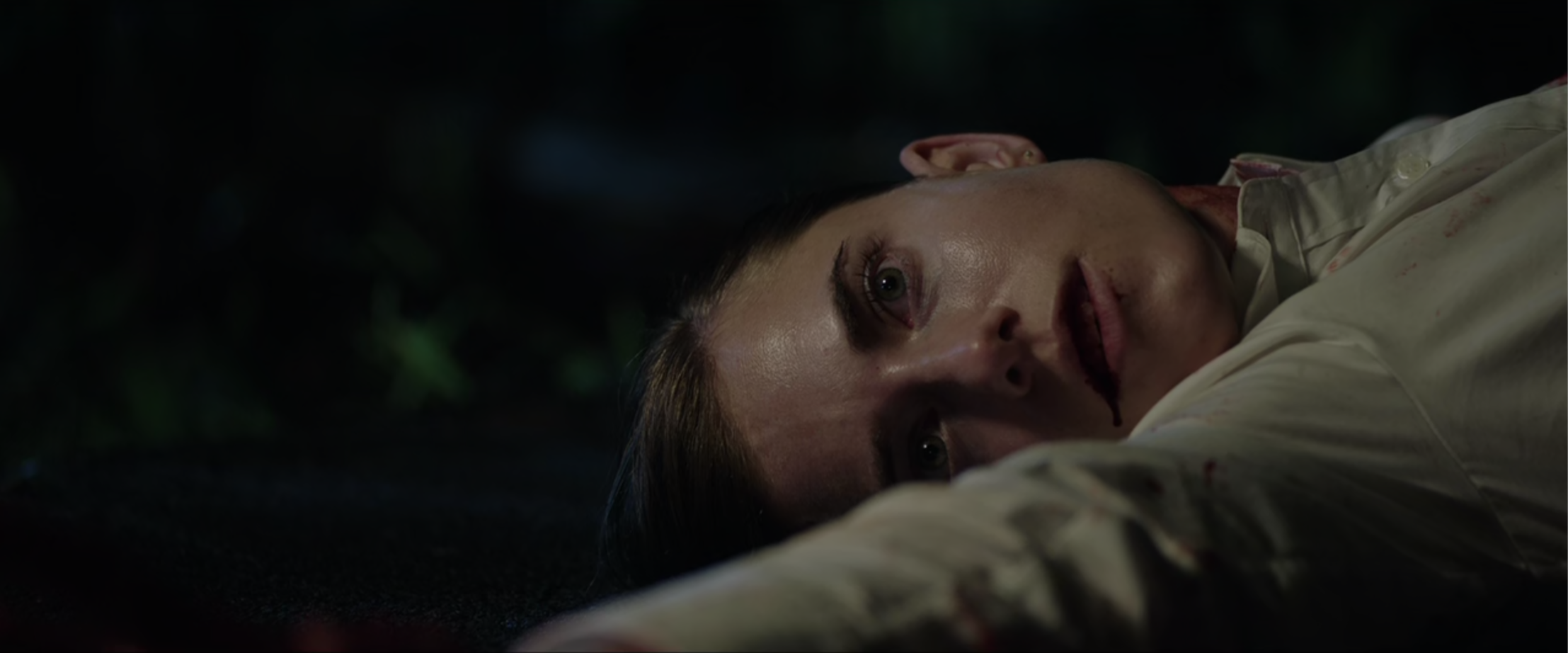
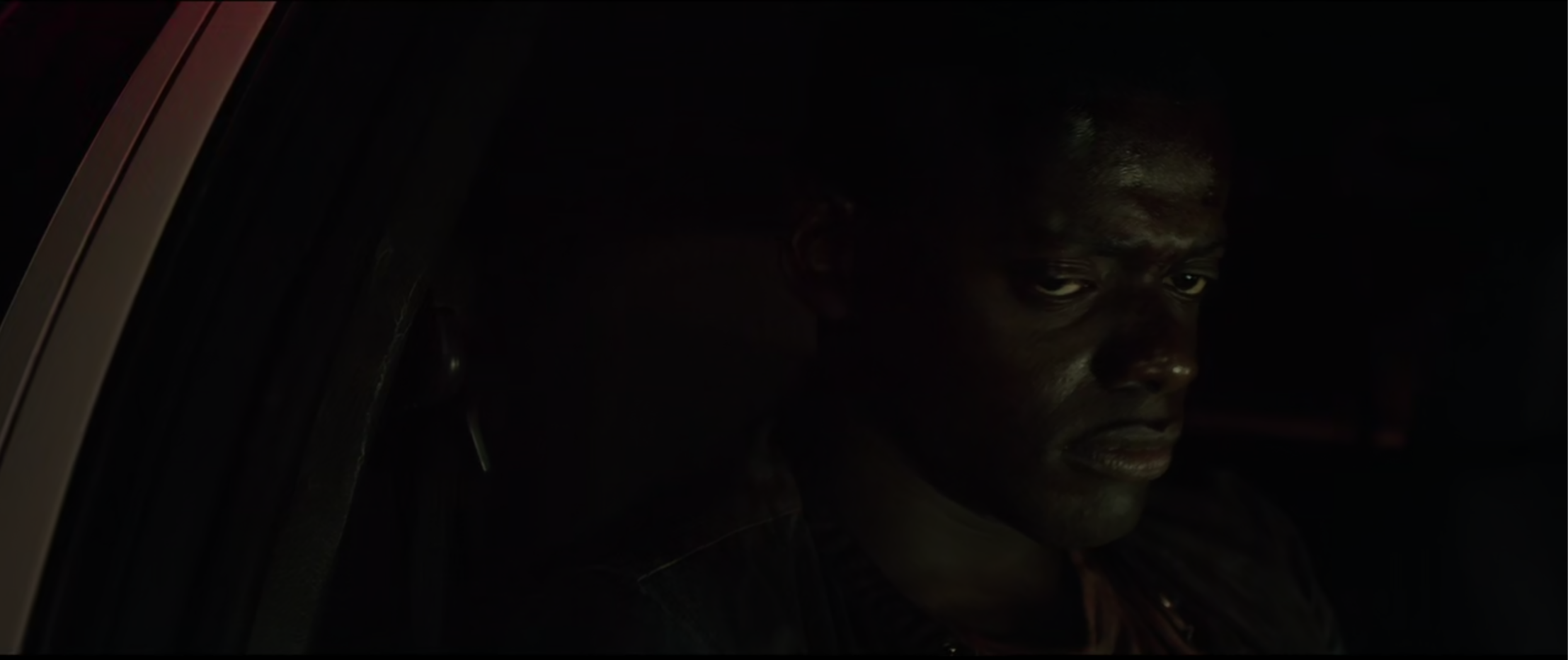
[4] A classic trope in the genre of horror is that the Black character dies first, and in recent times it has expanded to include any person that is non-white; this continues to suggest that characters of color are peripheral to the main story and so will not be missed when they are killed. But Get Out’s protagonist is Chris, a young Black man, and he occupies the role of the “Final Girl,” defined by Clover as, “the image of the distressed female most likely to linger in memory … the one who did not die: the survivor” (Clover 201). This is a huge flip in both the race and gender of the “Final Girl,” who is usually a white woman. The white woman in this film, Rose, is not a victim. She is the villain. As you can see in the images below, Chris is the survivor fleeing, evoking a sense of triumph and trauma, and Rose is the villain slain on the ground. (Figures 1 and 2)
Figures 1 and 2, Chris, the fleeing survivor; Rose, the slain villain
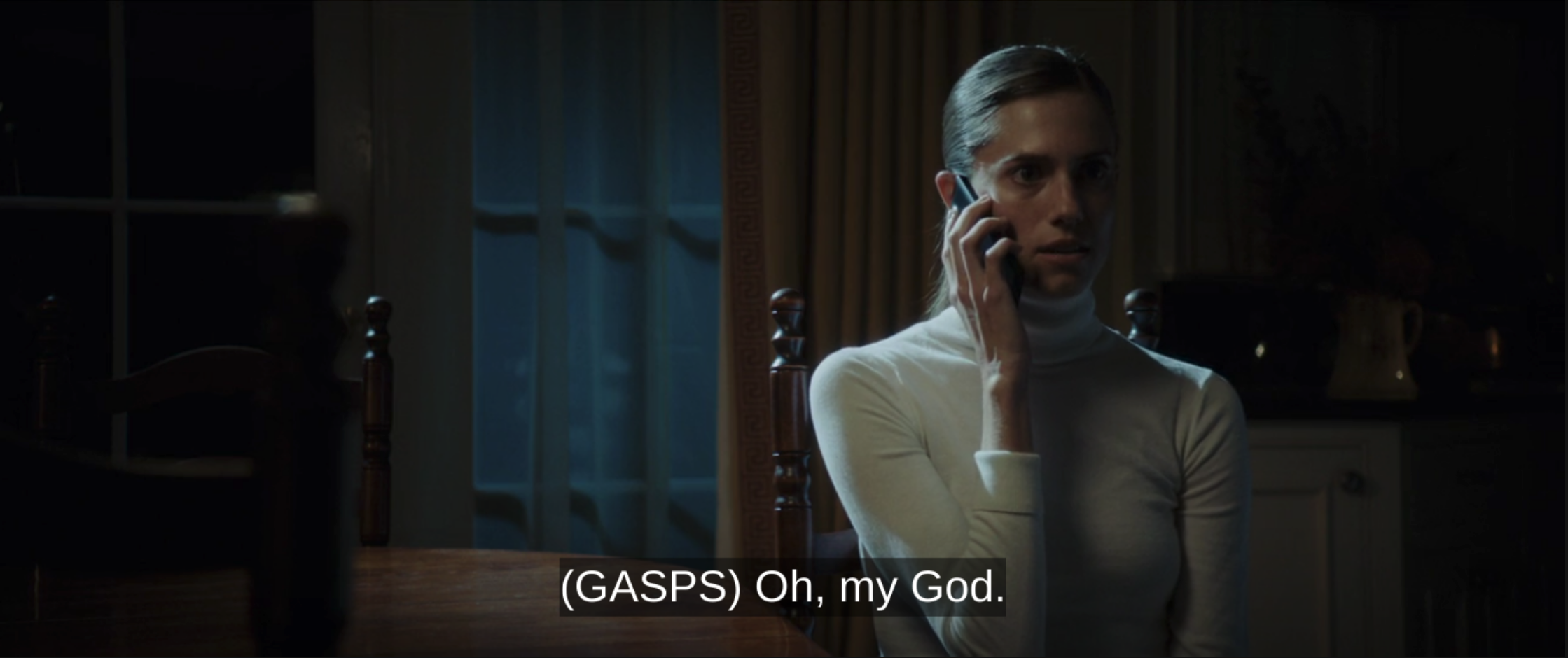
[5] Rose greatly deceives Chris and develops a romantic relationship with him for the sole purpose of using his body in this terrifying, racist, and inhumane procedure. In a scene towards the end of the film, Chris’s best friend, Rod, is calling Rose because he is worried about Chris, who has stopped answering his phone calls and text messages. Rose has a dead-pan facial expression while she is falsely conveying worry and fear in her voice, as seen in the image below. (Figure 3)
Figure 3, Rose performs as a worried white woman
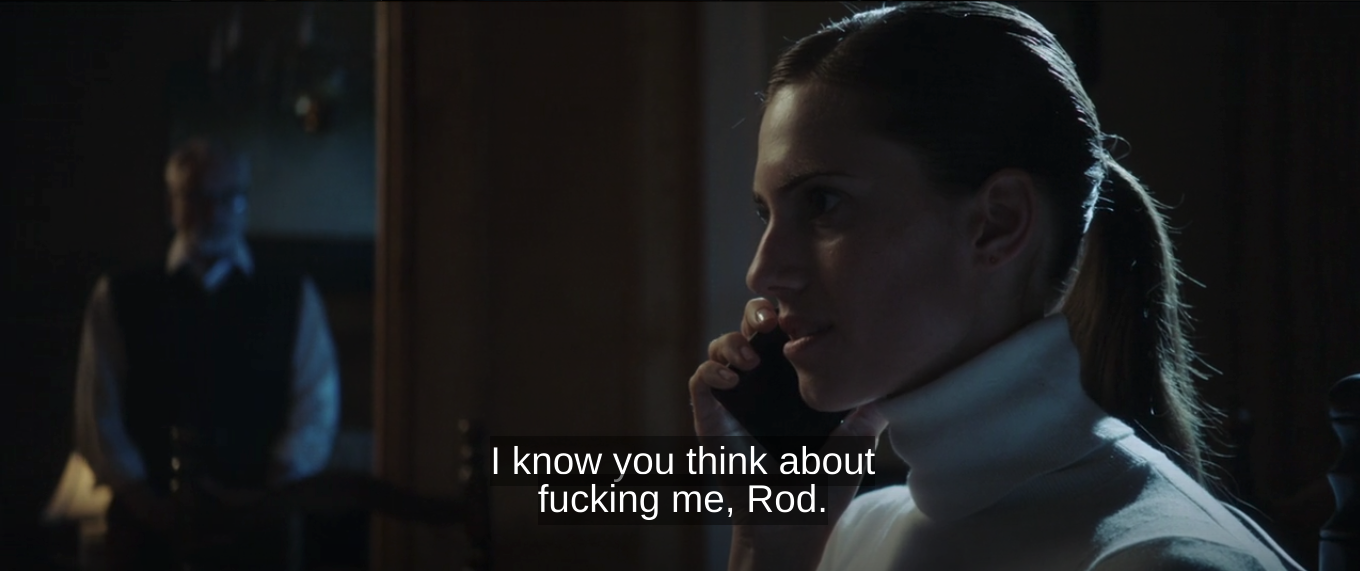
[6] Rose catches on to Rod’s suspicion and also suspects that he is recording the phone call, so she insinuates that Rod is calling because he is sexually attracted to her. Watching this scene evokes the history in the U.S. of white women falsely accusing Black men of rape. These false accusations were used as excuses for the lynching and murder of Black men. In a lot of cases, the white women had engaged in consensual sex with the Black men but lied when people found out out of shame.
[7] In this scene, Rose is using her privilege of being a white woman as a weapon against Rod who is a Black man. If Rod shares that recording, she will be seen as the victim and what he has to say will be disregarded. (Figure 4)
Figure 4, Rose weaponizes her privilege as a white woman against Rod
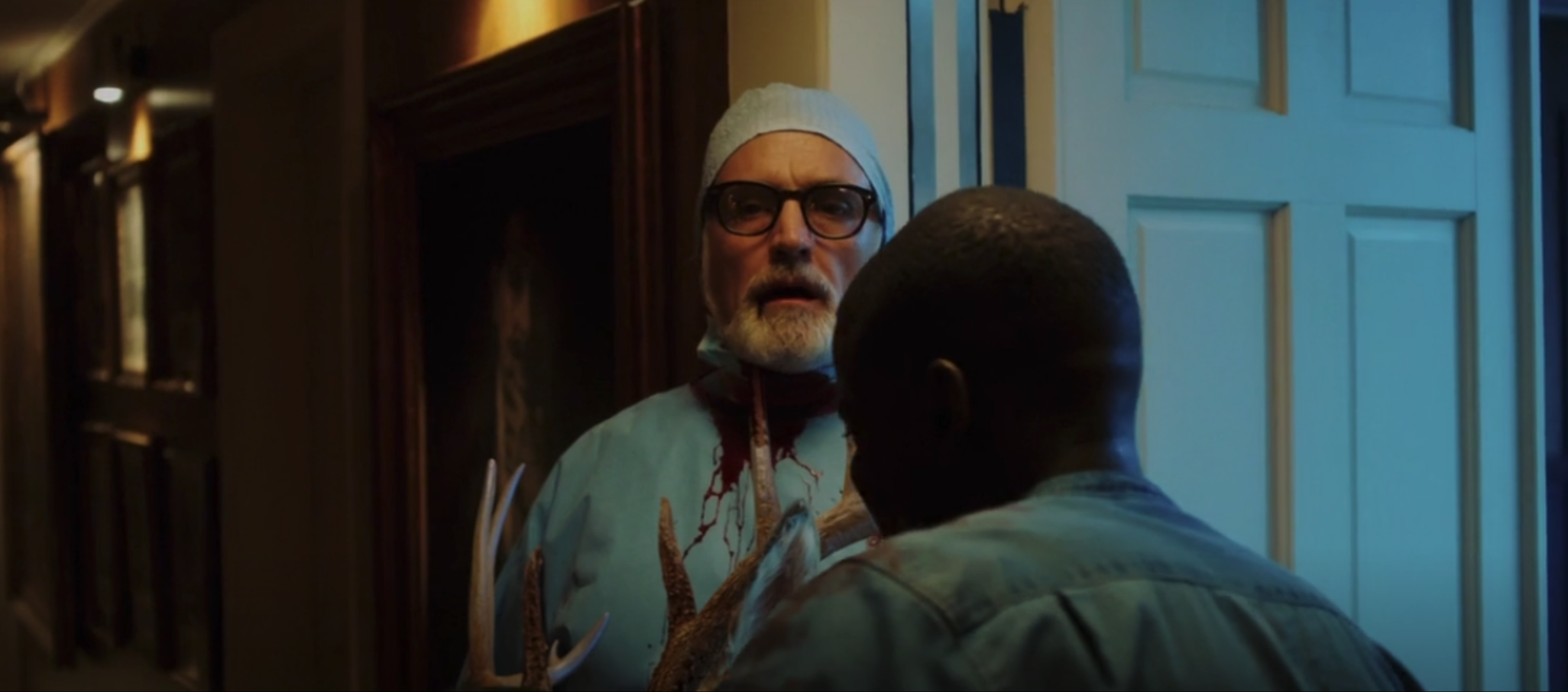
[8] Rose luring Chris also points to this psychological warfare, on top of the physical warfare, that exists in the racist structures of this country. Get Out perfectly exemplifies why it is important and necessary to address the function of horror as cultural problem-solving because, as Linda Williams argues in her article, “Film Bodies: Gender, Genre, and Excess,” “Genres thrive, after all, on the persistence of the problems they address; but genres thrive also in their ability to recast the nature of these problems” (Williams 12). Jordan Peele is engaging, more clearly and directly, in this cultural problem-solving that permeates horror films. He is manifesting these fears rooted in the racist reality Black people face into an extreme situation like the film’s premise. This extreme situation, however, still mirrors the visceral nature of the very real fear. In her article, Williams speaks about the phallic nature of the knife/ax/chainsaw in slasher films that the “Final Girl” typically uses to turn the tables on the killer, and kill them. The weapon grants them a phallic power that helps to create an easier identification with them from male audience members. In Get Out, the "Final Girl's" weapon is a mounted deer head; Chris uses its sharp antlers to stab Dean, Rose’s father. (Figure 5) Mounted deer heads are usually valued as trophies, a triumph of man over nature, civilized over the uncivilized, and in this case white man over non-white man, deer hunting being associated with a certain mode of dominating white male masculinity. Chris himself has been previously identified with the deer; at the beginning of the film, Rose kills a deer with her car, and Chris gets out to investigate it. We learn that Chris's mother was the victim of a hit and run accident; she, like the deer, died at the side of the road. The deer also represents Chris's own helplessness and loss of innocence in not being able to save his mother as a child. But Chris uses that deer, a symbol of his powerlessness, to kill Dean and assert his power over him. Chris, the one who was stalked and hunted, becomes the hunter and kills Dean.
Figure 5, Chris stabs Rose’s father Dean with the antlers of a trophy deer
[9] In Carol Clover’s article, “The Eye of Horror,” she points out that, “Horror privileges eyes because, more crucially than any other kind of cinema, it is about eyes” (Clover 167). Jordan Peele carries on this tradition but approaches it differently. Eyes and vision in this film can be seen as both a privilege and a commodity. Clover defines and draws a distinction between two different kinds of gazing: assaultive gazing and reactive gazing. Assaultive gazing is penetrative and violent, while reactive gaze is penetrated and victim to that violence. I think Chris is a victim of the assaultive gaze and his gaze (he is a photographer himself) is what the villains are attempting to steal. He is also sadistically forced to helplessly watch from the sunken place as his gaze and control is stolen. Rose stalks and lures Chris, like prey, to the family’s house. The ploy begins with her and the family pretending to be gazing fairly and genuinely at Chris, seeing him, when in reality, they gaze by objectifying and fetishizing him, which can be seen as a form of the assaultive gaze. We see how these gazes work in the ending scene of the film. Rose and Chris are having a physical struggle on the ground as a police car pulls up, and Rose perks up, realizing that her privilege will probably save her in this scenario: she, a white woman, is fighting a Black man. Chris’ face immediately drops, as he comes to the same conclusion as Rose: that a cop will see him, a Black man, and immediately view him as the criminal. So he puts his hands up. Rose, as a woman, is the object of the gaze, but she still has the privilege of being perceived a certain way. Rose believes being seen by a cop will save her while Chris knows that being seen by a cop will never be his salvation. Ultimately, Chris is actually saved by his friend (who is in the cop car), demonstrating what Clover points out about the horror film, that “assaultive gazing is not just thwarted and punished but actually reversed in such a way that those who thought to penetrate end up themselves penetrated” (Clover 192). In this particular case, it's Rose who ends up shot on the ground after the cop car pulls up, not the black man, which represents the same sort of scenario reversal as the female Final Girl stabbing/penetrating the killer with her phallic weapon.
[10] In Get Out, one interpretation of the “sunken place” is that it represents the entrapment of Black people stuck in the oppositional gaze of media and films in society. In bell hooks’s article, “The Oppositional Gaze: Black Female Spectators,'' she coins the term, “oppositional gaze,” and then further explains that:
[11] Spaces of agency exist for black people, wherein we can both interrogate the gaze of the Other but also look back, and at one another, naming what we see. The "gaze" has been and is a site of resistance for colonized black people globally. Subordinates in relations of power learn experientially that there is a critical gaze, one that "looks'' to document, one that is oppositional. (hooks 116)
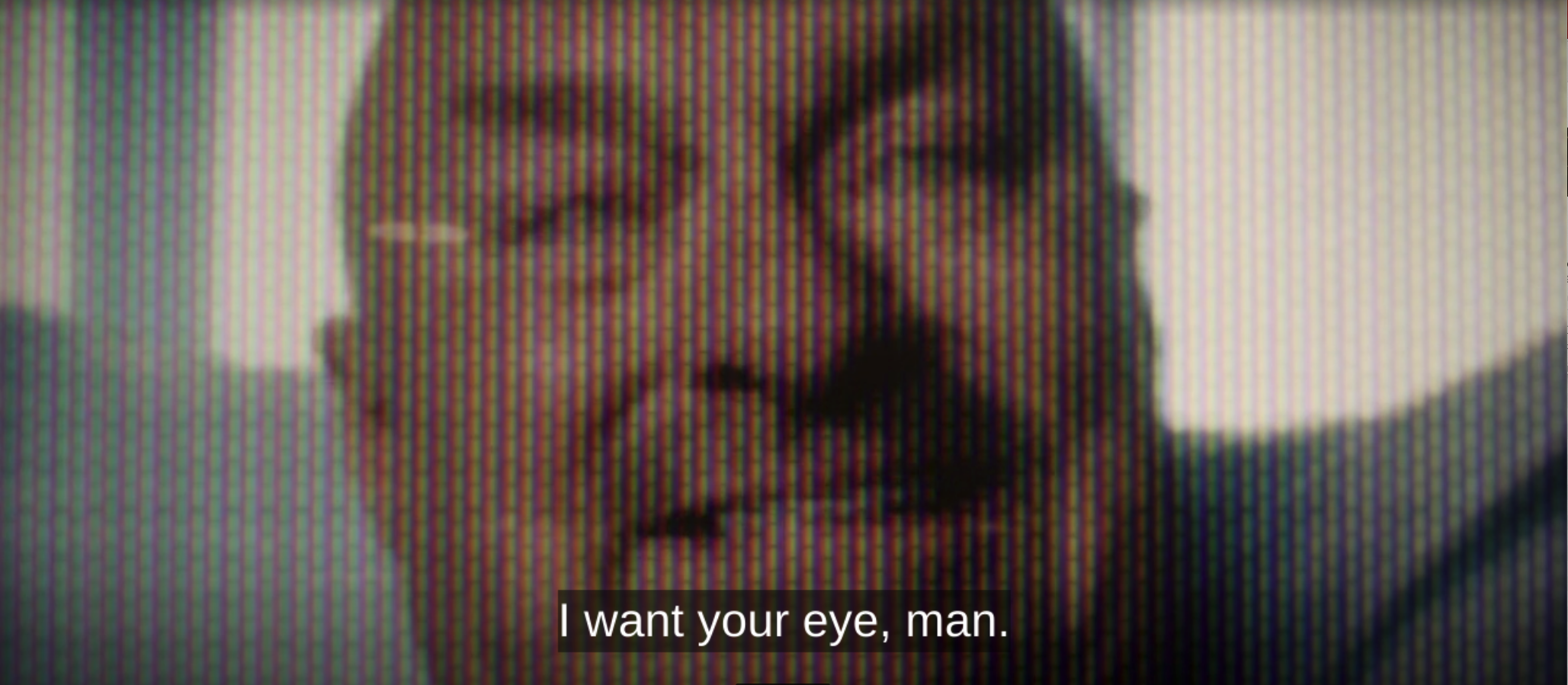
[12] In the film, Chris is a professional photographer, a creator of images, a maker of the gaze. His career is built on him breaking out of that oppositional gaze and gaining control over the making of images. But it turns out that he was chosen as a victim by Rose's family because of the quality of his gaze; that is the power they are trying to steal from him. As one character literally crows, “I want your eye, man,” meaning both his photographer’s “eye” (his taste) and, because this is horror, his actual eyes (as well as the rest of his body). (Figure 6)
Figure 6, White people want black people’s eyes, literally and figuratively
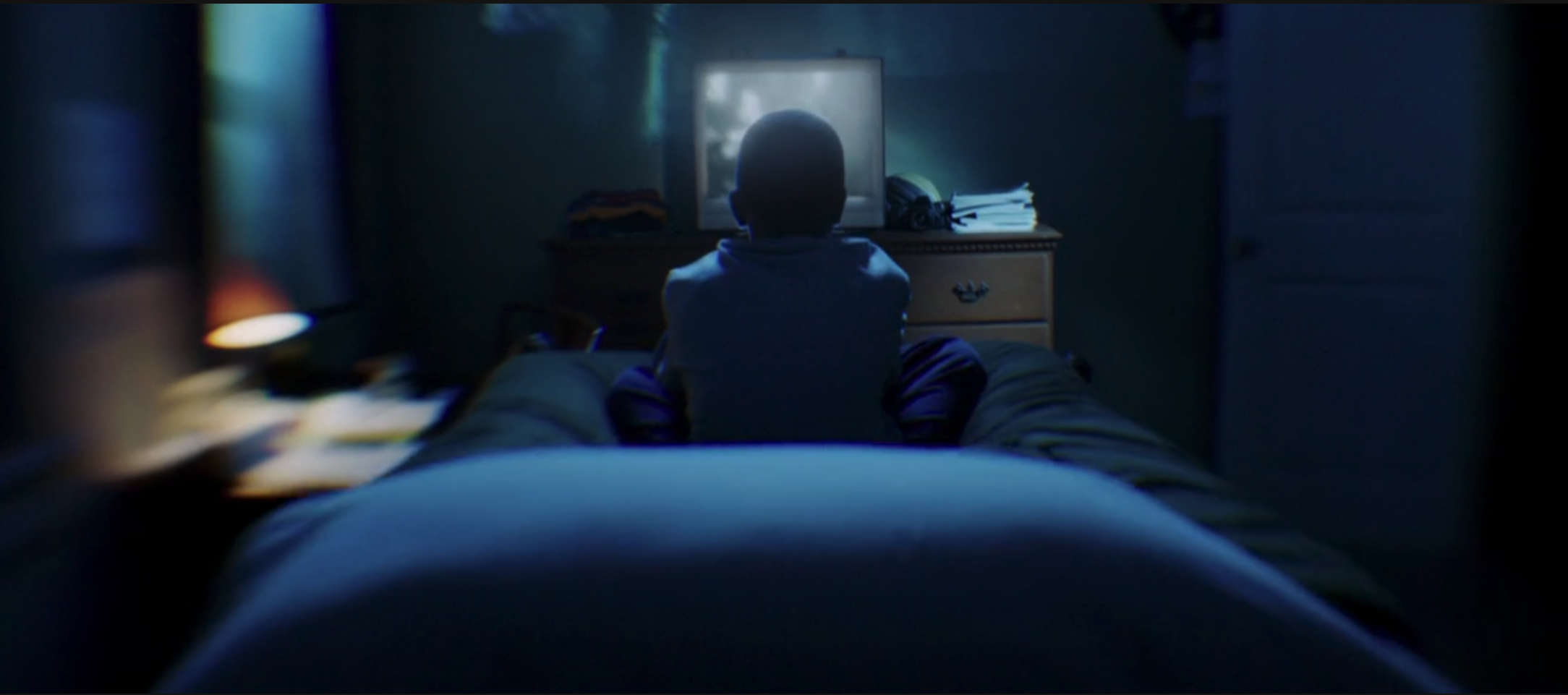
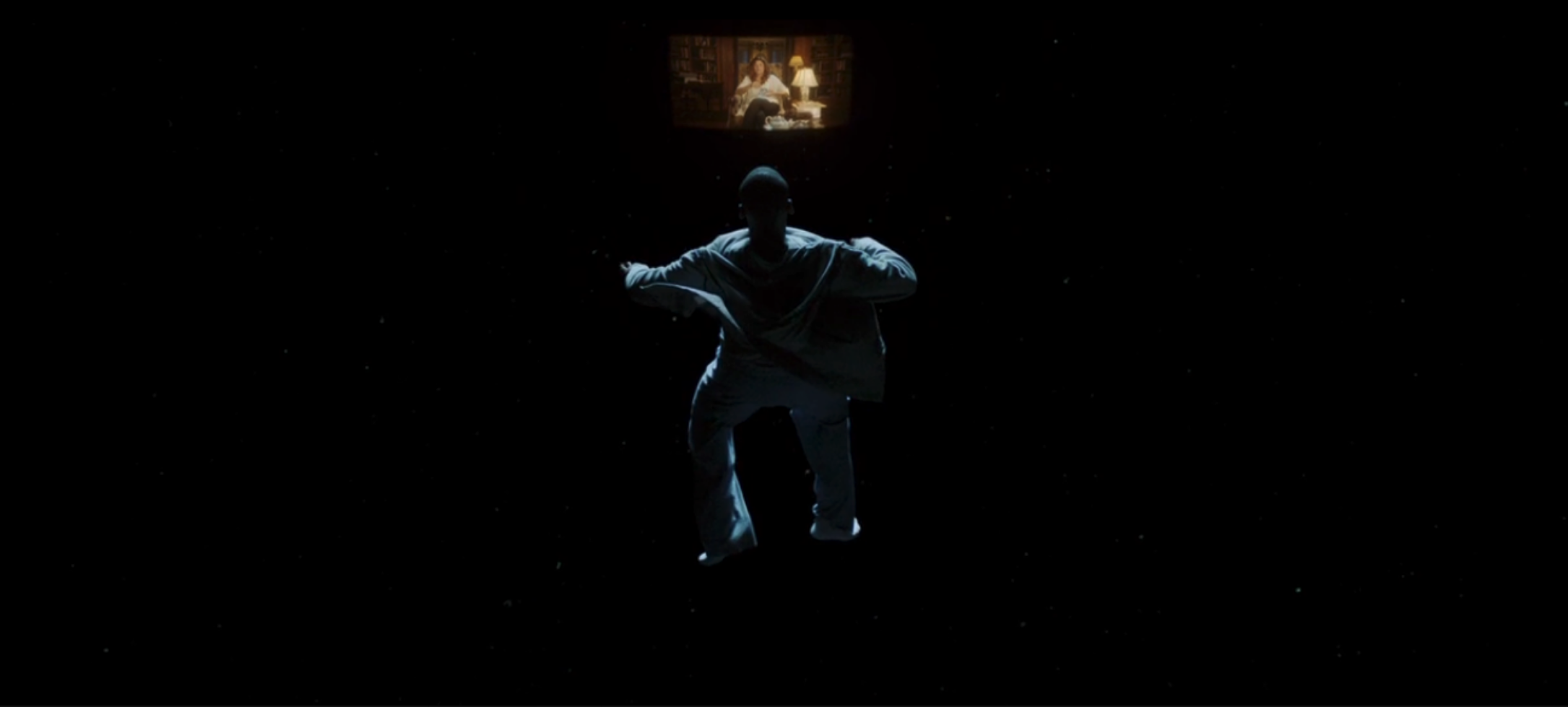
[13] When Chris is hypnotized and put into the sunken place, the power of controlling the gaze is flipped, and he moves from being a maker of images to being a helpless spectator. This helpless state of passivity is all too familiar to Chris. As a child, Chris was at home one night watching TV waiting for his mother to arrive. She kept taking longer and longer, and Chris was frozen in fear and could only stare at the TV ahead. Unbeknownst to Chris, his mother had been killed and was left to die alone on the side of the road. As you can see below in the first image (Figure 7), Chris relives his traumatic childhood memory as he sinks into the sunken place (Figure 8), reaching out to what resembles a TV screen in the distance.
Figure 7 and 8, In the sunken place, Chris relives the terror of being a passive black spectator
[14] This TV screen can represent media and film that negates and exploits Black people, and leaves them stuck in a place of oppositional gaze. Chris reverted back to watching the screen passively as he did when he was a child. The mounted deer head that Chris later uses to kill Dean is a symbol of this transformation from passivity and being prey to power and becoming the hunter—or the return to being the maker, the creator of images, like the film's Black director, Jordon Peele himself.
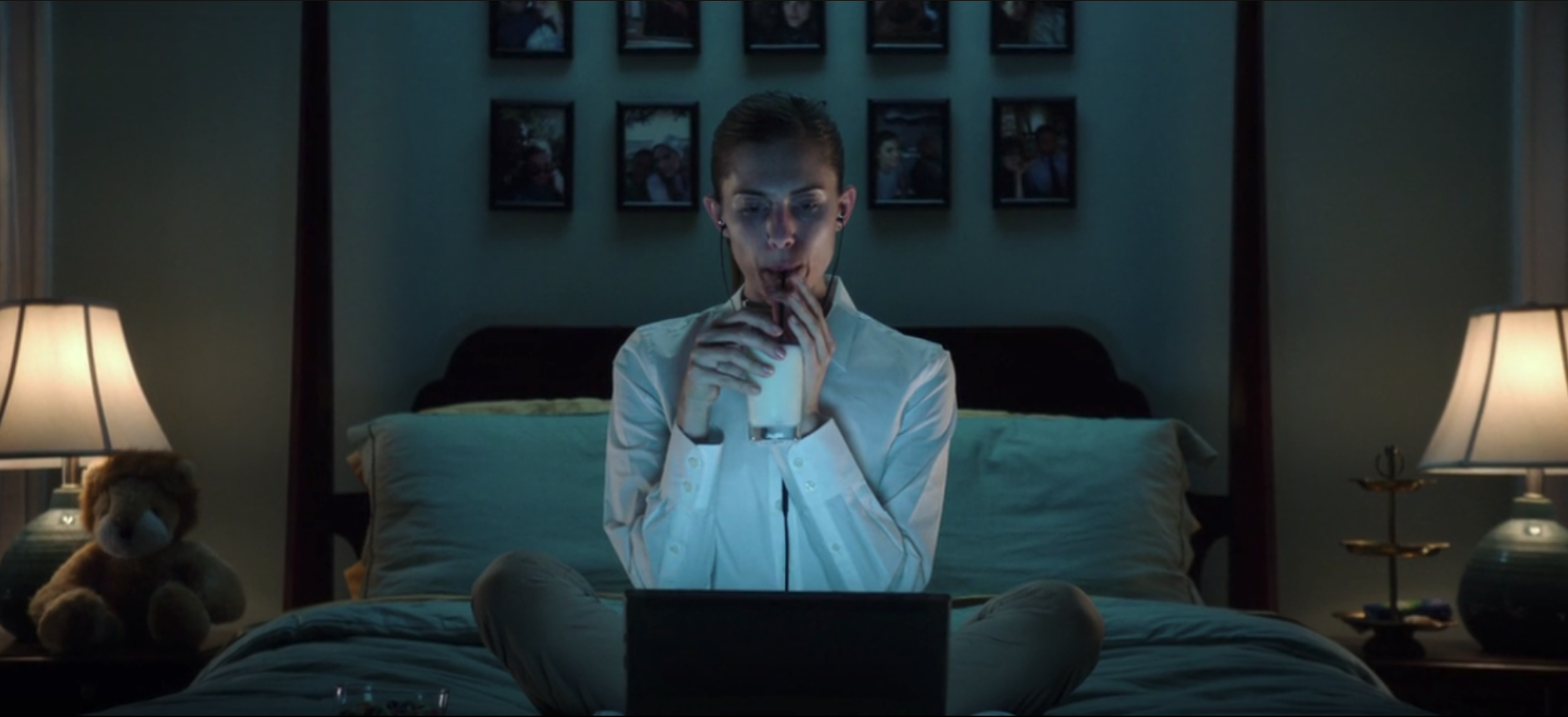
[15] Jordan Peele brings even more nuance to the gaze by complicating the binary of male and female gaze that Laura Mulvey has posed. Mulvey argues that the male gaze objectifies women, and the gaze of objectification only moves in one direction as it reflects society. In her article, “Visual Pleasure and Narrative Cinema,” Mulvey argues that ¨In a world ordered by sexual imbalance, pleasure in looking has been split between active/male and passive/female¨ (Mulvey 19). In the modern society we live in today, we have acknowledged and named fetishization, one form of which is the objectification of non-white people and their bodies. In Get Out, we see the character of Rose sitting on her bed, searching for “Top NCAA prospects” and scrolling through images of Black male athletes with prominent muscles, with pictures of all the Black people she has lured on the wall behind her. (Figures 9 and 10)
Figures 9 and 10, Rose is the fetishizing spectator, black men the object of her gaze
[16] Rose is perusing through these images that are objectifying Black men for her enjoyment and to seek out a new boyfriend to lure into the family’s evil scheme. She mimics a woman who is online shopping, except she seeks to befriend and/or seduce Black people in order to lure them to her family’s house. She does this “scrolling” online, but also in-person, picking out Black people based on parts of them ( particularly their muscles and status, which are deemed valuable to the family), and discarding the value of their lives. The whole family operation is an act of fetishization, choosing people for their parts, not seeing them as a whole person. Peele is complicating the proposed binary by Mulvey because Rose, a white woman, is objectifying Black women as well as Black men. Objectification is not moving in one direction and it is not solely tied to gender. The intersectionality of race and gender in the gaze is demonstrated. All in all, the only identity that doesn’t typically get fetishized or objectified is the white man. All races of women and non-white men can be the subject to fetishization and objectification. It is clear that the binary of female and male gaze prohibits nuance in our changing world where people’s different identities are acknowledged. This lack of nuance discounts selective readings and disidentification by women and non-white people watching films, specifically of the horror genre. Audience members have a better understanding of the gaze than critics realize, and they adapt techniques in order to enjoy films and create their own readings of them. Agency is stripped away by continuing to think in binaries. But in identifying the male gaze, Laura Mulvey helped set the stage for a larger discussion.
[17] In the film, we learn about the racial anxiety at the root of the family’s operation. It began after Dean’s father’s failure against a Black man; what starts out as almost a joke about Dean's father losing to Jesse Owens at the 1936 Olympics, a famous demonstration of Black excellence, turns out to be a growing tumor of white male envy and resentment. From there, we can see the ideologies Richard Dyer explains in his article, “The White Man’s Muscles,” about the white male "built" body versus the non-white male body. I’d like to expand on these ideas. Dyer argues that the white male “built” body has been seen as “built” through effort, discipline, and triumph of mind over body due to white men's “natural” mental superiority (Dyer 153). The white male body is sculpted and “built,” signifying affluence because of the leisure time necessary to dedicate to it. The hairlessness of the white male body also connotes a striving above nature, a departure from the animal. The armor-like, muscular body demonstrates resistance towards non-whiteness and femininity and is a result of their anxieties about these things. Finally, the tanned body signifies white people's ability to move along the spectrum of skin color and be successful at “still being white”; in contrast, non-white people who try to whiten their skin are seen as ridiculous, stupid, and un-successful in their attempts to be “white.” White people are able to move along the spectrum of skin colors, unlike non-white people. The white male “built” body thus forms a contrast with the non-white body. Non-white built bodies exist as well, as the author points out, in famous bodybuilders who have been forgotten and ignored. But the non-white "built" body has often been explained by surroundings and life-style, as if it were sculpted out of necessity rather than focus, concentration, and will. The non-white "built" body exists because of cliched ideas like "native people lived off the land" or "engaged in hunting" or some-such. The non white "built" body was not seen as a triumph of mind over body but rather as a "natural" product of what might be deemed to be an inferior life-style. The built white male body is a mirror of colonization. White men have disciplined and controlled their own bodies to have that physique, much like the raw land and bodies of the lands they colonize that need their discipline. The built body is meant to signify both power of the body and mind, covering both bases.
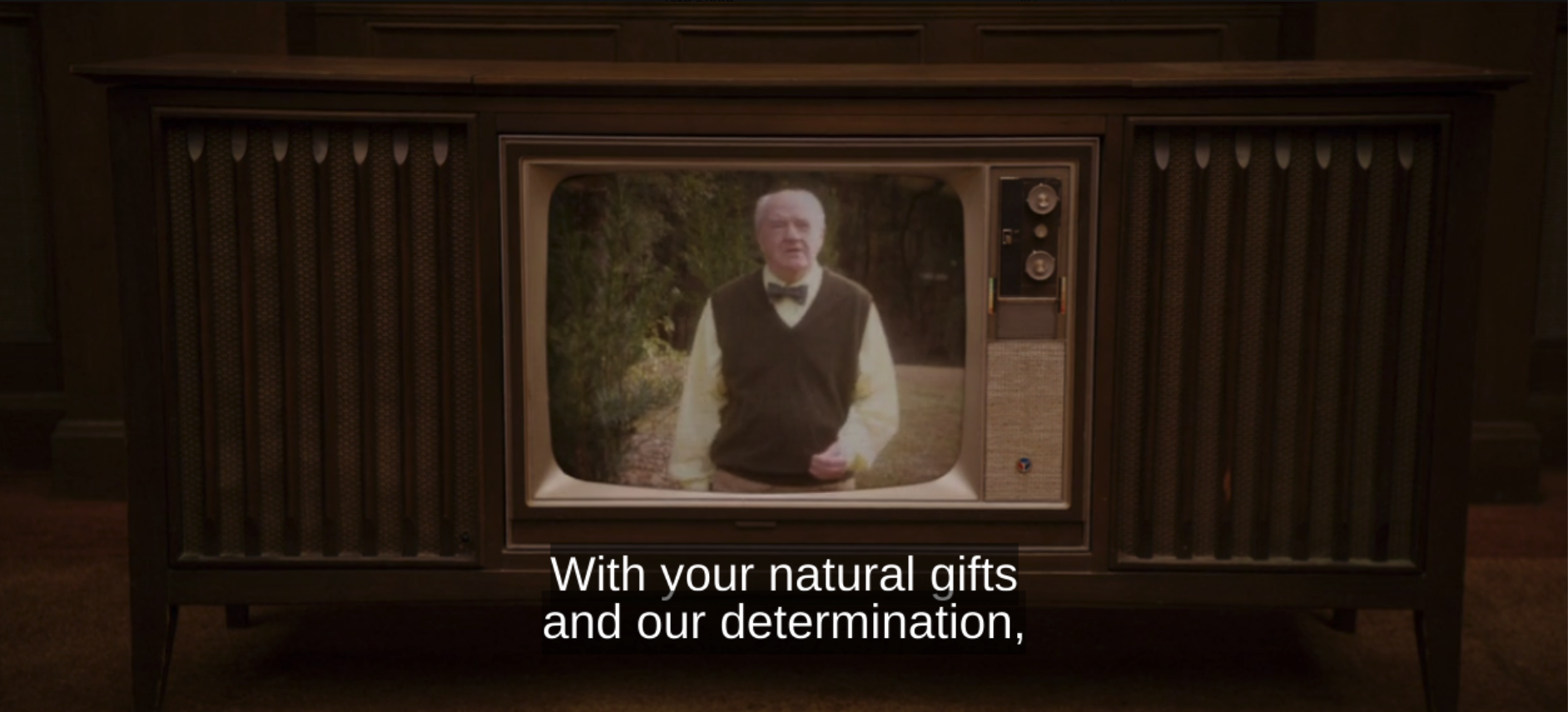
[18] In the beginning of Get Out, Dean tells Chris how his white father was beaten by Jesse Owens, a Black man; Owens later won in front of Hitler, thus rebuking Hitler's ideas of white Aryan superiority. Dean says half-jokingly, referring to his father, “He almost got over it.” His father, of course, was envious of the muscular Black man, bested even with his superior white “built” body. White men have the will and determination to build their own body, but when their body does not succeed, as seen in this case, they will use their will to steal other bodies. In a video explaining the family's body-stealing operation that Chris is forced to watch while strapped to a chair in the basement, Dean’s father says, “With your natural gifts and our determination, we could both be part of something greater.” (Figure 11)
Figure 11, The message Chris gets from TV
[19] His envy drove him to use his will and control Black people’s bodies. The white “built” body is a result of self-control and his failure in the Olympics represents a failure of that control as well. He gains that control back by kidnapping and auctioning off Black people’s bodies for white people to inhabit for their own purposes. Other bodies are an extension to the white “built” body, they are only valued as parts not as a whole.
[20] Get Out is a fascinating and innovative addition to the horror genre. The film shows that the genre of horror has a lot of room to grow in different directions because fear will always persist and manifest in new ways. The issues we face in society are disturbing and confusing and exploring those feelings in films by reproducing them will always be a great way to culturally problem-solve. The film helps to demonstrate that horror is on a spectrum of visceral horror and psychological, cerebral horror. They do not have to be in a hierarchy, and can be seen as different styles and vessels for the messages of the films. Get Out also owed its success to the fact that it centered Black Americans and their experiences, giving voice to an important message. The film had a layered approach to the gaze, examining different kinds: male gaze, oppositional gaze, female gaze, assaultive gaze, reactive gaze and the intersectionality of gender and race in the gaze.
[21] In Get Out, the traditional structures of gender and race are manipulated and race takes on a function in horror that gender usually occupies. Instead of gender trauma being at the heart of the plot, it is actually racial trauma. The film adds nuance and complexity to the role of the “Final Girl” and what survival entails for people of different races. The contrast between the phallic weapon of the slasher versus the mounted deer head used by Chris is so interesting in terms of gender power dynamics and racial power dynamics. The recurring trope of the eyes in horror is uniquely played upon by Jordan Peele. He demonstrates both the physical and (less often acknowledged) psychological violence of the gaze. The binary of the assaultive gaze and the reactive gaze actually offers a different lens through which to see power and violence. The Black community’s history of spectatorship and the power dynamics involved can be related to the TV-like images of the real world Chris sees while he is drowning in the sunken place. The modern framework of intersectionality comes into play and complicates the binary that the male gaze, as articulated by Laura Mulvey, perpetuates. The fetishistic gaze is brought up in the scene of Rose scrolling through pictures of Black men, but also in the entire evil family’s operation, which thrives on objectification and dehumanization. Finally, the long history of racial anxiety over the white man’s built body is at the root of the entire operation, when Dean’s father was physically bested by a Black male athlete. The film tackles the deep and complex issue of racism, but it never fails to explore or point to the nuances involved in how it manifests in society. Get Out uses the skeleton of the horror genre to then build upon and create something unique and impactful. The film is using race and gender differently to show a Black perspective that horror films have not portrayed in the past. It’s exciting to see new perspectives and explorations of fear at the personal and societal level.
Clover, Carol J. 1987. “Her Body, Himself: Gender in the Slasher Film.” Representations, vol. 20, p. 187–228.
Clover, Carol J. 2015. “The Eye of Horror,” Men, Women and Chainsaws Gender in the Modern Horror Film. 1. Princeton Classics edition. Princeton ; Oxford, XIII, 260 Seiten: Princeton University Press.
Dyer, Richard. 1997. “The White Man's Muscles.” White, Routledge, New York.
hooks, bell. 1992. “The Oppositional Gaze: Black Female Spectators” Black Looks: Race and Representation, p. 115-131.
Mulvey, Laura. 1975. “Visual Pleasure and Narrative Cinema.” Visual and Other Pleasures, Screen, p. 14–26.
Williams, Linda. 1991. “Film Bodies: Gender, Genre, and Excess.” Film Quarterly, vol. 44, no. 4, p. 2–13.