[0.1] Abstract - In the traditional disability picture, the individuality of people with dementia is often discounted because they are viewed through the lens of their illness rather than their illness being viewed as but a part of their own personhood. New Alzheimer's Films like Still Alice, The Father, and Mémorable have given us examples of how the symptoms of Alzheimer's can be presented to audiences in understanding and compassionate ways.
[0.2] Keywords - disability, Alzheimer’s disease, animation, narrative time, point-of-view, semi-subjective gaze, “dementia boom”
[0.3] Trailer
Katz, Noah. 2024. “Portraying the Art of Losing: An Analysis of the Alzheimer’s Genre,” Muhlenberg Visions. Volume 1, No. 2.
[1] In a 2012 report, the World Health Organization referred to Alzheimer's related dementia as “one of the greatest societal challenges of the 21st century” (WHO). There are currently around 50 million people with dementia-related Alzheimer's around the world, a number that is expected to rise to 82 million by 2030 (Matthews and Xu 17). Alzheimer’s disease is a degenerative brain disorder that is the most common cause of a general condition of impairment known as dementia. Alzheimer's causes amyloid plaques to build up in the hippocampus, entorhinal cortex, and cerebral cortex regions of the brain. In early stages of the illness, these plaques cause mild cognitive impairments like getting lost in familiar places or frequently misplacing items. Later stages of the disease symptoms can be far more severe as patients may lose the ability to carry on simple conversations and respond to the surrounding environment. Most cases of Alzheimer’s occur in persons over the age of sixty-five, but early-onset cases can affect individuals as young as thirty. On average, a person with Alzheimer's lives four to eight years after diagnosis though some can live up to twenty years depending on other factors of symptom progression (Xu, Kochanek, et al). Not only is it a disease that receives much focus from the neuroscience community, Alzheimer's also has a growing presence in the world of film and television. As the number of persons with Alzheimer's has increased, so have the number of portrayals of Alzheimer's patients in popular entertainment, film, and television – to the extent that they may be said to have carved out their own genre. In their book Popularizing Dementia: Public Expressions and Representations of Forgetfulness, Aagje Swinnen and Mark Schweda explain how “The concept of dementia is no longer limited to biomedical discourses, but is integrated into public imagination and popular culture,” and refer to this increased prevalence as “The Dementia Boom” (Swinnen and Schweda, 10).
[2] While portrayals of Alzhiemers can now be seen throughout drama, comedy, horror, and action films, the concepts or memory loss associated with it appear in written works dating back to 400 BC. References to the effects of Alzheimer's disease appear in the works of Greek writers Hippocrates and Pythagoras, who theorized that declining cognitive abilities could often be associated with advanced age. It was also theorized during this time that decline of mental performance was due to weak will in select individuals (Yang, Kim, et al. 16). It would not be until 1906 that the world would gain its first real understanding of the amyloid plaques and neurofibrillary tangles that cause the illness thanks to the work of Otto Ludwig Binswanger and Alois Alzheimer (Mast, Tatemichi, Mohr). The discoveries of these early researchers would help us to eventually reach our modern understanding of Alzheimer’s disease.
[3] Though they lacked a full understanding of the pathology behind this illness, this did not stop centuries of dramatists from utilizing its symptoms in their works. In Greek drama, “Anagnorisis” refers to a moment in a play or other work when a character makes a critical discovery. In many famed Greek plays, including Medea and The Choephoroi, this moment of sudden awareness or recognition is considered the most important moment of the narrative. Without it, the protagonist's journey towards self discovery remains incomplete. This drama of recognition hinges the narrative on the concept of memory. Many years later, William Shakespeare reaped plenty of theatricality out of King Lear's slow descent into a madness that seems to be based on symptoms of dementia. This play, with the theme of memory loss at its center, is one of the great tragedies of English literature.
[4] The utilization of memory loss for narrative purposes has also been used throughout the medium of cinema. Symptoms resembling those of Alzheimer’s-related dementia are often exploited as a tool to heighten the effectiveness of horror, melodrama, and action films. In the horror franchise The Evil Dead, characters who are possessed by evil spirits immediately become hellbent on killing their un-afflicted friends. Those who have been possessed appear as zombie-like creatures but will often take on the persona of their now-dead host in order to lure in their victims. They call their victim by name or reference shared knowledge in order to give their target a sense of security before they quickly revert to mindless killer creatures. It is this possibility of and then immediate lack of recognition from loved ones that makes these scenes particularly frightening. Horror films like this seek to tap into the inherent human need for recognition and subsequent fear that stems from lack of recognition. While they appear fictional in these works, these are struggles that real persons caring for Alzheimer's patients grapple with everyday. Memory loss is also heavily featured in several action films including Memento (2000), Remember (2015) and Memory (2022). In these films, the main protagonists are seeking vengeance on those who did them wrong, all while facing increasingly failing cognitive abilities. Their race to inflict vengeance before losing their memory completely is used as a dramatic gimmick to increase the excitement that the film may offer. As explained in Alfred Hitchcock's famous example of placing a bomb under the table, setting the narrative action against a ticking clock automatically increases the level of suspense (Belodubrovskaya 5). Melodramas also use Alzheimer's symptoms to increase the emotional impact of their romantic stories. Films like The Notebook (2004) use a narrative that oscillates between before and after a character's complete memory loss in order to heighten its tear-jerking nature.
[5] In her essay on genre and excess, Linda Williams describes the temporality of fantasy in horror as “too early” and melodrama as “too late” (Williams 1991, 9): that is, horror works by taking the viewer by surprise (things happen too early, unexpectedly), while melodrama makes us feel the hopeless grief that comes with running out of time or being out of time. Alzheimer's symptoms are at the intersection of this temporal analysis. It is too late to do anything to prevent the patient's slow decline and yet too early for this person to have to completely lose who they are (especially in cases of early-onset Alzheimer’s). This is why Alzheimer’s symptoms are dramatically interesting, and so are used by filmmakers even outside of movies about disabilities.
[6] In his book on film genres, Daniel López defines the disability film as:
[7] Oscillating between melodrama and genuine drama, a group of films concentrating on the handicap, the infirm, and the terminally ill. These films focus their attention on stories of endurance and fortitude. Some are based on true case histories. At their best, they show the human ability to surmount affliction by conquering pain or some physical or mental handicap. At their worst, they become an excuse for over-sentimentality and only seek to make the audience's tear ducts flow” (Lopez 1993, 74).
[8] Many disability films will feature an Alzheimer's patient as a secondary character and instead center the film on the people around them who are providing medical care.
[9] While the number of Alzheimer's films has significantly increased during the past decade, only a few acknowledge the personhood and subjective world of Alzheimer's patients. As Aagje Swinnen and Mark Schweda describe:
[10] Representations of people with dementia in film tend to draw heavily on familiar tropes such as global memory loss, violence and aggression, extreme dependency on heroic carers, catastrophic prognosis, and early death. Audiences may therefore uncritically absorb discourses which reinforce negative stereotypes and perpetuate the biomedical orthodoxy that everything a person with dementia says or does is attributable to the disease” (Swinnen and Schweda 229).
[11] Alzheimer's films must work as a vehicle for empathy and understanding that portray the actuality of the disease without reducing it to devised drama or fictitious horror. Creating films that recognize the true reality of those living with Alzheimer's is crucial to a better understanding of the disease for the viewing public. These films should strive to tell their stories from the point of view of those afflicted with Alzheimer's, which is certainly not an easy task. As head of research at Dementia UK, Dr. Karen Harrison Dening explains, “It's difficult to represent dementia on screen because it's often hard to get a true user perspective of what it's like. We have to assume or interpret,” (quoted in Strong). Alzheimer's is a disease that does not manifest itself through changes in outer physical appearance and is a far more internal struggle. This does not fit with the objective viewing of Alzheimer's as portrayed in many Alzheimer's films.
[12] But a different breed of Alzheimer's film has developed over the last decade that recognizes the importance of artistic form as much as the content of disability as a subject matter. From this point on, I will refer to this movement as the New Alzheimer's Film.
[13] In many ways, film is a memory. It is a record of past events, images, sounds, and actions that can be returned to even as time progresses. New Alzheimer's Films are examples of how filmmakers can warp and affect that memory in order to attempt to recreate the experience of the disease sufferers. These films are better able to validate the views and unique subjectivity that is brushed aside when Alzheimer's is used as nothing more than a narrative tool to get the audience weeping. New Alzheimer's Films move towards a more complex representation of those with Alzheimer's as opposed to presenting them as empty vessels for the audience. They emphasize the character's own personhood. Scholar Tom Kitwood hails the arrival of these new films in his book on contemporary Alzheimer's portrayals by saying that “one of the most encouraging signs in recent years is that at last people with dementia are being recognized as having true subjectivity” (Kitwood 485-486).
[14] The concept of a semi-subjective view is particularly important to the effectiveness of the New Alzheimer's Film. Semi-subjective refers to a perspective that is neither a third person objective shot nor a first person point-of-view perspective. Like watching a film of a child on a swing with the camera swinging back and forth, we are not looking directly from the view of the child, but we still feel some relation to her movement. If we were locked in the child’s own perspective, we would lose the view of the swing and wouldn't have as much understanding of her contextual environment as we would with a semi-subjective view. As applied to the New Alzheimer's Film, this concept allows the audience to experience a film grounded in the reality of the experience of the illness, but not indelibly bound to a first person point-of-view style. This allows the film to focus on what Benjamin Fraser refers to in his book on cognitive disability aesthetics as “textures of everyday over the spectacle of loss” (Fraser 139). This focus on the minutiae of day-to-day Alzheimer's struggles over a parade of histrionic narrative checkpoints is what sets New Alzheimer's Films apart from other representations.
[15] In her essay on portrayals of personal memory, María Rincón describes how these films are:
[16] an innovative proposal in the filmic representation of personal memory, going beyond the most obvious topic of the film, memory mediated through cinema manages to convey its communicative character to a wide audience. They tend to follow a non-causal narrative structure, which manages to capture an indiscernibility between past and present, able to reflect the workings of human memory” (Rincòn 17).
[17] It is this fluctuating narrative structure and use of the film medium to warp ideas of memory that sets the New Alzheimer's Film apart as its own sub-genre within the conventional disability picture genre. Linda Williams describes how certain genres set themselves apart: “The repetitive formulas and spectacles of film genres are often defined by their differences from the classical realist style of narrative cinema” (Williams 3). While other disability pictures will stick to this more traditional and realist linear narrative, the New Alzheimer's Film sets itself apart with its innovative take on the temporality of its narratives. Three films made within the last ten years, Still Alice (2014), The Father (2020), and Mémorable (2019), have especially captured the techniques, point of view, and authentic representation of the New Alzheimer's Film. When analyzing these films in the order of their production we can also see how the techniques of representation have progressed over time.
[18] Richard Glatzer and Wash Westmoreland’s film, Still Alice, features actress Julianne Moore as a linguistics professor diagnosed with early-onset Alzheimer's shortly after her 50th birthday. The film is based on the 2007 novel by Lisa Genova and follows much of the novel's approach to the story, in which Alice's point of view is front and center. Genova, who studied neuroscience at Harvard Medical School, writes with a style that is more clinical than it is theatrical. She closely viewed her grandmother's development of Alzheimer's disease and was inspired to write about it from a firsthand perspective. While the film does address the struggles of her family members, it is focused primarily on Alice, who is in almost every second of the film.
[19] Prior to the start of production, co-director Richard Glatzer was diagnosed with Amyotrophic Lateral Sclerosis (ALS), a neurodegenerative disease that shares some similarities to the progression of Alzheimer's. Despite his diagnosis, Glatzer worked as a director for the film alongside Wash Westmoreland. Due to his complications from ALS, Glatzer was unable to speak and provided his directorial notes by typing them onto a tablet (Saner). As Alice’s condition deteriorates throughout the film, she is still able to have meaningful emotional connections with people around her. Glatzer's continued participation in the film even amidst his fight with a neurodegenerative disease strengthened the film's message of continued personal identity even amidst illness. In addition to Glatzer, Still Alice also featured several prominent Alzheimer’s advocates in prominent creative roles. Elizabeth Gelfand Stearns, who is a former member of the Board of Directors of the National Alzheimer’s Association, served as a producer on the film. An important characteristic of the New Alzheimer's Film is increased input and participation from those who study, advocate for, and are affected by Alzheimer’s. This is in opposition to other disability pictures that will not curate their production crew to better represent and relate to the Alzheimer’s experience.
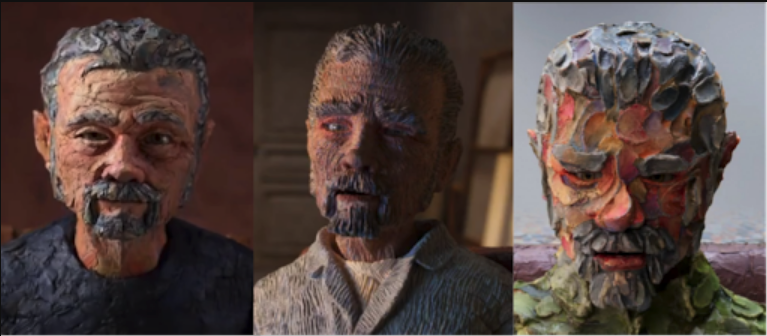
[20] In addition to these behind-the-scenes decisions, Still Alice also showcases the use of cinematic techniques to help portray Alice’s experience. Towards the beginning of the film, we witness a scene in which Alice is going for a jog on the college campus she has spent many years working at. As she stops to catch her breath, it immediately becomes clear that she now feels lost and no longer recognizes the once familiar area. The filmmakers shoot the scene using a camera with a long focal length to keep Alice in focus but blur the whole world around her. As she glances around with a troubled air, the camera whirls around her to help portray her feeling of lost-ness. The filmmakers of Still Alice adapted their cinematic style to better express the reality of Alzheimer's symptoms, another notable characteristic of the New Alzheimer's Film. That being said, Still Alice is a film that is still rooted in the techniques of the traditional disability picture. With its traditionally linear narrative and often melodramatic scenes, it is merely a jumping off point that the New Alzheimer's Film will evolve from.
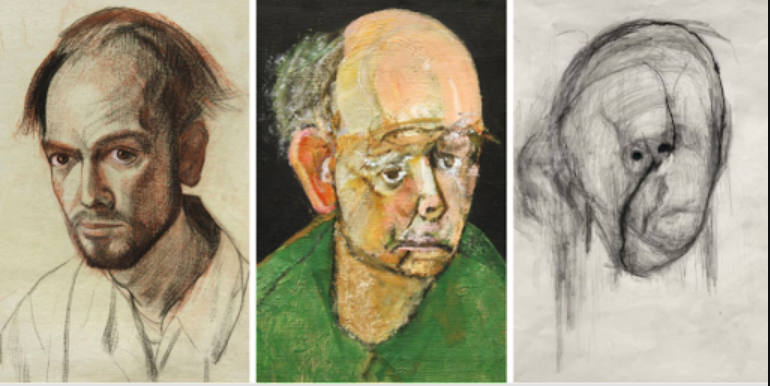
[21] The 2020 film The Father is a strong example of a portrayal of Alzheimer's breaking new ground in the cinema. The film is an adaptation of director Florian Zeller’s 2012 play Le Père. It follows Anthony (played by Sir Anthony Hopkins), an 80-year-old man living with Alzheimer's whose daughter is struggling to care for him as his condition deteriorates. As Anthony's grip on reality begins to unravel, we experience his fear and uncertainty within his ever-changing surroundings. The Father takes its cinematic portrayal of Alzheimer's related symptoms a step further than Still Alice with its dynamic choices in casting and production design. Throughout the film, the actors who portray characters around Anthony switch their roles in order to give us a better understanding of Anthony’s inability to recognize those around him. We, as the viewer, are thus able to feel the same sense of disorientation and fear that Alzheimer's patients experience when they are no longer able to recognize people they used to know. In addition to strategically swapping out actors, the production designers made subtle ongoing alterations to the color schemes and day-to-day objects in Anthony’s apartment. This may not be as instantly apparent as the effect created by changing actors, but as Anthony and the audience move through the apartment spatially and temporarily, these small changes can instill a disconcerting sense of unease that is similar to the paranoia that Alzheimer's patients so often feel. With these changes to the set and the actors, a viewer becomes almost as uncertain of his or her surroundings as Anthony himself. The film also deviates from the traditionally linear narrative as Anthony appears to relive certain moments multiple times. Zeller’s subjective approach weaves the story through the protagonist’s distorted memories and leaves the audience trying to piece the puzzle together. Benjamin Fraser states that techniques like these leverage cinematic form and narrative in how they “destabilize the unequivocal understanding of time,” so as to create a spectator who “actively constructs the meaning of the visual text through an interactive process that unfolds over time” (Fraser 141). It is through this type of interactive viewing that The Father further immerses us in Anthony's perspective and approaches a fresh depiction of the subjective experience of Alzheimer's.
[22] Like Still Alice, The Father’s portrayal of Alzheimer's hinges not only on these cinematic tricks but on the humanity of its central character. In addition to his struggles, we also see Anthony crack jokes, tell stories, and show gratitude by thanking his daughter for all she does to help him. As cognitive disability scholar Benjamin Fraser explains, “The subjective experience of Alzheimer's related dementia must be approached simultaneously from one perspective that is clinical and another that might be called qualitative or humanistic” (Fraser145). In New Alzheimer's Films like The Father, this tender focus is just as important (if not more important) than the artistic styling of the film itself.
[23] Few films have utilized as much visual experimentation to portray the experience of Alzheimer's as the 2019 animated short film Mémorable. The film follows a painter named Louis who has been diagnosed with Alzheimer's and begins to lose comprehension of the objects and people around him. Due to its animated medium, filmmaker Bruno Collet is able to deploy a series of exceedingly creative techniques to create the reality of Alzheimer's. As Louis’s condition deteriorates, objects that he has forgotten begin to melt and dissolve before our eyes. People he once knew now start to appear as peculiar shapes and colors. Renowned gerontologist Anne Basting explains the symptoms that these moments convey, saying that, “Severe short term memory loss can bring disorientation and paranoia: Who is this person coming into my room? What is this room? Gradually the forgetting of details grows into the loss of concepts. One does not just forget where one put the keys. One cannot comprehend the meaning of a key” (Basting 79). We see this loss of comprehension throughout Mémorable as Louis's belongings become as unrecognizable to us as they are to him and his room soon becomes an endless white abyss. The claymation medium of the film lends itself especially well to this technique of warping the characters' environment.
[24] Collet's vision for Mémorable was inspired by the works of William Utermohlen, an artist who suffered from Alzheimer’s but continued to portray himself in paintings despite battling with the disease (Figures 1 and 2). As Collet himself explains “I was really interested in the fact that, for the first time, [with] the painter, we got a glimpse of a real person who was suffering from the disease—not from a person outside. It’s very touching, because if you look at his paintings, you can really see the evolution of the disease from beginning to end” (Grobar). By the end of Collet’s film, we can see how Louis' own comprehension of himself has changed and warped just like Utermohlen’s paintings. This concept gives us an incredible insight into the experience of those with Alzheimer’s and how their view changes with their condition.
Figure 1, Paintings of William Utermohlen showing first hand the artist’s loss of self-recognition
Figure 2, Bruno Collet’s Mémorable echoing the loss of self-recognition from Utermohlen paintings through a cinematic expression
[25] Alzheimer's disease has been amongst us for thousands of years, even before we as a society were aware of the pathology and neurology behind it. As our understanding of the causes and effects of Alzheimer's disease continues to advance, so must the portrayals of those battling the illness. While films that use memory loss as a narrative device will not disappear entirely, it is important to have a more clinically accurate division of disability pictures to counter discourses that may reinforce negative stereotypes. In the traditional disability picture, the individuality of people with dementia is often discounted because they are viewed through the lens of their illness rather than their illness being viewed as but a part of their own personhood. New Alzheimer's Films like Still Alice, The Father, and Mémorable have given us examples of how the symptoms of Alzheimer's can be presented to audiences in understanding and compassionate ways.
Basting, Anne Davis. 2001. ““God Is a Talking Horse”: Dementia and the Performance of Self.” TDR/the Drama Review 45 (3): 78–94. https://doi.org/10.1162/10542040152587123.
Belodubrovskaya, Maria. 2023. “The Master of Surprise Alfred Hitchcock and Premise Uncertainty.” Projections 17 (1): 1–19. https://doi.org/10.3167/proj.2023.170102.
Collet, Bruno, dir. 2019. Mémorable. Vivement Lundi.
Fraser Benjamin. (2018 ). Sequencing Alzheimer’s Dementia: Paco Roca’s Graphic Novel Arrugas (Wrinkles). In Cognitive Disability Aesthetics: Visual Culture, Disability Representations, and the (In)Visibility of Cognitive Difference (pp. 136–169). University of Toronto Press.
Grobar, Matt. (2020). 'Memorable' director Bruno Collet uses stop-motion to tap into an aging painter's experience of dementia. Deadline. Retrieved May 2, 2023, from https://deadline.com/2020/01/memorable-director-bruno-collet-oscars- animated-short-interview-news-120284394
Jones R. 2014. “The Madness of the King: King Lear.” British Journal of General Practice 64 (620).
Kitwood, T. M., Clive Baldwin, and Andrea Capstick. 2007. Tom Kitwood on Dementia : A Reader and Critical Commentary. Maidenhead, Berkshire: McGraw-Hill/Open University Press.
Lopez, D. (1993). Films by genre: 775 categories, styles, trends and movements defined, with a new filmography for each. McFarland & Co.
Low, Lee-Fay, and Farah Purwaningrum. 2020. “Negative Stereotypes, Fear and Social Distance: A Systematic Review of Depictions of Dementia in Popular Culture in the Context of Stigma.” BMC Geriatrics 20 (1).
Matthews, Kevin A., Wei Xu, Anne H. Gaglioti, James B. Holt, Janet B. Croft, Dominic Mack, and Lisa C. McGuire. 2019. “Racial and Ethnic Estimates of Alzheimer’s Disease and Related Dementias in the United States (2015-2060) in Adults Aged ≥65 Years.” Alzheimer’s & Dementia: The Journal of the Alzheimer’s Association 15 (1): 17–24.
Mast, H, T K Tatemichi, and J P Mohr. 1995. “Chronic Brain Ischemia: The Contributions of Otto Binswanger and Alois Alzheimer to the Mechanisms of Vascular Dementia.” Journal of the Neurological Sciences 132 (1): 4–10.
Rai, Mayank, and Debanjan Banerjee. 2022. ““The Father”: As Real as It Gets to Living with Dementia.” Indian Journal of Psychiatry 64 (2): 213–15.
Rincón, María del, Efrén Cuevas, and Marta Torregrosa. 2018. “The Representation of Personal Memory in Alan Berliner’s First Cousin Once Removed.” Studies in Documentary Film 12 (1): 16–27.
Saner, Emine. (2015). Still Alice Director: Escaping a religious cult, making porn and celebrating Julianne Moore’s Oscar. The Guardian. March 5. https://www.theguardian.com/film/2015/mar/05/still-alice-director-wash-westmoreland-religious-cult-making-porn- celebrating-julianne-moore-oscar
Strong, Hannah.2021, Film's struggle to help us understand the pain of dementia. BBC. Feb 24. https://www.bbc.com/culture/article/20210224-can-film-really-help-us-understand-the-pain-of-dementia
Swinnen, Aagje, and Mark Schweda, eds. 2015. Popularizing Dementia : Public Expressions and Representations of Forgetfulness. Bielefeld: Transcript Verlag. http://site.ebrary.com/id/11159602.
Westmoreland, Wash & Richard Glatzer, dir. 2014. Still Alice. Sony Pictures Classics.
Williams, Linda. 1991 Film Bodies: Gender, Genre, and Excess.” Film Quarterly, vol. 44, no. 4, pp. 2–13.
World Health Organization (WHO) & Alzheimer’s Disease International. 2012. Dementia – A Public Health Priority. Geneva: WHO. https://www.who.int/publications/i/item/dementia-a-public-health-priority
Xu, Jiaquan, Kenneth D Kochanek, Sherry L Murphy, and Betzaida Tejada-Vera. 2010. “Deaths: Final Data for 2007.” National Vital Statistics Reports : From the Centers for Disease Control and Prevention, National Center for Health Statistics, National Vital Statistics System 58 (19): 1–19.
Yang, Hyun Duk, Do Han Kim, Sang Bong Lee, and Linn Derg Young. 2016. “History of Alzheimer’s Disease.” Dementia and Neurocognitive Disorders 15 (4): 115–21.
Zeller, Florian, dir 2020. The Father. Sony Pictures Classics.